

Gardening in Las Vegas: Expert Tips
Successful desert gardening is all about working with the environment rather than against it. That means improving soil structure, using efficient irrigation like drip systems, choosing heat- and drought-tolerant plants, and timing planting around seasonal temperature shifts.
Prepare Soil For Planting
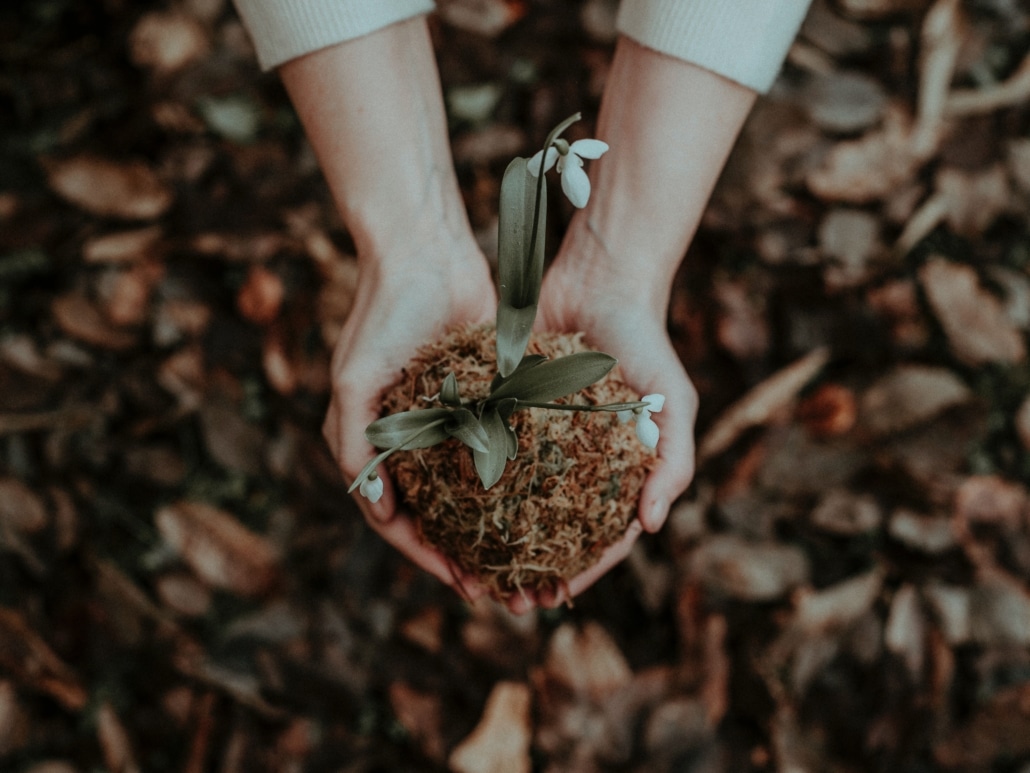
Soil preparation is always the first step of learning how to garden in Las Vegas. Las Vegas soil is hard and rocky, making it not so great for retaining both the moisture and nutrients that plants need to survive and grow. The soil is a critical part of vegetable gardening in Las Vegas for growing all but the hardiest plants. That’s why you need to take your time to prepare the soil for planting.
Las Vegas soil is hard, rocky, and low in organic matter, it drains fast but holds almost no nutrients. For vegetable beds, mix native soil with compost and a perlite or coarse sand amendment to improve both drainage and fertility. For cacti and succulents, use a dedicated cactus mix as standard potting soil retains too much moisture for desert plants and leads to root rot.
Identify What Your Zone Needs
When learning how to grow a garden in Las Vegas, or anywhere else for that matter, growing or climate zones are a big help.
Growing zones tell gardeners which plants will thrive in their climate and region. Las Vegas has two different growing zones due to experiencing both extreme heat and extreme cold over the year. This can be a source of confusion for people learning how to garden in Las Vegas.
According to the US Department of Agriculture (USDA), most of the Las Vegas Valley is classified as Zone 9b, although some higher-elevation areas remain 9a and warmer urban microclimates may approach 10a.
When purchasing plants or seeds, confirm which zone system the label references. Some plants tolerate conditions slightly outside their recommended zone, but in Las Vegas that usually means extra effort shade cloth in summer, frost protection in winter, or more frequent irrigation. Check your exact ZIP code on the USDA Plant Hardiness Map for the most accurate zone.
Regulate the Sun Levels for Your Plants
Standard recommendations for “full sun” plants (6–8 hours of direct sunlight) are written for temperate climates, not the Mojave Desert. In Las Vegas, even sun-tolerant plants benefit from afternoon shade. Position beds where they receive morning sun and are shaded by a wall, pergola, or shade cloth by 1–2 pm. This is especially important from May through September when temperatures regularly exceed 100°F. Shade cloth rated at 30–50% is an inexpensive fix that significantly reduces heat stress.
Water Properly
Keeping a desert garden adequately watered can be a challenge in Las Vegas’s climate. It can also be expensive. Getting this right is key to reducing wasted water, preventing your plants from burning, and generally keeping your desert crops healthy.
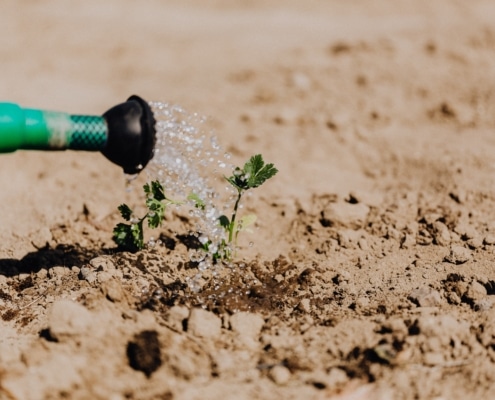
Watering by hand or above-ground sprinklers is expensive as a lot of water is wasted through spillage and evaporation. On a hot day, water can evaporate before reaching the plant’s roots, and watering a plant under intense sunlight can cause it to burn.
Drip irrigation is much more efficient and effective for Las Vegas gardening. Delivering water directly to the plant roots reduces the evaporation caused by heat and sunlight and overall limits water wastage through the inaccuracy of hand watering or a sprinkler system.
Running a drip irrigation system for 30 to 40 minutes early in the morning provides enough water for most plants and allows the plants to absorb much of that water before the hottest part of the day evaporates it. Small leaks can quickly add up in water costs, so check your irrigation system regularly for any need to repair. On sweltering days, it can be a good idea to water plants once again in the evening. Never water your plants in the evening during winter, however, as this could harm your plants.
Get Ready For Pests
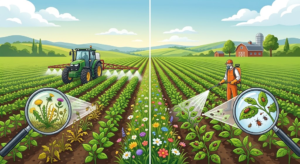
Desert gardens can play host to a surprising number of pests that you will need to prepare for:
- Ants
Ants aren’t troublemakers themselves, but they are often a sign that other potentially damaging insects are also present.
- Spider Mites
Spider mites live on the undersides of plant leaves. They will bite into the leaves and suck out the plant juices for food and moisture. The damage this causes to the plate gives it not only an unsightly mottled appearance but also affects your crop’s ability to absorb sunlight and grow.
Only use insecticides intended for spider mites as general use pesticides are more effective at killing the beneficial insects that control spider mite populations. Introducing healthy insect populations such as ladybugs that eat spider mites can be an effective way of reducing or preventing an infestation.
- Leaf Miners
The larvae of some moth, beetle, and fly species will burrow into plant leaves for food and shelter. While this damage alone is rarely enough to kill your plants, the insects they turn into will cause further damage. They can usually be handled with general pesticides. Commercial farms and plant nurseries sometimes use wasps to control leaf miners and other pests, but wasps are rarely welcome at a home garden or yard.
- Beetles
Some beetles will bite chunks out of plant leaves, limiting sunlight absorption and causing a loss of moisture and nutrients. Others will bite directly into fruit and vegetables or, worse, go straight for the plant’s roots. Protective nematodes can control beetles and other pests without harming bees, worms, and other beneficial bugs.
- Sowbugs
Sowbugs tend to prefer eating soft fruits like strawberries and tomatoes, and they are a common problem in desert gardening. You might not spot these pests at first because they usually only come out at night. General pesticides and nematodes can control them.
Plant At The Right Time
Nevada has two distinct growing seasons. Cool-season plants can be planted safely in February and March or in August and September. Most warm-season plants should be planted between March and June. Every crop in a desert garden has an ideal time for planting; however, these are just rough guidelines.
Mulch vs. Rock: What to Use in a Las Vegas Garden
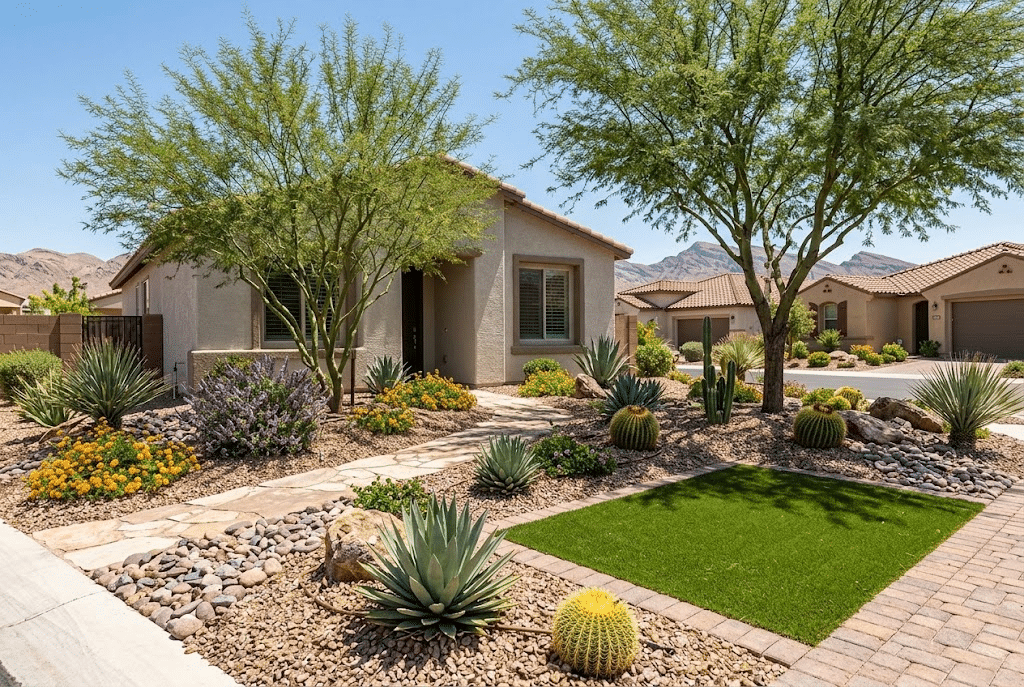
In most climates, organic mulch is the standard recommendation for moisture retention and weed suppression. In Las Vegas, the calculus is different. Organic mulch breaks down quickly in desert heat, needs frequent replacement, and can hold excess moisture in areas where root rot is already a risk. For established desert landscaping and xeriscape areas, decomposed granite and decorative rock are more practical, they reflect heat, require no replacement, and align with SNWA water conservation guidelines. For vegetable beds and container gardens, a thin layer of straw or wood chip mulch can help retain soil moisture between waterings.
So Which Vegetables Can You Grow in Las Vegas?
Despite the desert climate, Las Vegas gardeners can grow a wide variety of vegetables throughout the year by planting crops in the right season. Cool-season vegetables thrive during the valley’s mild fall and winter months, while warm-season crops perform best when planted in late winter or spring before the peak summer heat arrives.
| Vegetable | Season | Best planting time | Sun requirements | Water needs | Difficulty |
|---|---|---|---|---|---|
| Lettuce | Cool season | Sept–Nov, Jan–Feb | 4–6+ hours | Moderate | Easy |
| Spinach | Cool season | Sept–Nov, Jan–Feb | 4–6+ hours | Moderate | Easy |
| Broccoli | Cool season | Aug–Oct | 6+ hours | Moderate | Moderate |
| Carrots | Cool season | Sept–Nov, Jan–Feb | 6+ hours | Moderate | Easy |
| Tomatoes | Warm season | Feb–Apr | 8+ hours | High | Moderate |
| Peppers | Warm season | Mar–Apr | 8+ hours | Moderate–High | Easy |
| Cucumbers | Warm season | Mar–May | 8+ hours | High | Easy |
| Squash | Warm season | Mar–May | 8+ hours | Moderate–High | Easy |
In addition to these popular options, Las Vegas gardeners can successfully grow cool-season crops such as cabbage, cauliflower, kale, peas, onions, garlic, radishes, and turnips. Warm-season choices include eggplant, sweet corn, pumpkins, melons, watermelon, okra, and sweet potatoes. With proper irrigation and seasonal planting, it’s possible to harvest fresh vegetables from your garden nearly year-round.
Understand Cacti & Succulent
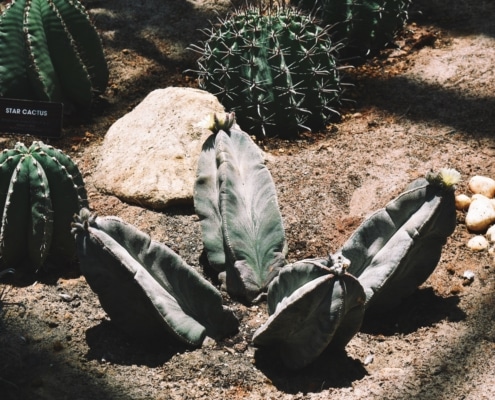
Cacti and succulents can look pretty similar to the casual observer, but they are somewhat different. Cacti are natural desert plants, built to handle harsh sunlight and an arid climate with low rainfall. Most succulents, on the other hand, originate from humid and tropical environments. As a result, they can dry out or burn when exposed to harsh sunlight for too long.
Cacti and succulents are more similar when it comes to watering, however, and you should avoid watering either during the cold season for several reasons. Cacti and succulents can go into a hibernation period in the coldest months, during which they absorb very little water from the soil. As a result, the unabsorbed water can leave the plant roots soggy and cause them to rot. Additionally, on the coldest nights of the year, temperatures may fall low enough to freeze water. If your cacti and succulents are overhydrated, water close to the surface of their skin can freeze, cracking and damaging the plant’s skin.
Conclusion
With the right soil preparation, irrigation system, and plant selection, gardeners can successfully grow vegetables, herbs, cacti, and flowering plants throughout the Las Vegas Valley. Not up for DIY? Our gardening services handle plant selection, soil prep, and seasonal transitions for Las Vegas properties.