
Wondering how to keep your lawn green in Las Vegas without wasting water? Desert heat, inconsistent watering habits, and compacted soil can quickly cause healthy grass to turn brown. The good news is that with the right lawn care practices, you can maintain a green, healthy lawn while using water more efficiently.
Key strategies include watering deeply and less frequently to encourage stronger root growth, mowing at the proper height for your grass type without removing more than one-third of the blade at a time, and regularly inspecting your irrigation system for leaks, broken sprinkler heads, or uneven coverage. These small adjustments can make a significant difference in keeping your lawn consistently green in a desert climate.
Why Grass Turn Brown
Many homeowners searching for how to keep their grass green are actually dealing with lawn that has already started to discolor. Understanding the root cause is the first step to restoring a healthy lawn. Common reasons grass turns brown include:
- Underwatering or inconsistent irrigation
- Overwatering, which suffocates roots and encourages disease
- Dull mower blades that tear rather than cut grass
- Soil compaction that restricts water and nutrient absorption
- Nutrient deficiencies, especially nitrogen
- Excessive heat stress during peak summer temperatures
- Irrigation system problems such as leaks or uneven coverage
- Pet damage and urine spots
Identifying the cause early can prevent long-term damage and help restore a consistent green color more quickly. If the damage is already widespread or the grass has died off in large patches, sod installation is often faster than trying to nurse a dying lawn back to health.
Tips on How to Keep Your Lawn Green
1. Mow Properly
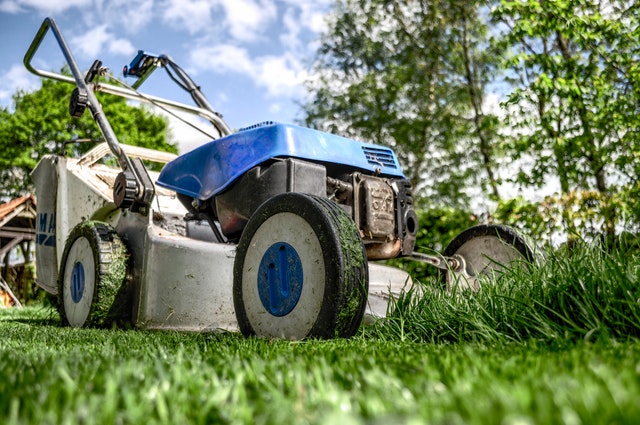
Grass that is cut too short will need more water. For most grass types if you are mowing once a week you should not cut more than 1.5-2 inches off at a time. Keep your mower blades sharp and switch up your mowing pattern for the best results. Here are tips on mowing your lawn:
- Mow Bermuda grass at 1–1.5 inches during the growing season (April–October). Cutting too short stresses the grass and forces it to draw more water.
Never remove more than one-third of the blade length in a single mow. For most Las Vegas lawns on a weekly schedule, that means removing no more than 1.5–2 inches at a time. - Mow in the early morning or evening, not midday. Cutting grass during peak heat (above 100°F) causes immediate moisture loss and can brown the tips.
Keep mower blades sharp. Dull blades tear the grass rather than cut it cleanly, leaving jagged edges that dry out faster and invite disease. - Switch up your mowing direction each week. Mowing the same pattern repeatedly compacts the soil and causes grass to lean in one direction, making it harder for water to reach the roots.
- Leave clippings on the lawn. Grass clippings decompose quickly and return nitrogen to the soil, reducing how much fertilizer you need.
In winter, if you’ve overseeded with ryegrass, raise your mowing height to 2–2.5 inches and reduce frequency, ryegrass grows slower in cooler months.
2. Fertilize
If you want good color and lush growth then fertilizing is a must, especially during the growing season. On the flip side of the coin, too much of a good thing can be bad. If you over-fertilize, your lawn will need more water and require mowing more often, so don’t overdo it. Your fertilizer should be equipped with directions right on the bag, but a few general rules of thumb apply:
- Apply approximately ½ lb of nitrogen per 1,000 square feet every month from April to September
- Stay away from nitrogen fertilizers at the end of the growing season
- Time-release fertilizers are worth the extra expense (they save you time and are more efficient)
- Fertilize early morning or late evening and water well right after
- For the late summer/fall use formulas with iron to increase the green color
3. Water Properly
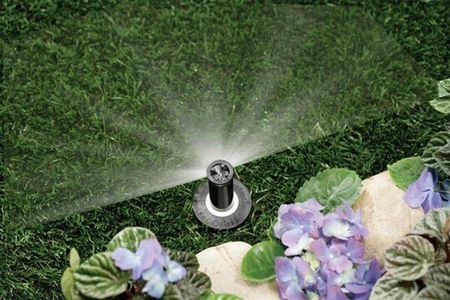
How and when you water is vital to saving water and increasing proper absorption. Watering in the early morning when temperatures are cooler or at night will improve efficiency by cutting down on water lost to evaporation. Most grass types should not be watered more than every three days. A few tips to maximizing water usage:
- Make sure your sprinklers are positioned so they don’t waste water spraying walkways, driveways or sidewalks.
- If one area needs more water, water it by hand instead of increasing the water on the entire area.
- Cut down water by a minimum of 30% in shady areas
- Check for signs you are under watering: Hard soil you can’t push a screwdriver through, soil that is warm to the touch after the sun has gone down
- Check for signs you are overwatering and need to cut back: soft, mushy soil or consistent water puddles
4. Aerate
Tough and compact soil will prevent water from being absorbed efficiently by the roots and cause water to run off or puddle, wasting it even more. By core aerating, which means plugs of earth are pulled out of the ground so water can seep deep into it, you will vastly improve root growth and maximize water efficiency. Spring is an ideal time to aerate when the grass is growing steadily. For best results, aerate after watering or rain so the ground is softer. A manual machine is sufficient for a small lawn. If you have a large lawn you may want to rent a mechanical machine.
5. Cut down lawn size
You can have your cake and eat it too, by decreasing the amount of your yard allotted to grass. Keep enough grass to enjoy and to give you the look you want but switch some of your grass for a rock and cacti garden or other desert plants and shrubs, cutting down on the high water usage a lawn requires. You don’t have to give up your lawn, but by cutting down the size just a bit you can save water, effort, and time.
Many people are unaware of the steps to properly care for their Las Vegas Valley lawn. But as the saying goes, “Knowing is half the battle.” Now all you have to do is implement the tips above and watch your lawn become healthier and more attractive. Our landscape professionals at Cacti Landscapes are happy to answer questions about how to improve your lawn and are available to help get your lawn in its best shape, and keep it that way, all year long.
6. Check Your Irrigation System Regularly
Even a well-maintained lawn can turn brown if the irrigation system is not functioning correctly. Regular inspection ensures consistent water coverage across the entire yard. Check for:
- Broken or leaking sprinkler heads
- Uneven spray patterns or dry spots
- Clogged or misaligned nozzles
- Overspray onto sidewalks, driveways, or streets
- Zones that are under- or over-watering
A properly functioning irrigation system is essential for maintaining a consistently green lawn.
7. Improve Soil Health
Healthy soil is the foundation of a green lawn. If the soil is compacted or lacking nutrients, grass will struggle regardless of watering or mowing practices. To improve soil health:
- Add organic matter when needed to improve structure
- Aerate the lawn annually to relieve compaction
- Address compacted areas that block water penetration
- Test soil quality if grass continues to decline despite proper care
Improved soil conditions help roots absorb water and nutrients more effectively, leading to stronger, greener grass.
FAQS
Why is my lawn turning brown even though I water it?
A brown lawn is not always caused by a lack of water. Common causes include irrigation system problems, compacted soil, dull mower blades, nutrient deficiencies, lawn disease, and improper watering schedules. Check for dry spots caused by poor sprinkler coverage and inspect the soil for signs of compaction. If the lawn is receiving adequate water but continues to discolor, a soil test or professional inspection may help identify the underlying issue.
How often should I water my lawn in Las Vegas?
Most established lawns in Las Vegas perform best when watered deeply every few days rather than receiving light daily watering. Deep watering encourages roots to grow farther into the soil, making the lawn more resilient during hot weather. The exact schedule will vary based on grass type, soil conditions, sun exposure, and seasonal temperatures. Watering during the early morning hours is generally the most efficient way to reduce evaporation and maximize absorption.
Does mowing height affect lawn color?
Yes. Mowing height plays a major role in lawn health and appearance. Grass that is cut too short loses moisture more quickly, becomes stressed during hot weather, and is more susceptible to discoloration. Maintaining the proper mowing height helps shade the soil, reduce water loss, and encourage stronger root development, all of which contribute to a greener lawn.
Can aeration help keep grass green?
Aeration is one of the most effective ways to improve lawn health and maintain green grass. Over time, soil can become compacted, making it difficult for water, oxygen, and nutrients to reach the roots. Core aeration removes small plugs of soil, improving water penetration, encouraging deeper root growth, and increasing nutrient absorption. For many Las Vegas lawns, annual aeration can significantly improve overall turf health and appearance.