Knowing how to choose artificial turf in Henderson is different from anywhere else. Henderson summers don’t just test turf, they expose every weakness in it. Surface temperatures regularly exceed 150°F, monsoon season pushes drainage systems to their limit, and UV exposure fades low-grade fibers within a single season. Henderson also has specific landscape restrictions that affect what you can install. Most generic buying guides skip all of that. This one doesn’t. Here’s exactly what holds up in the desert, from fiber quality and blade shape to backing systems and what installation actually costs in Henderson.
How to Choose Artificial Turf That Survives Henderson’s Climate
The type of fiber used affects how long it lasts. Premium artificial turf uses C6 or C8 polyethylene, higher carbon counts result in better shape retention, UV resistance, and recovery from foot traffic.
Most products use lower-grade C2 or C4 polyethylene, which flattens and fades more quickly. Polypropylene costs less but works only for low-traffic decorative areas, while nylon remains the most durable option for professional sports installations.
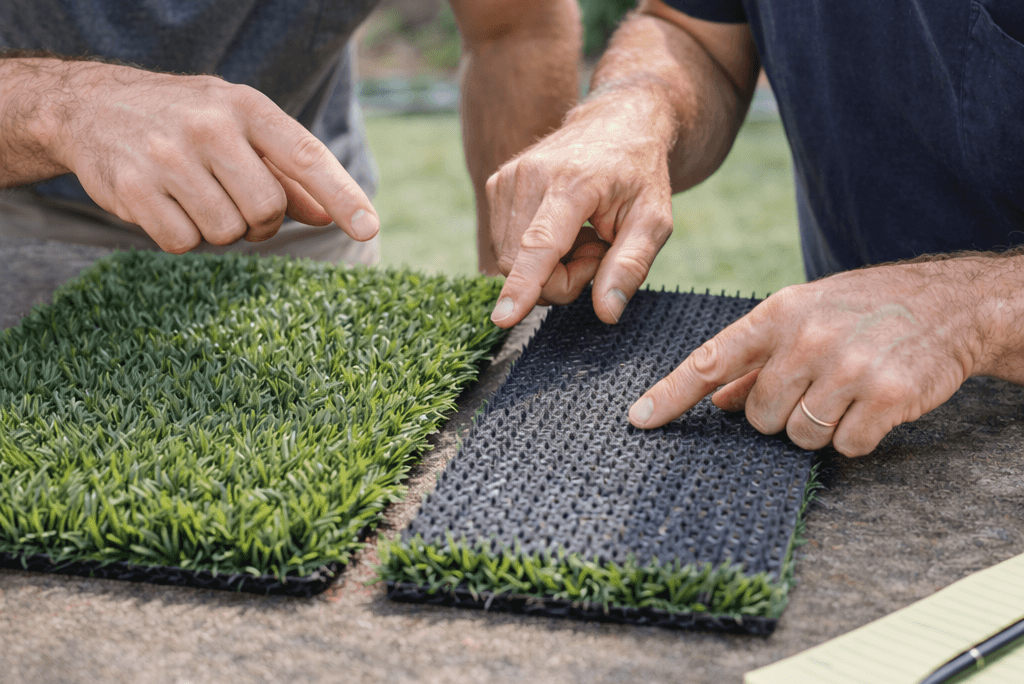
The blade shape affects how well the turf can handle pressure. When people walk on them, W- and C-shaped blades don’t melt down. Diamond and Omega shapes are soft but strong at the same time. S-shaped blades cut down on glare, making the grass look more real. High-end products often use a mix of shapes to get the best performance.
Backing systems control how well water drains and how long they last. Quality turf has two layers of backing: the main layer is polypropylene, and the second layer is polyurethane or latex. Polyurethane is better at holding tufts together and keeping moisture out. Face weight (50–80 oz/yd² for homes) shows how thick the blades are and how much area they cover.
Performance by Application
Landscape turf, for example, focuses on looking real, with a pile height of 1.5 to 1.75 inches and colors that blend together in different tones. In contrast, pet turf needs antimicrobial backing and drainage that can handle more than 800 inches of water per hour. Meanwhile, sports applications require longer piles (2 to 2.5 inches), special infill to absorb shock, and performance features that are specific to each sport.
Manufacturing Standards and Quality Control
UV stabilizers built into fiber keep colors from fading and breaking down. Quality manufacturers test their products to see if they meet ASTM standards for color retention and lead-free materials.
Blade retention depends on tuft bind strength, which is the polyurethane coating that holds fibers to the backing. Quality turf uses at least 20 oz/yd² of coating to prevent premature blade loss. A warranty of 10 to 15 years shows that the manufacturer is sure of their product, and some high-end items even come with a 25-year expected lifespan.
What Are the Common Types of Artificial Turf?
Understanding the different turf categories helps narrow your options quickly, since each type is engineered for specific conditions and use patterns.
Landscape Artificial Turf
Modern synthetic yard grass uses stem-style blade construction with multiple fiber types at different heights for visual depth. Multi-colored yarns create natural variation without paint that wears off. Thatch layers (shorter tan/brown fibers) add realism and blade support. For extreme heat areas, W-shaped blades reflect sunlight and stay 15–20 degrees cooler than flat designs making them the go-to choice for any Henderson landscaping project.
Pet and Play Turf
Flow-through backing systems can handle more liquid than regular perforated backing can. Instead of having separate drainage holes, non-perforated permeable backing lets liquids pass through the whole surface.
Antimicrobial backing with silver ion technology stops bacteria from growing, which causes smells that won’t go away. The C- and W-shaped blades are strong enough to stand up to active pets without getting crushed. They also have a higher face weight (70–80 oz/yd²), which keeps wear patterns from showing.
Sports and Athletic Turf
For football and soccer fields, athletic turf has a pile that is 2 to 2.5 inches high and is filled with rubber or sand-rubber to absorb shock. Putting greens need a pile that is 0.5 to 1 inch thick and sand that is made for putting greens so that the ball rolls exactly.
Dense construction (80+ oz/yd²) keeps balls from getting stuck between blades. FIFA, World Rugby, or sport-specific certifications are often required for professional installations.
How to Choose the Right Artificial Turf Installer
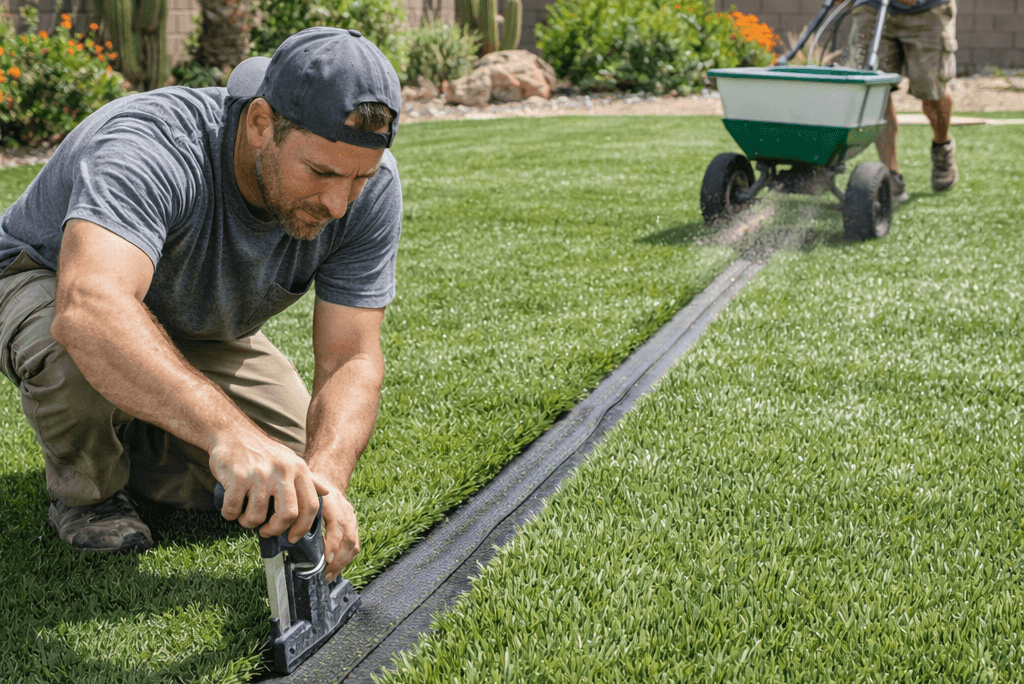
The type and brand of turf you choose only gets you halfway there. The landscaping service in Las Vegas includes proper base preparation that determines whether turf lasts 10 years or needs replacement in 5. Proper base preparation, correct drainage slope, and climate-specific product selection aren’t things a national brand can guarantee, they depend entirely on who’s installing it.
Cacti Landscapes specializes in desert-climate turf installations across Henderson and the Las Vegas Valley. That means climate-specific product recommendations, proper base prep for monsoon drainage, and UV-stabilized systems built for extreme heat. Contact us to find out which turf system actually makes sense for your yard.
Cost Considerations When Choosing Artificial Turf
Most people underestimate total project costs because they focus only on the turf price per square foot. Installation and site prep often exceed material costs, especially if drainage or base work is required.
What Impacts Artificial Turf Pricing
Material quality drives pricing. Higher-grade polyethylene (C6/C8 vs. C2) costs more but delivers better longevity. Polyurethane backing costs more than latex but provides superior durability.
Face weight directly correlates with material cost. Application determines specifications, residential landscape runs $5–$12 per square foot, pet turf with antimicrobial backing costs $7–$15, sports turf ranges $10–$20+ depending on certifications.
Brand premium reflects reputation and warranty coverage. Established manufacturers with proven longevity command higher prices than unknown brands.
Installation vs Material Costs
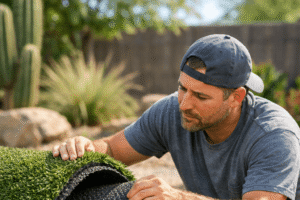
Professional installation typically costs $3–$8 per square foot beyond materials. This includes site preparation (3–4 inches compacted crushed rock), turf cutting/seaming, infill distribution, and grooming.
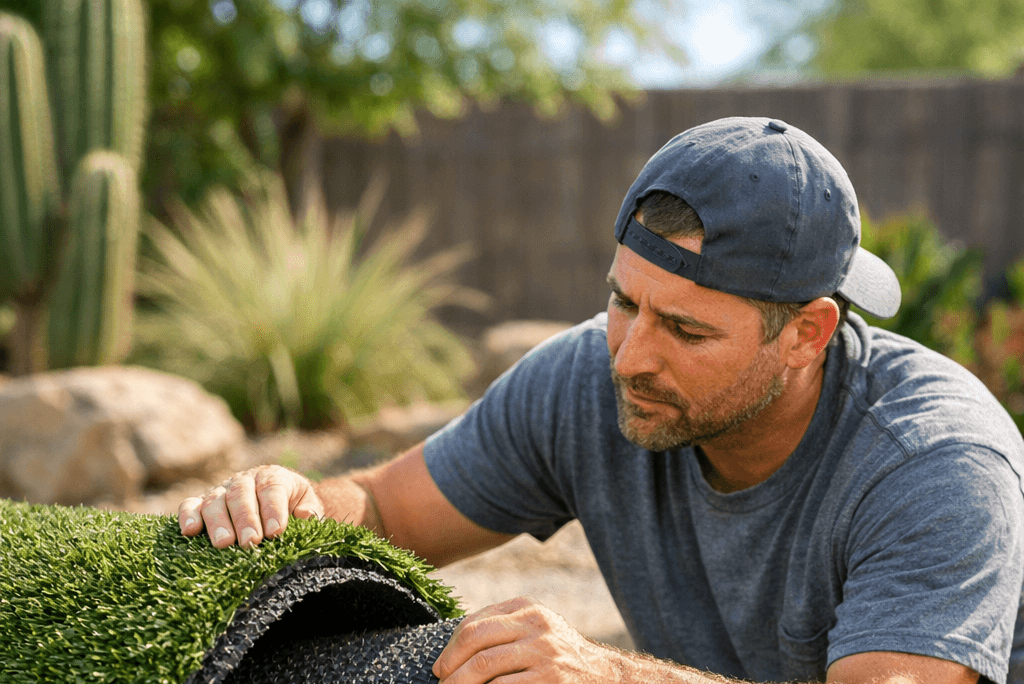
Proper base preparation is essential for drainage and stability. DIY saves labor but requires seaming tape, adhesive, cutting tools, and compaction equipment. Poor seaming creates visible lines and weak points.
For homeowners considering professional landscape design in Las Vegas, climate-specific installation requirements make expert work worthwhile. Desert heat amplifies installation mistakes, inadequate drainage shows during monsoons, poor base preparation causes settling in summer.
Final Thoughts
Choosing the best fake grass isn’t about finding perfection, it’s matching turf specifications to actual use and climate demands. Focus on fiber quality resisting UV degradation, backing systems engineered for your drainage needs, and appropriate blade construction. Premium materials cost more upfront but deliver better value across expected lifespan.