
Maintaining a lush, vibrant garden in the Mojave Desert often feels like fighting a losing battle against nature. Summer temperatures climb past 115°F, and even the hardiest biological plants can struggle. Your investment becomes a collection of brown, crispy foliage.
The faux greenery available today bears little resemblance to the cheap plastic decor of decades past. Advances in polymer chemistry and 3D molding now produce replicas engineered specifically for arid climates. If you are tired of dragging hoses and replacing dead shrubs every autumn, high-quality synthetic elements deserve a closer look.
Why Choose Faux Greenery for Desert Landscaping
Installing synthetic plants is more than an aesthetic choice. It’s a practical response to the extreme environment of the American Southwest. When your landscape’s beauty no longer depends on water consumption, you gain control over how the property looks year-round.
Water-Saving & Low Maintenance Benefits
In regions like Las Vegas, water conservation is legally enforced through restrictions on turf, water waste, and irrigation schedules. Commercial, multi-family, and HOA common areas face the strictest requirements.
Synthetic plants need no water at all, so your utility bills drop and fertilizers, pesticides, and weekend pruning sessions become relics of the past. The result is true low-maintenance landscaping that frees up your weekends.
UV & Weather Resistance for Harsh Sun
The primary enemy of any outdoor plants in the desert is ultraviolet (UV) radiation. Standard plastics will crack and fade within months under the desert sun. Commercial-grade fake landscaping plants rely on high-density polyethylene (HDPE) with UV stabilizers compounded into the polymer, not applied as a surface coating.
Because the protection runs through the entire leaf, the foliage withstands prolonged sun exposure without turning brittle. Products specifically marketed as UV-resistant plants will outperform generic outdoor decor.
Long-Lasting Appearance
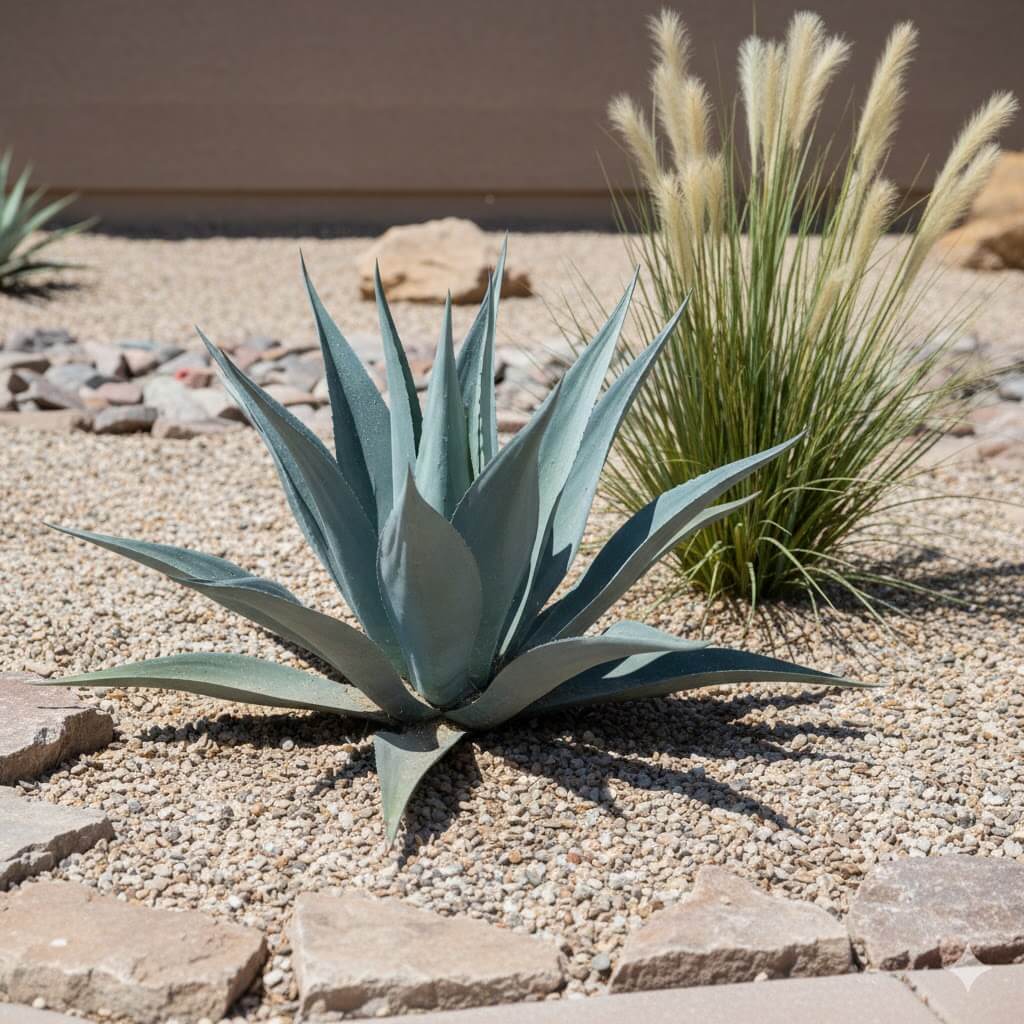
Real plants have life cycles: they bloom, shed, go dormant, and sometimes die unexpectedly. An artificial agave, by comparison, will maintain its vibrant appearance season after season. Color and structural integrity hold up regardless of drought conditions or heat waves. For homeowners who want polished curb appeal that does not fluctuate with the seasons, that consistency is invaluable.
How to Choose the Best Faux Greenery for Desert Landscapes
Quality varies wildly among synthetic plants. The market is flooded with cheap decor meant for indoor use, which will fail catastrophically outdoors. To protect your investment, you must know what to look for on the label and in the material itself.
Look for Outdoor-Rated Materials
When sourcing plants and materials, you must verify that the product is explicitly rated for outdoor use. Anything labeled “silk” or “fabric” is typically polyester that will fade, fray, and degrade quickly in the wind and sun.
Prioritize “Poly-blend” or “100% PE” (polyethylene) products. Polyethylene is hydrophobic, so it repels water and dust. It also handles heat well.
In direct sun, desert hardscapes can exceed 160°F: one Las Vegas surface-temperature study recorded readings up to 170°F. Quality polyethylene products with proper outdoor ratings maintain their shape under those conditions.
Consider Realism and Texture
The secret to fake plants that look real lies in the finish. Cheap manufacturing uses polished molds that leave a shiny, glossy surface. Real desert plants tend to have matte or waxy leaves, sometimes with a slightly fuzzy coating that reflects sunlight.
The best realistic faux plants replicate this with “soft-touch” matte finishes and varied color gradients. Imperfections sell the illusion: lighter green tips, slight browning at the base, color that shifts from one part of the leaf to another.
Size, Scale & Placement
One of the fastest ways to make faux plants look fake is placing a small, lightweight plant in a large, heavy planter. Scale matters. To prevent your faux outdoor plants from looking like temporary decorations, use the “pot-in-pot” installation method. Bury a nursery pot into the soil or decorative planter, then place your faux plant inside, securing it with expanding foam or heavy gravel. The extra weight keeps the plant from tipping over in high winds.
Placement Tips in Desert Yards
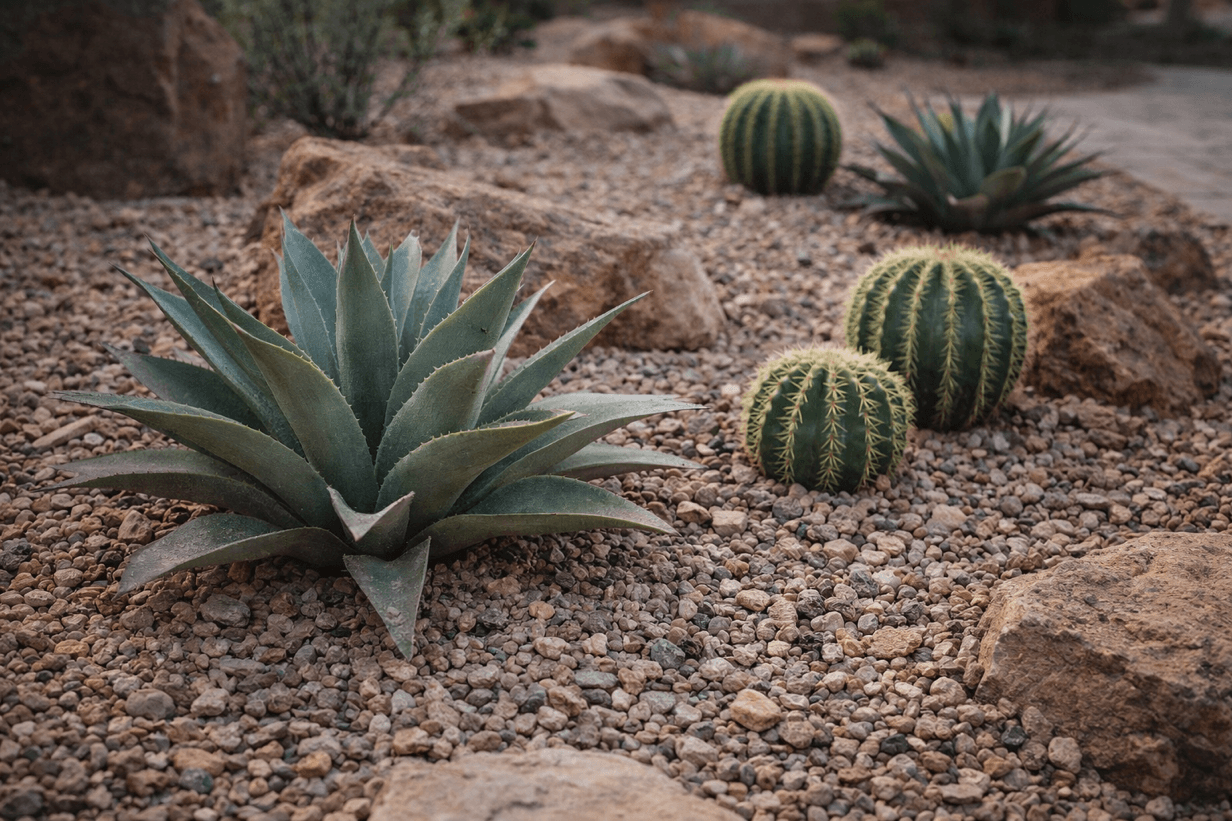
Strategic placement can fool the eye, so position your most realistic synthetic specimens in the background or hard-to-reach areas, such as high planter ledges or deep shade zones where real plants would struggle. In the foreground, where guests might touch or smell the foliage, mix in hardy living plants like golden barrel cacti. The combination tricks the brain into assuming the entire landscape is living.
Five Faux Greenery Types for Desert Landscaping
Selecting species that naturally belong in a desert biome is essential for a convincing design. A faux fern will always look out of place in a rock garden, while a synthetic succulent blends seamlessly with native landscaping. The right faux greenery choices will complement your existing hardscape and create a cohesive aesthetic.
Faux Cacti & Succulents
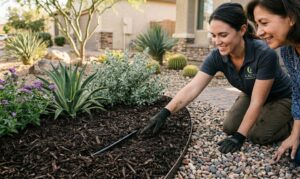
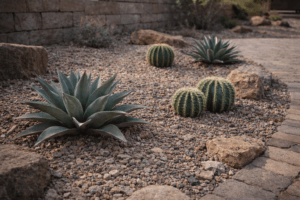
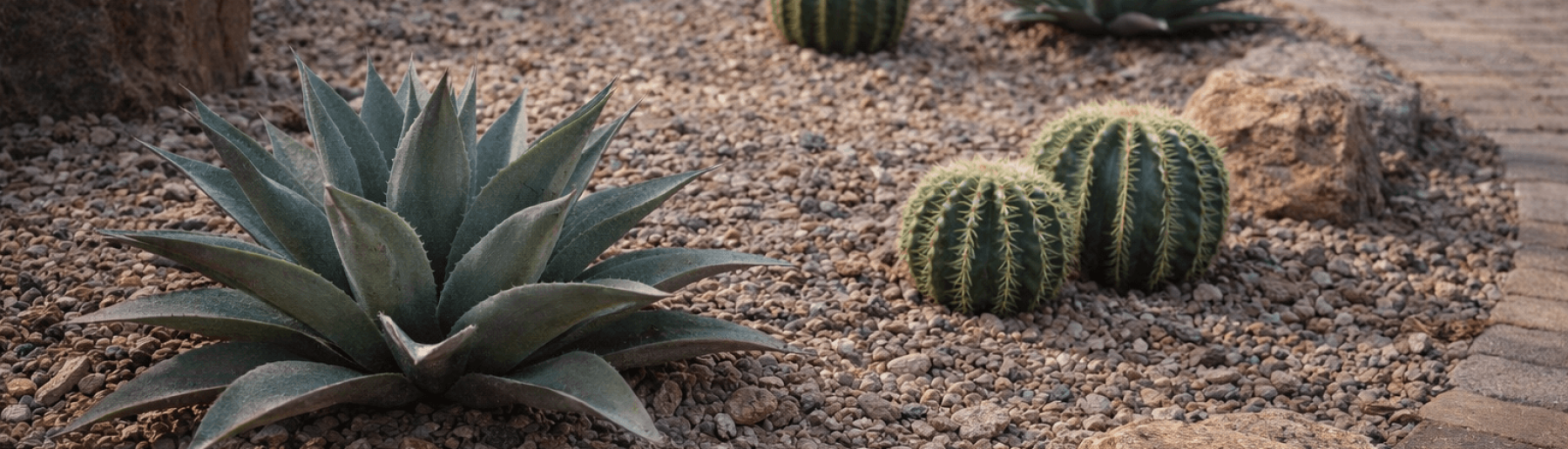
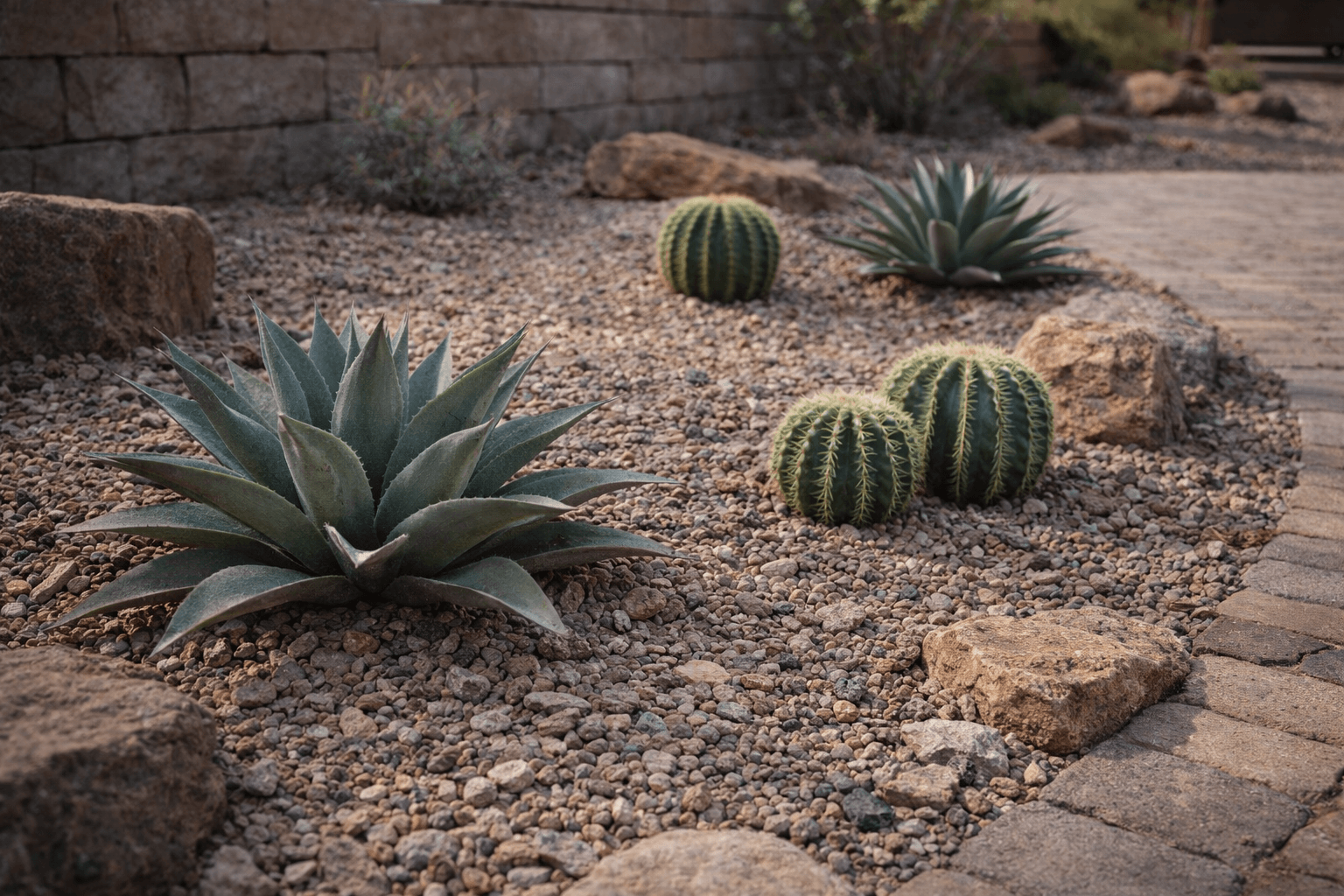
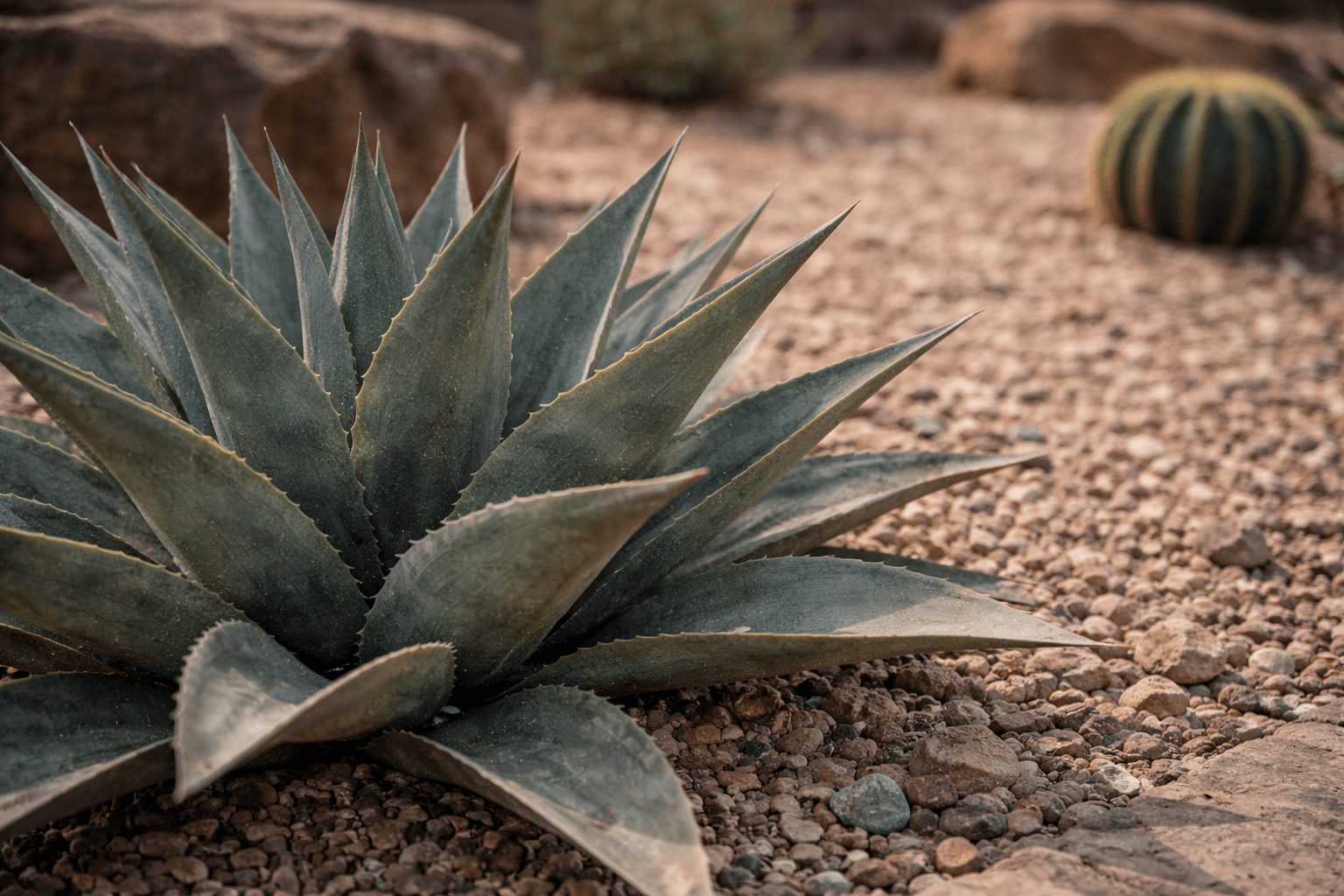
Succulents are the most convincing artificial greenery because their natural counterparts already look thick and waxy. High-quality faux agaves, aloes, and barrel cacti are often indistinguishable from the real thing, especially agaves with thick, rigid leaves that won’t droop in the heat. Planted in gravel beds, they act as stunning architectural focal points.
Artificial Desert-Style Grasses & Shrubs
Ornamental grasses add movement and soften the hard lines of stone and concrete. Varieties like black mondo grass or blue fescue are popular choices, though you should always check local invasive species lists before selecting ornamental grasses for your area.
If you are incorporating synthetic turf design into your yard, faux ornamental grasses in the bordering planter beds will create a cohesive, lush aesthetic and keep water demand low. In addition, different types of artificial grass offer ground cover options and help you match textures effectively.
Faux Trees & Large Foliage
For vertical impact, faux olive trees and palms are top contenders. Since trees are subject to significant wind load, ensure you choose models with heavy-duty steel cores and secure base plates. Olive trees with their silvery-green leaves fit perfectly with the desert landscaping aesthetic and give off a Mediterranean oasis feel. You also avoid the mess of dropping olives.
Faux Ground Covers & Moss
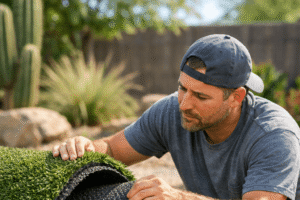
Faux sedum mats or “stonecrop” ground covers work well in place of water-thirsty lawn patches. You can cut the interlocking mats to fit around boulders and pavers, filling in gaps with greenery that never needs trimming. Bright green “sheet moss” does not grow naturally in the desert, so opt for grey-green or multi-tone succulents instead.
Faux Vines & Creeping Greenery
Vines are perfect for softening block walls or trellises. If you are searching for the best fake flowers for front-yard flowerbed borders or hanging baskets, faux bougainvillea makes an excellent choice. The real version thrives in Vegas but creates a massive mess of thorny debris. UV-infused faux versions give you that iconic pop of magenta or purple color and skip the cleanup entirely.
Common Mistakes to Avoid With Faux Landscaping
Even with the best materials, installation errors can ruin the illusion.
- UV damage: Cheap foliage often lacks proper UV stabilization. When UV rays break down the pigments and plastics, plants may fade dramatically, turn chalky, or shift to odd discolored hues. Always verify the UV warranty before purchasing.
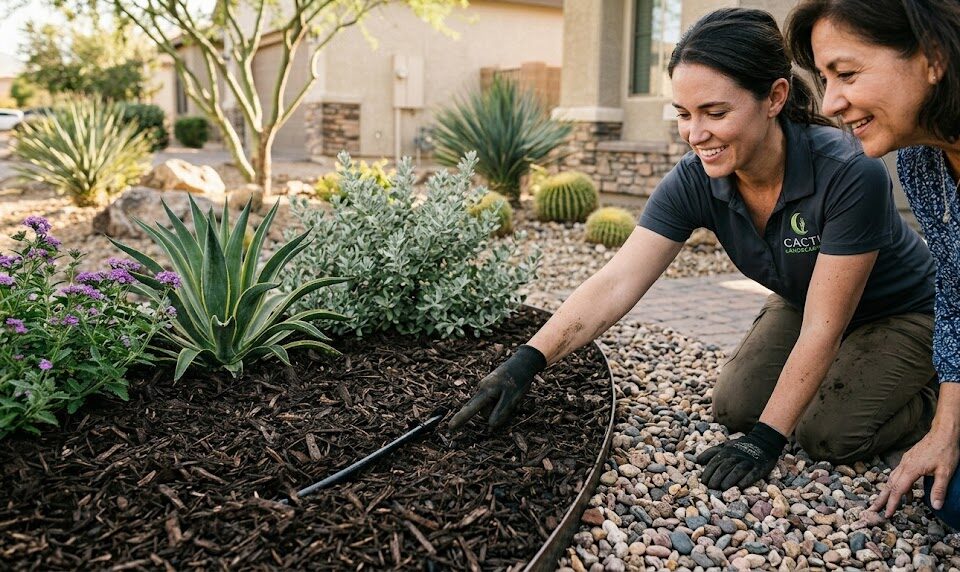
- Inadequate stability: Desert winds can easily blow away lightweight fake plants. Weigh down pots with heavy river rock or secure stems with zip-ties if using a trellis. If securing large faux trees or integrating them with irrigation-free zones feels overwhelming, a professional landscaping service in Las Vegas can help with installation and anchoring.
- Dust accumulation: Faux plants do not need water to survive, but they do need a rinse to look their best. Spray them down with a hose once a month to clear off the alkaline dust. Need help finding commercial-grade materials built for the Mojave sun? Contact us and we can point you in the right direction.
Avoid these pitfalls from the start, and your investment pays off season after season.
Final Thoughts
A well-designed faux greenery landscape lets you enjoy a lush desert garden year-round without the water bills or weekend maintenance. Stick with UV-stabilized materials, species that belong in a desert setting, and installations that can handle the wind. Get those details right, and your yard stays green and beautiful regardless of what the desert throws at it.