
Growing crops in dry climates takes water, which costs money. As a result, farmers have always looked for ways to stretch every gallon, and furrow irrigation became one of the earliest answers. Even today, thousands of years later, growers still rely on it because the method remains cheap and effective for the right conditions.
What Is Furrow Irrigation?
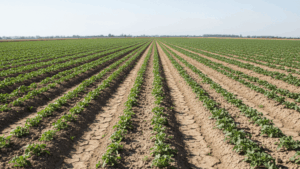
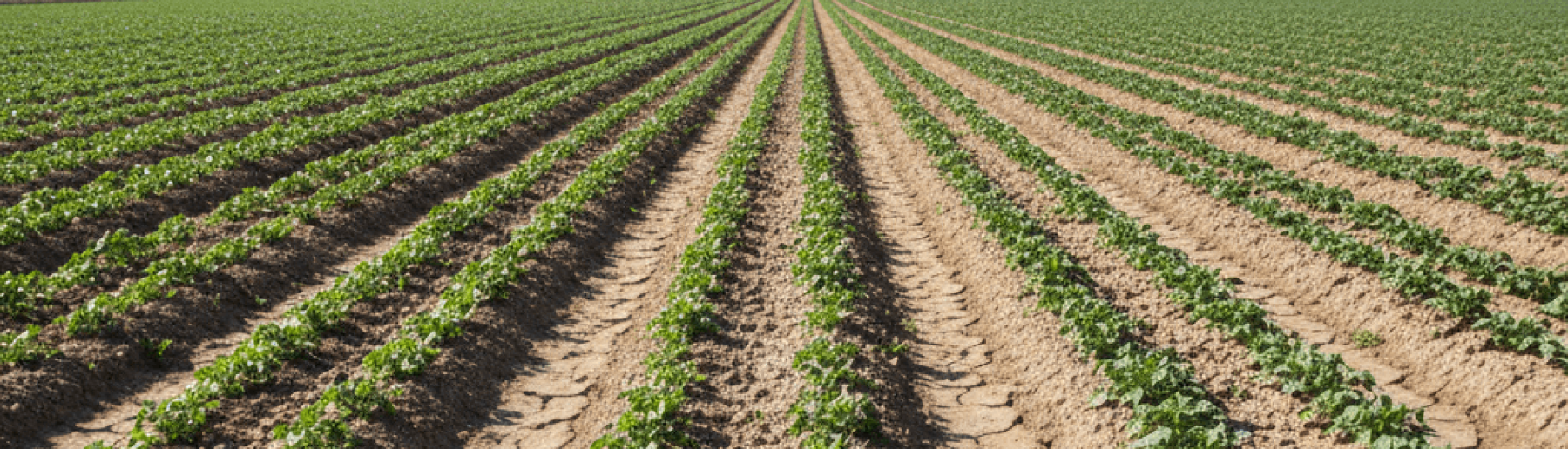
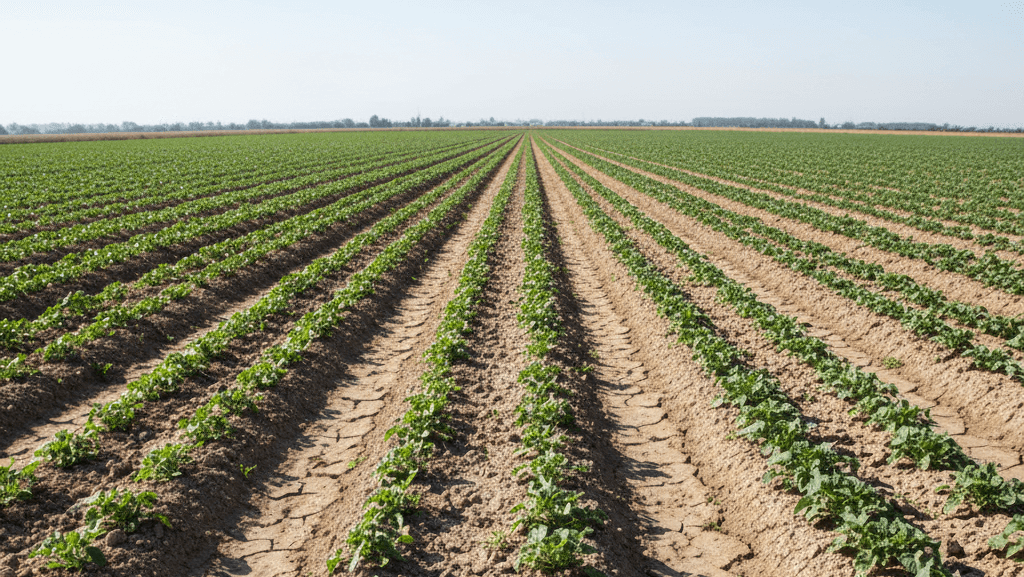
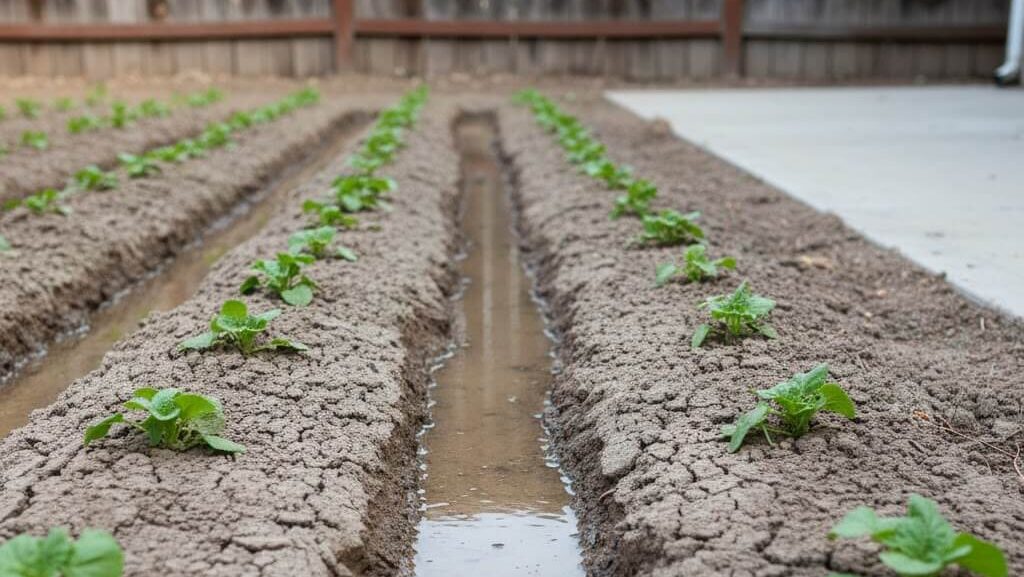
What is furrow irrigation in practice? Picture small channels dug between rows of plants, running down the length of a field like shallow ditches.
Water gets released at the top of a sloped field, and gravity pulls it downhill through the furrows. As the water moves along, it soaks into the soil from the sides and bottom of each channel. Consequently, this brings moisture to the roots of plants growing on the raised ridges between furrows.
Furrow Irrigation vs Flood Irrigation
Flood irrigation and furrow irrigation both use gravity, however, the water goes to different places.
With flood irrigation, water covers the entire field surface like a shallow pond. Rice grows well this way because it can sit in standing water without rotting. In contrast, with furrows, water stays inside the channels only. The irrigation surface stays much smaller, so less water evaporates. As a result, plants like tomatoes, peppers, and cotton stay healthier because water never sits around their stems.
How Does Furrow Irrigation Work?
Getting good results takes planning. How does furrow irrigation work? It starts with field prep and ends with water cutoff.
Field Preparation and Furrow Design
The first step is shaping the land. To do this, workers build raised ridges with channels running between them, typically 4–8 inches deep. Additionally, the field needs a gentle slope so gravity can move the water forward.
Soil type determines how furrows should be built. For example, sandy soils drain fast and need narrow furrows placed close together. Whereas, clay soils hold water longer and let it spread sideways, allowing wider spacing. That’s why any pro handling irrigation repair in Las Vegas checks soil type before designing a system.
Water Application Process
Water enters from the top end through pipes with gates, siphon tubes, or open ditches. Gravity does the work from there. The irrigation water flows downhill while soaking into the dirt along the way. Only the furrows get wet, which keeps plant leaves dry and helps prevent disease.
Water Advance and Cut-Off Timing
Knowing when to turn off the water is the trickiest part of any furrow system. Irrigation timing makes or breaks the results. If water stops too soon, the far end stays dry. If it runs too long, water pours off the field and gets wasted.
Experienced farmers watch how fast water moves and aim to shut off the supply just as it reaches the end.
Types of Furrow Irrigation Systems
Once you understand how water moves, the next step is choosing the right layout. Three main types exist, and each one fits different terrain.
Straight Furrow Irrigation
Straight furrows run in parallel lines down the slope. Most farmers prefer this setup because tractors and harvesters move through straight rows without trouble. Flat fields or gentle slopes work best for this approach.
Contour Furrow Irrigation
Some fields have uneven slopes or hills. Running straight furrows down these areas would cause erosion because water moves too fast. Contour furrows solve this by following the contours of the land. If your lot has uneven terrain, a landscaping service in Las Vegas can tell you whether contour furrows make sense.
Level Furrow Irrigation
Level furrows are almost completely flat with small walls at each end to hold water in place. This type needs careful land grading but gives even water distribution when done right.
Advantages of Furrow Irrigation
Farmers keep using this method for many reasons. Cost is the biggest advantage. Setting up furrows costs much less than drip irrigation or sprinklers. Running the system is cheap since gravity moves the water without electricity.
In addition, the equipment is simple to fix without special parts. Drip systems are fussier, and learning how to repair a drip irrigation system becomes part of the deal.
This approach also keeps water off leaves and stems. Many crops stay healthier when their tops remain dry because wet foliage invites fungal disease.
When Should You Use Furrow Irrigation?
Knowing what furrow irrigation is only gets you halfway. The bigger question is whether it fits your situation. It works well for row crops like corn, cotton, beans, and vegetables since these plants grow in lines that match how furrows are laid out. Fields with clay or loamy soil are good choices because water spreads sideways to reach plant roots.
On the other hand, this method struggles in sandy soils where water drains straight down before spreading to plants. Properties that can’t afford to lose water should look at a smart irrigation system instead. It also demands regular attention, which makes it tough for anyone running short on labor. To discuss options for your property, contact us for guidance.
Furrow Irrigation vs Modern Irrigation Methods
Even when furrows fit your situation, it helps to know how they compare to newer alternatives. Older irrigation systems like furrows lose more water than newer ones. Water loss happens through evaporation and runoff at the field edges.
Drip systems run water through small tubes right to each plant’s roots, so very little gets lost along the way. Sprinklers throw water across fields and can work on timers without much oversight. Neither wastes as much as a basic furrow setup.
However, newer isn’t always better for everyone. Drip systems cost a lot to install and need regular maintenance. Sprinklers require pumps and electricity. A basic furrow system irrigation setup costs a fraction of these alternatives, which explains why so many farmers stick with it. Properties going through updates might explore modern landscape design that balances different watering methods.
Some farmers improve their furrow systems instead of replacing them. Surge irrigation, which pulses water on and off, helps water travel farther before soaking in. Catching runoff and pumping it back to the top also cuts waste.
Final Thoughts
Furrow irrigation has stuck around for thousands of years because it works without much fuss. Essentially, gravity and shaped earth do most of the job. Although the method wastes more water than modern alternatives, for farmers growing row crops on clay or loamy soil, it remains a solid choice that doesn’t break the bank.