
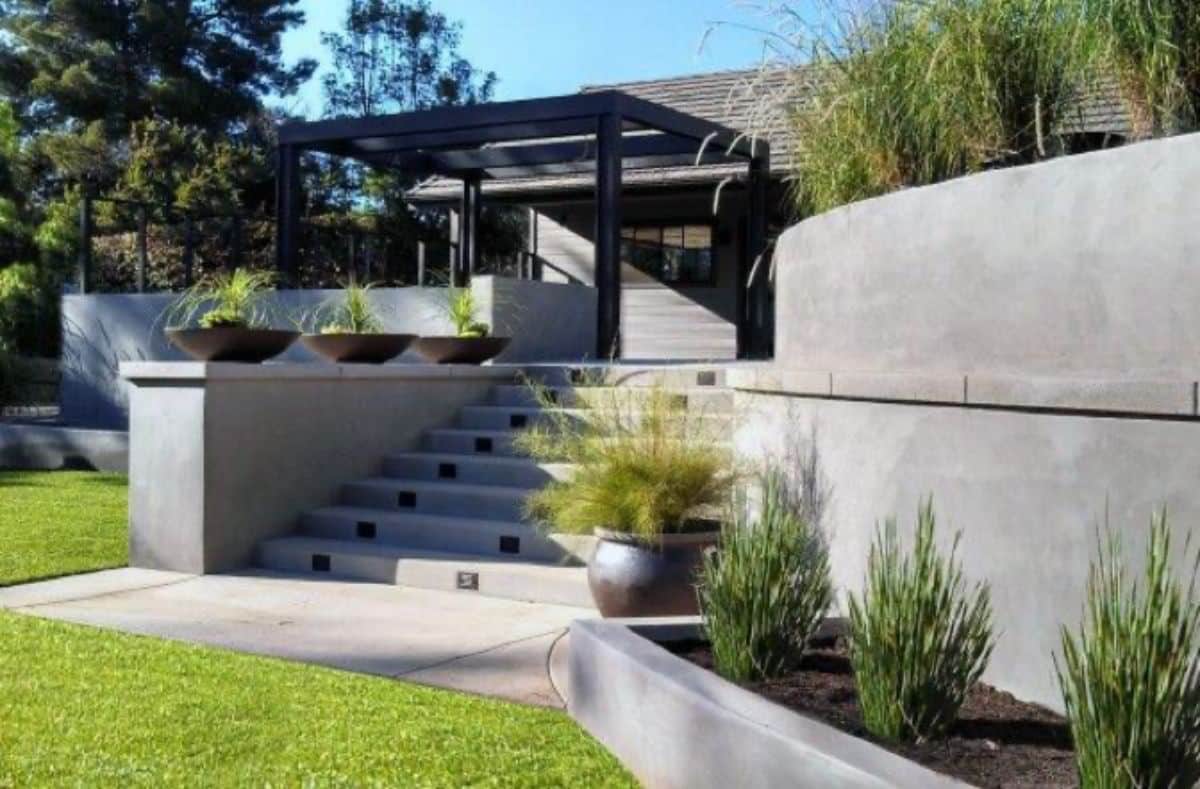
A retaining wall turns a sloped or uneven yard into usable space, and it’s one of the more valuable additions you can make to a Las Vegas or Henderson property with elevation changes. Beyond the practical function, a well-landscaped retaining wall adds real visual interest to a yard that would otherwise just be a slope.
Where to Install a Retaining Wall
Sloped areas are the most common spot for a retaining wall, since plants generally establish better and look more intentional on level ground than on an incline. Retaining walls also make sense near stairs or anywhere elevation changes across a yard, without one, those transition areas often end up as dead space with little room for plants or use. With a wall in place, both the upper and lower levels become usable, which matters in a yard where every square foot counts.
Benefits of a Retaining Wall
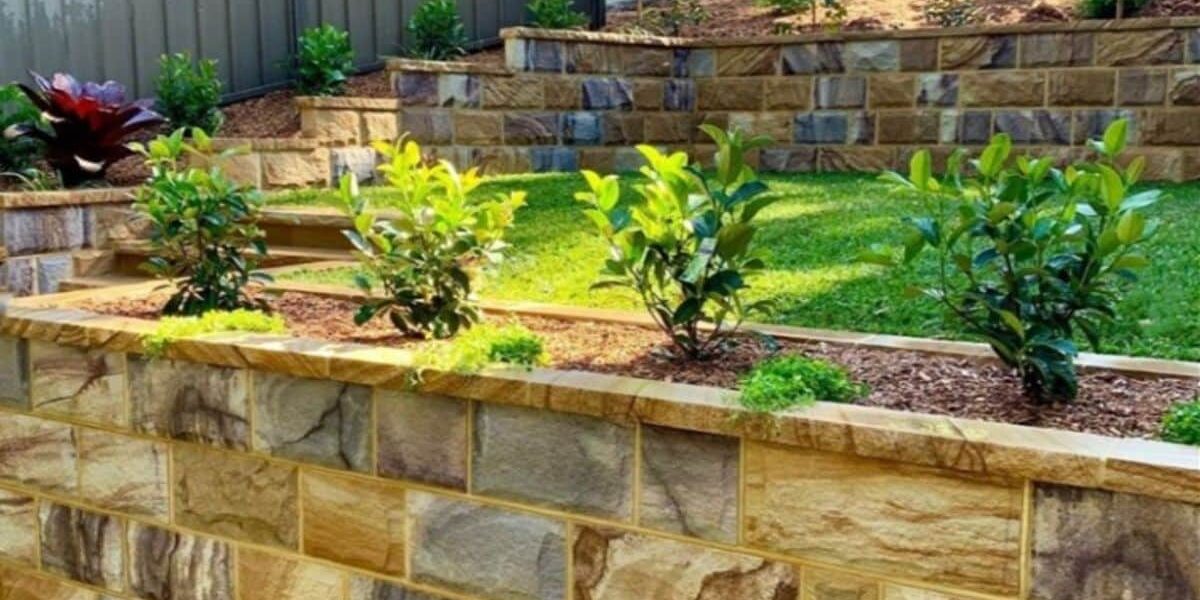
The most common reason homeowners install a retaining wall is erosion control. Sloped soil erodes over time, especially with the seasonal downpours Las Vegas does get despite its dry climate overall, and a retaining wall holds that soil in place.
Beyond erosion control, a retaining wall adds real structural support and creates usable land that wasn’t there before, extra space for a garden bed, a patio, or seating for entertaining. That expanded usable space, combined with a more finished-looking yard, is also one of the more straightforward ways to add to a home’s resale value.
Materials to Choose From
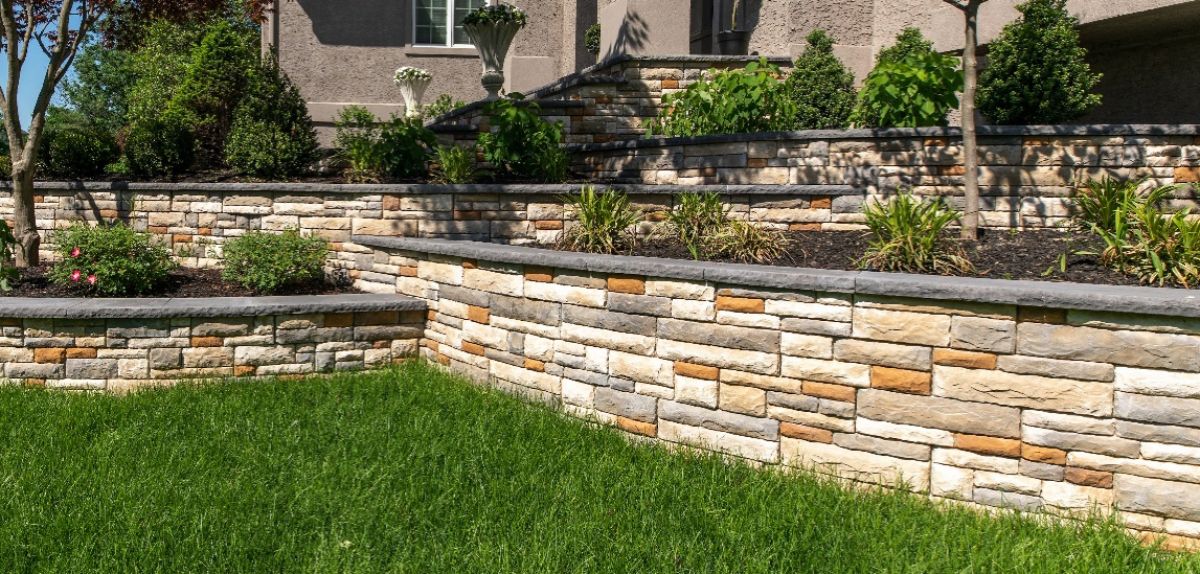
Retaining walls are commonly built from wood, brick, concrete block, or natural stone, each with different cost, durability, and appearance tradeoffs. Natural stone and rock or boulder materials tend to blend most naturally into a desert landscape design, while concrete block offers a lower-cost, highly durable option for larger walls.
Creative Ways to Use a Retaining Wall Beyond Plants
A retaining wall doesn’t have to just hold back soil. Terraced tiers turn a single steep slope into multiple flat planting levels, giving you more usable growing space than a flat yard of the same square footage would. A low retaining wall can also frame a small water feature, holding a pond or fountain basin in place while doubling as a design element. If there’s a mature tree near a slope, a mini retaining wall around its base protects the root zone from erosion without cutting into the root system itself. And landscape lighting along the top or base of a wall turns a purely functional structure into a nighttime feature, uplighting stone texture reads completely differently after dark than it does in daylight.
Best Plants for Landscaping a Retaining Wall
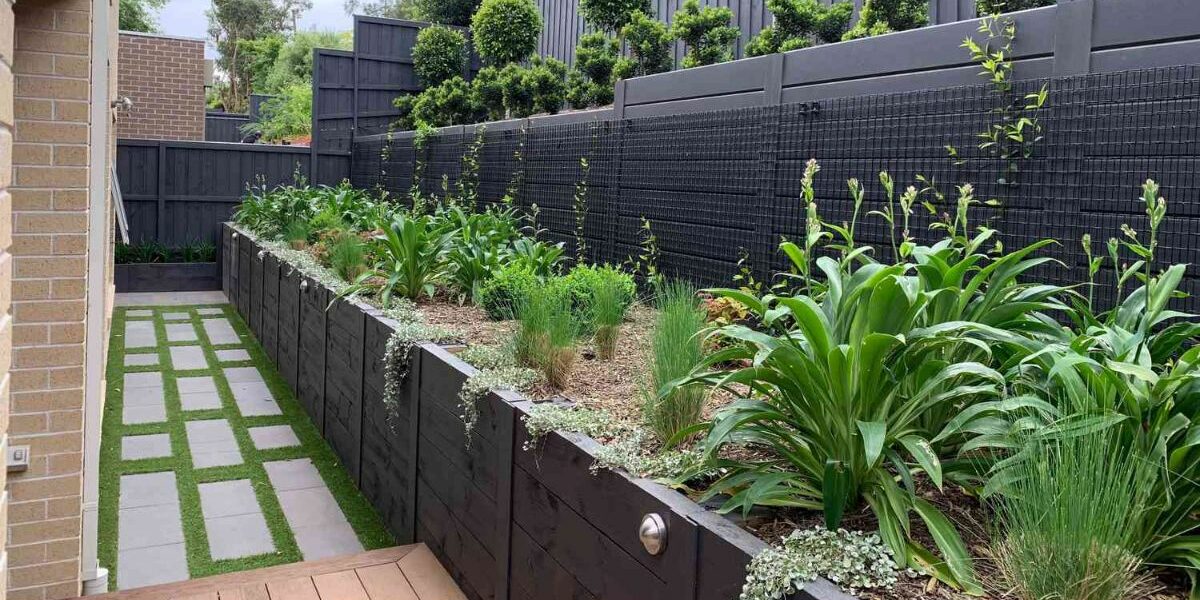
The right plants for a retaining wall need to handle full Las Vegas sun and ideally spread or trail to soften the wall’s hard edge. Ground cover and trailing plants are generally the best fit for this. Reliable options include:
- Creeping rosemary
- Lantana
- Germander
- Jasmine
- Myoporum
- Trailing verbena
- Sedum (in partial shade areas of the wall)
All of these hold up well through Las Vegas’s four seasons and need relatively little water once established. Ongoing plant care keeps them looking full and healthy year-round rather than patchy after the first summer.
Low-Water Care for Retaining Wall Plants
Plants along a retaining wall often dry out faster than plants in open ground, since water tends to run off a slope before it soaks in. A drip irrigation system solves this by delivering water slowly and directly to the root zone instead of relying on overhead spray that runs downhill. If you already have irrigation in place near a retaining wall and aren’t sure it’s covering the area well, Cacti Landscape’s irrigation evaluation checks coverage before plants start showing stress. A layer of mulch around the base of wall plantings also helps hold onto whatever water does reach the soil.
FAQs
Where should a retaining wall be installed in a Las Vegas yard?
Sloped areas and spots near stairs or other elevation changes are the best candidates, since these are the areas where plants otherwise struggle to establish or where usable space is lost to the incline.
What plants work best around a retaining wall in the desert?
Low-growing ground covers and trailing plants like creeping rosemary, lantana, jasmine, and trailing verbena handle Las Vegas heat well and soften the look of the wall without heavy water needs.
What materials are retaining walls typically made from?
Wood, brick, concrete block, and natural stone are all common choices, with natural stone and rock generally blending best into a desert-style yard.
Do retaining wall plants need special watering?
Often yes. Water tends to run off a slope before soaking in, so drip irrigation aimed directly at the root zone works better than overhead spray for plants along a wall.
Can a retaining wall be used for anything besides holding back soil?
Yes. Terraced walls create multiple planting levels, a low wall can frame a small water feature, and lighting along a wall adds a nighttime design element beyond its structural purpose.