
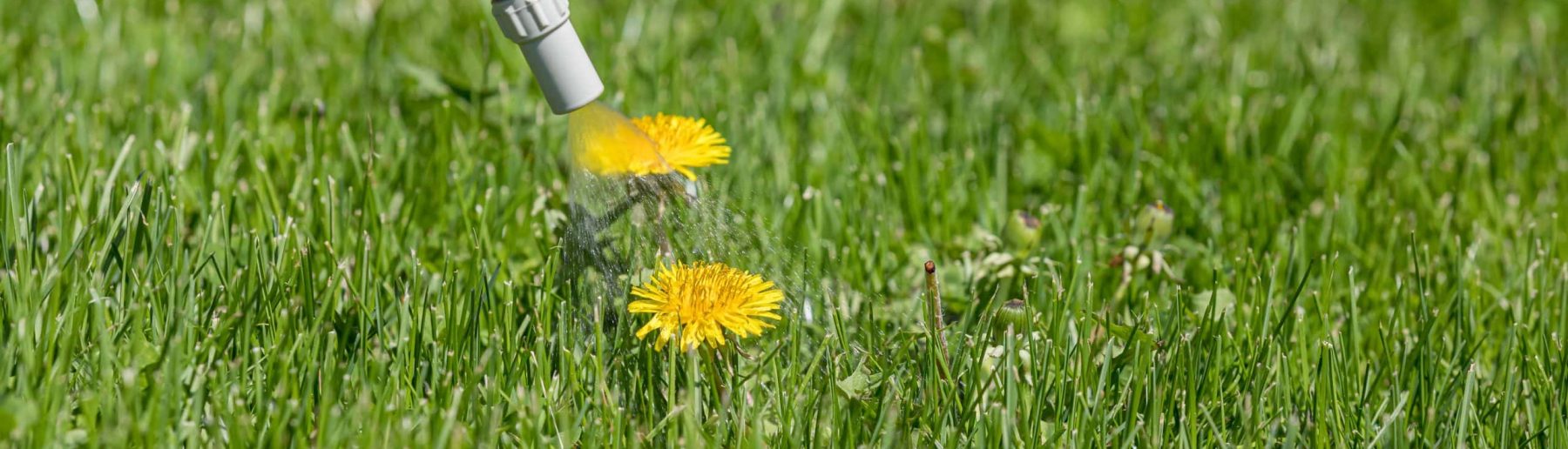
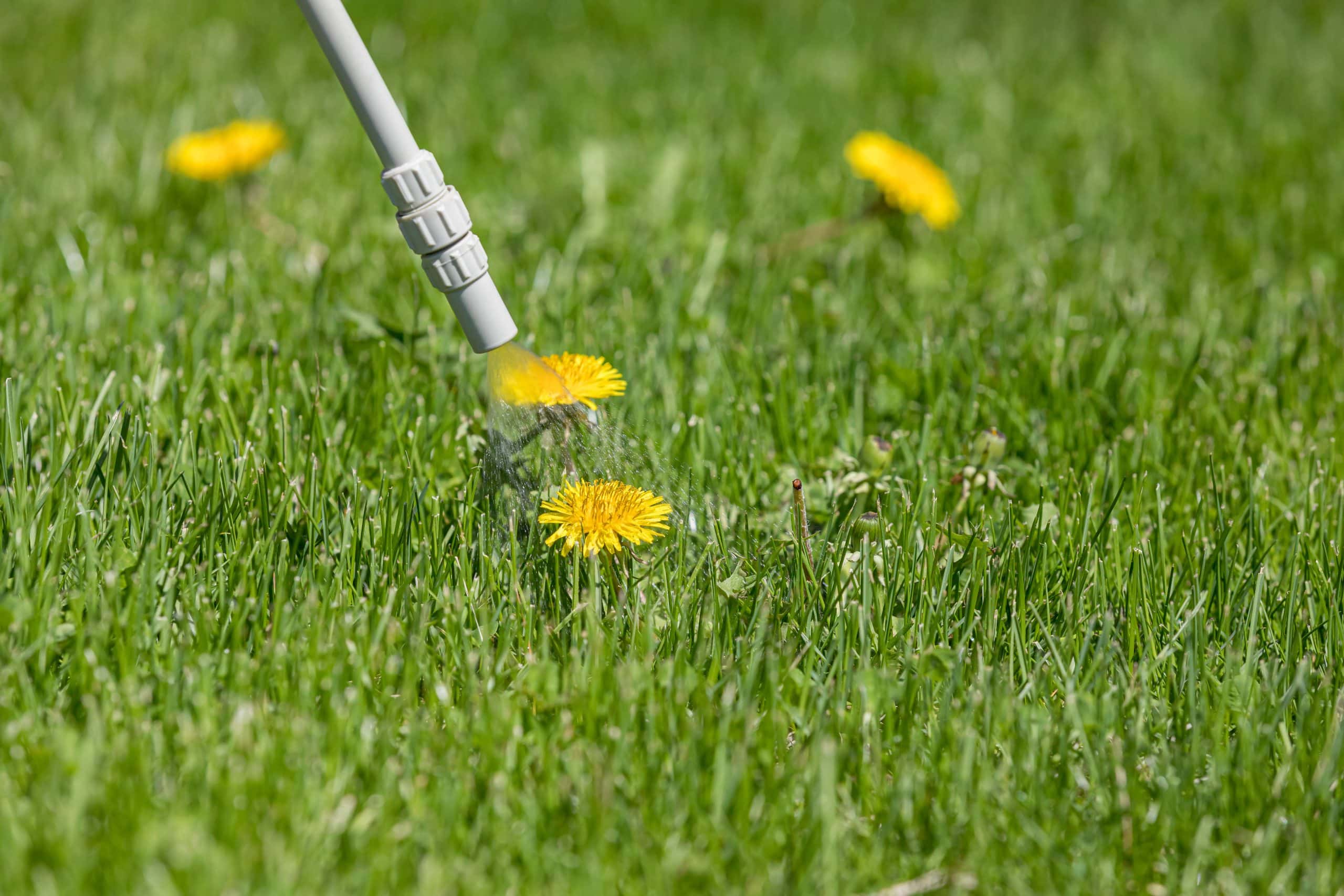
Weeds compete with your lawn and landscape plants for water, nutrients, and space, and they can take over a yard fast once they take hold. Herbicides are one of the most effective tools for controlling them, whether you’re dealing with a few stray weeds or a widespread problem across your yard.
Las Vegas gets very little rainfall, but that doesn’t make yards immune to weeds. Irrigated lawns, garden beds, and even drip-irrigated desert landscaping create exactly the moisture weeds need to germinate and spread. In practice, this means Las Vegas weed control often has less to do with rain and more to do with where your yard is watered and how often. This guide covers what herbicides are, the different types, and how they’re used to keep desert yards weed-free.
What Is an Herbicide?
An herbicide is a chemical substance used to control or eliminate unwanted plants, most commonly weeds, by disrupting their growth processes. Herbicides work by interfering with a plant’s ability to photosynthesize, divide cells, or absorb nutrients, which ultimately kills the plant or stops it from spreading further. It’s worth understanding how herbicides differ from pesticides since the two are often used interchangeably but target different problems.
Herbicides are used far beyond home lawns. They’re a core tool in agriculture, forestry, and land management, and locally they’re used just as often in residential yards, HOA common areas, and commercial landscaping to keep weeds from competing with desired plants and grass.
Types of Herbicides
Herbicides are generally classified in two ways: by what they target and by when they’re applied. Understanding both helps explain why a Las Vegas weed control service might use more than one type in a single treatment.
Selective vs. Non-Selective Herbicides
Selective herbicides are formulated to target specific types of plants while leaving others unharmed. This is the type most often used on lawns, since it can kill broadleaf weeds like dandelions without damaging the surrounding turf.
Non-selective herbicides kill or damage any plant they come into contact with, weeds and desired plants alike. These are typically used in areas without desired vegetation nearby, such as driveway cracks, gravel beds, fence lines, or the perimeter of rock landscaping common in xeriscape yards.
Systemic vs. Contact Herbicides
Systemic herbicides are absorbed through the leaves or roots and move throughout the entire plant, including the root system. This makes them effective against perennial weeds that would otherwise regrow from surviving roots.
Contact herbicides only affect the parts of the plant they directly touch. They tend to work faster but often require repeat applications, since anything not directly sprayed, like a protected root system, can survive and regrow.
Pre-Emergent vs. Post-Emergent Herbicides
Beyond selectivity and mode of action, herbicides are also classified by timing.
Pre-emergent herbicides are applied before weed seeds germinate. They create a barrier in the soil that prevents seedlings from establishing, which makes them a proactive option rather than a reactive one. Because they work before weeds are visible, timing matters: applying too late, after weeds have already sprouted, significantly reduces their effectiveness.
Post-emergent herbicides are applied after weeds have already emerged and are visibly growing. They’re the right choice when pre-emergent treatment was missed or when new weeds show up mid-season. The tradeoff is more cleanup, since dead weeds still need to be removed after treatment.
Many Las Vegas weed control programs combine both: a pre-emergent application to prevent the bulk of seasonal weed growth, followed by post-emergent spot treatment for anything that gets through.
Herbicide Use in Las Vegas Yards
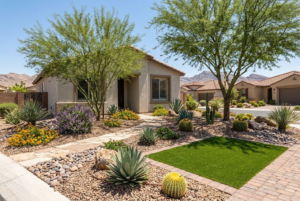
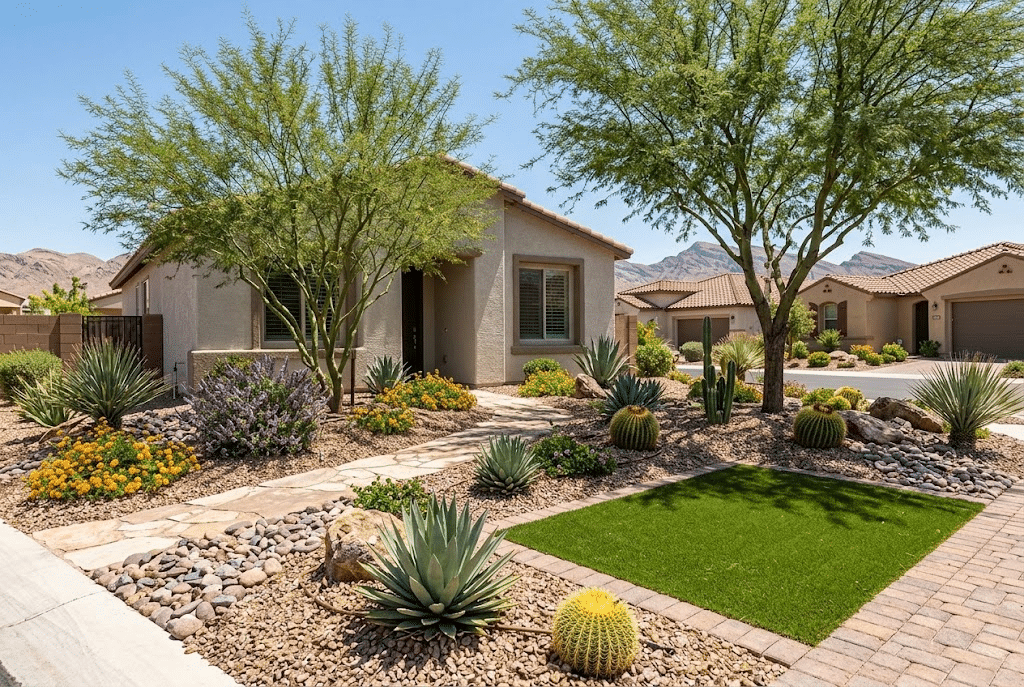
Desert landscaping doesn’t eliminate weed pressure, it just changes where weeds show up. Common problem spots in Las Vegas yards include gaps in rock and gravel beds, along drip irrigation lines where moisture concentrates, and in turf areas that get regular watering. Bermuda grass, spurge, and puncturevine are among the more persistent weeds seen locally, and each responds differently to selective versus non-selective treatment.
For yards with a mix of turf, garden beds, and rock landscaping, a one-size-fits-all herbicide approach usually doesn’t work well. Rock and xeriscape areas can typically handle non-selective treatment, while lawns and planting beds need a selective product to avoid damaging what you want to keep.
Advantages of Herbicides
Herbicides offer several real advantages over manual weed removal, especially for larger yards or established weed problems.
They save time. Hand-pulling weeds across an entire yard is labor-intensive and needs to be repeated constantly. A properly timed herbicide application handles the same area in a fraction of the time.
They protect the health of desired plants. Weeds compete with grass and landscape plants for water and nutrients, and left unchecked, they can crowd out and weaken the plants you actually want. Controlling weeds early protects the health of your lawn and landscaping.
They work quickly and consistently. Both pre-emergent and post-emergent herbicides are effective regardless of the weed’s growth stage, and unlike manual removal, they treat an entire area evenly rather than missing patches.
Herbicide Safety Basics
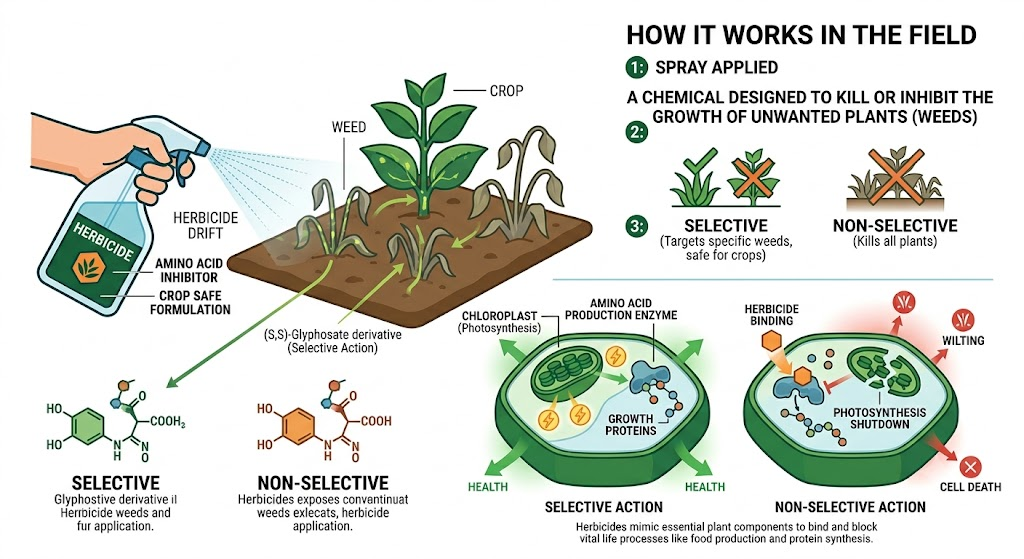
Herbicides are effective, but they’re still chemical products and should be handled carefully.
- Always read and follow the product label, including application rate and timing.
- Wear appropriate protective equipment, such as gloves, when handling concentrated products.
- Store herbicides securely, away from children, pets, and food.
- Avoid application on windy days to prevent drift onto desired plants or neighboring properties.
- Dispose of empty containers according to local regulations.
If you’d rather not handle herbicide selection and application yourself, a professional weed control service will match the right product to your yard’s specific weed problem and apply it safely.
When to Call a Professional
Matching the right herbicide type, whether selective or non-selective, systemic or contact, pre-emergent or post-emergent, to the specific weeds and layout of your yard takes some know-how. Using the wrong type in the wrong area can damage the plants you’re trying to protect or fail to control the weeds you’re trying to eliminate.
Cacti Landscape provides professional weed control for homes throughout Las Vegas and Henderson. We’re a licensed Nevada landscaper (License #84942), and our team knows which weeds are common in local yards and how to treat them without harming your lawn, garden beds, or desert landscaping. Call (702) 370-5000 to schedule a visit, or visit our weed control page to see the full scope of what we offer.
FAQs
How often should herbicides be applied to a Las Vegas yard?
Most yards benefit from a pre-emergent application roughly every six months, timed ahead of the seasons when weeds are most likely to germinate, with post-emergent spot treatment as needed in between.
Can herbicides harm my grass or desert plants?
Non-selective herbicides can, since they affect any plant they contact. Selective herbicides are formulated to target weeds while leaving turf and many desired plants unharmed, which is why choosing the right type for the area matters.
Is professional weed control worth it over DIY products?
For small, isolated weed patches, DIY spot treatment can work. For yards with a mix of turf, garden beds, and rock landscaping, a professional can apply the right product to each zone and avoid the trial-and-error that often comes with store-bought products.