

Landscaping with fruit trees makes perfect sense, whether in Nevada or elsewhere. Knowing fruit trees that grow in Las Vegas can be a challenge. It is notoriously tough to get the right landscaping design and find things that grow properly in this climate. Peaches, figs, pomegranates, citrus, and certain apple varieties all grow successfully in the Las Vegas Valley, whereas others will not. The key is matching the tree to the climate, setting it up correctly from planting, and staying on top of irrigation. Skip any one of those and you’ll get a tree that limps along and eventually dies.
In this guide, we look at fruit trees that grow in Las Vegas as well as some top tips for using them in your own garden. Landscaping with fruit trees is a way to create fresh and beautiful garden, even in areas where growing other plants and trees can provide a real challenge.
Best Fruit Trees for Las Vegas
Naturally, the first step is choosing fruit trees that grow in Las Vegas and Nevada to ensure you aren’t setting out on the wrong path from the very outset. Vegas can be unforgiving and you need to pick fruit trees to suit. You aren’t too restricted, though, as long as you pick the right types of trees.
The most important filter when choosing fruit trees for Las Vegas is chill hours the number of hours per winter when temperatures sit between 32°F and 45°F. Most deciduous fruit trees need a minimum number of chill hours each year to break dormancy and produce fruit. Las Vegas averages 600–800 chill hours annually depending on neighborhood elevation. Plant a high-chill variety and you may get leaves and growth, but you won’t get fruit.
Here’s what works:
Peach Trees
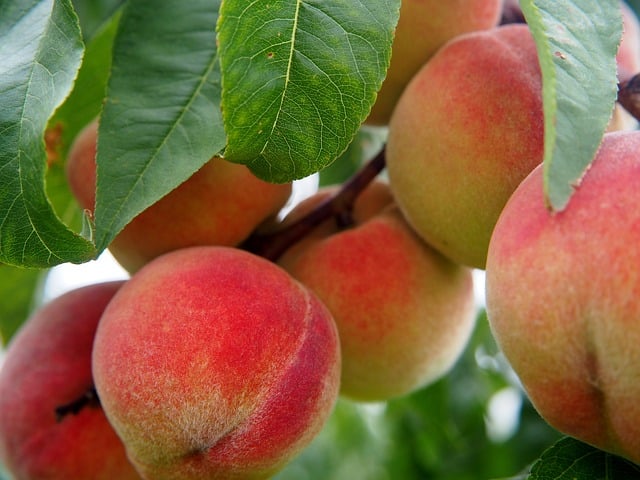
Peach trees are among the most successful fruit trees in the Las Vegas Valley. Low-chill varieties like Desert Gold (250–300 hours), Bonanza (250 hours), and Flordaprince (150 hours) all perform reliably. A healthy peach tree in Las Vegas can produce fruit within 2–3 years of planting.
Apricot Trees
Apricot trees also adapt well to Nevada’s climate and handle alkaline soils better than many other stone fruits. Varieties like Blenheim/Royal (400–500 chill hours) and Katy (around 300 hours) are commonly grown in the region. While they bloom early and may occasionally be affected by late winter temperature drops, frost damage is rare in most parts of the Las Vegas Valley.
Fig Trees
Fig trees are one of the easiest and most dependable fruit trees for Las Vegas. They require no chill hours, tolerate drought once established, and produce heavily with minimal maintenance. Popular varieties include Brown Turkey and Black Mission. For homeowners looking for a low-maintenance, high-yield option, figs are an excellent choice.
Pomegranate Trees
Pomegranates are exceptionally well-suited to the Mojave Desert. They thrive in heat, require little water once established, and perform well in alkaline soils. In addition to their fruit production, they also offer strong ornamental value, especially in fall when they produce vibrant, colorful fruit.
Citrus Trees
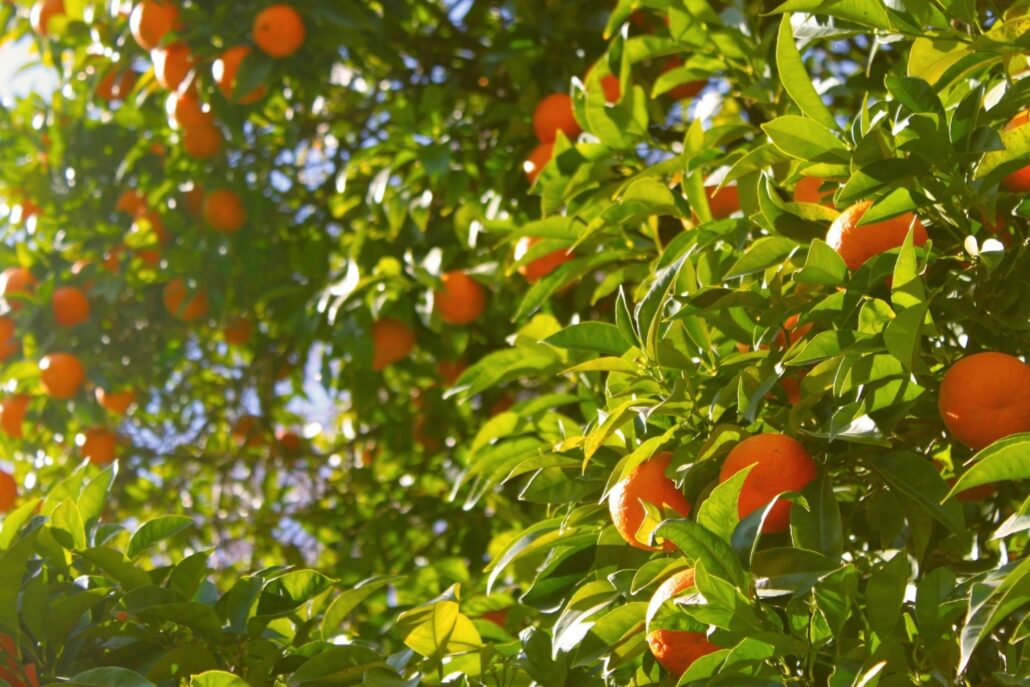
Citrus trees such as lemons, oranges, and grapefruit grow successfully in USDA Zone 9b. Varieties like Valencia and Navel oranges, Eureka lemons, and Rio Red grapefruit produce reliably in Las Vegas when properly maintained. While they may need protection during rare cold snaps below 28°F, they generally perform well with consistent drip irrigation, which is already common in desert landscapes.
Low-Chill Apple Varieties
Low-chill apple varieties such as Golden Dorsett (around 100 chill hours) and Anna (200–300 chill hours) can grow successfully in Las Vegas, but they require cross-pollination, so at least two compatible varieties should be planted to ensure fruit production. In contrast, standard apple varieties like Fuji, Gala, and Honeycrisp, which require 800–1,000+ chill hours, are not well-suited to the Las Vegas climate and typically will not produce reliable fruit.
Avoid high-chill stone fruits standard cherries and most pear varieties. They’ll leaf out but they won’t produce in the Las Vegas Valley. If you plan to work with a landscaping company, make sure they know the needs in the area and let them advise you on choosing the right types of trees.
How to Landscape with Fruit Trees in Las Vegas
Fruit trees are more than just food producers. They also act as important structural elements in a landscape. When used correctly, they provide shade, seasonal color, and vertical interest that gravel and desert plants alone cannot offer.
The main challenge in Las Vegas is balance. Your landscape needs to be both water-efficient and heat-tolerant, while still supporting fruit production.
Use Fruit Trees as Shade Anchors
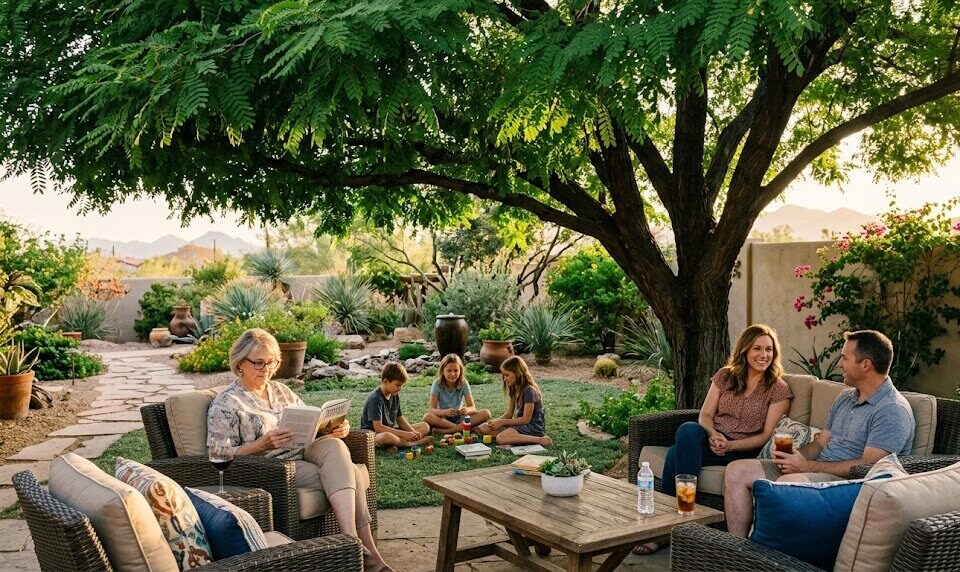
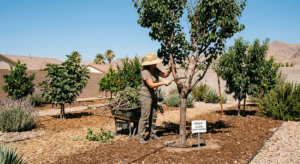
Fruit trees can be placed to provide real relief from the desert sun. A mature fig or peach tree near a patio can noticeably reduce afternoon temperatures.
The best placement is on the west side of your home or outdoor living space. This helps block the strongest sun between 3–6pm during summer.
Pair With Drought-Tolerant Groundcover
Avoid turf grass under fruit trees. It competes for water and creates stress for both systems. Instead, use decomposed granite, gravel, or drought-tolerant plants like lantana or desert marigold. Fruit trees perform better in a clean, well-drained drip irrigation zone. For more detailed guidance on planting and design considerations, see our guide on landscaping around trees.
Plant in Clusters When Space Allows
Grouping fruit trees together creates a small orchard effect. This makes irrigation easier and improves harvesting and maintenance. It can also help with pollination for certain apple varieties that need a partner tree.
Consider Espalier for Small Spaces
Espalier is a great option for tight yards. Trees are trained to grow flat along walls or fences. This saves space and works especially well in Las Vegas where walls also provide heat reflection in winter. It does require regular pruning, but it keeps trees compact and productive.
Keep Fruit Trees in a Separate Irrigation Zone
Do not mix fruit trees with xeriscape plantings. Their water needs are very different. Fruit trees need consistent drip irrigation, while desert plants require much less.
Keeping them in separate zones prevents overwatering or underwatering issues.
Best Time to Plant Fruit Trees in Nevada
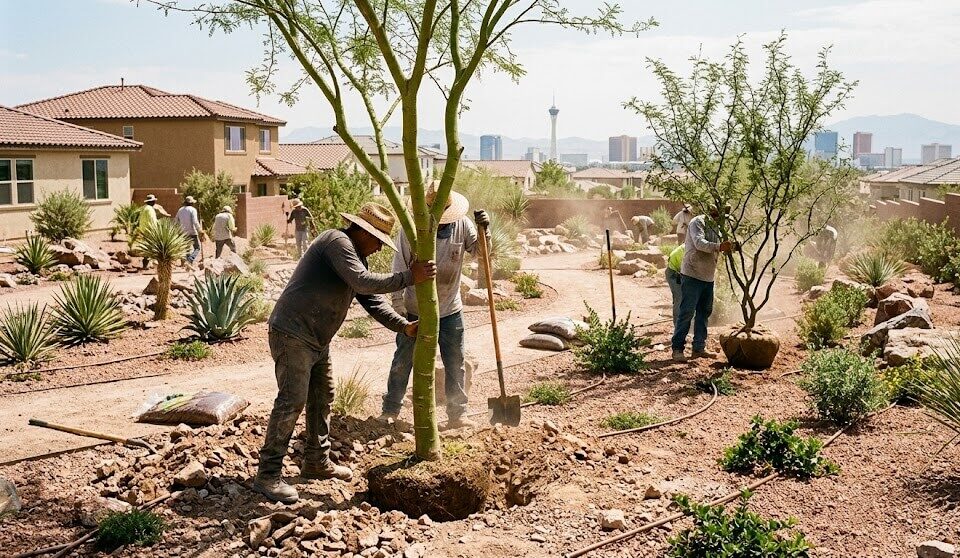
Timing matters more in Las Vegas than in most climates because the intense summer heat can be extremely stressful for newly planted trees with undeveloped root systems. For bare-root trees, the best time to plant is January through February, while the tree is still dormant and temperatures are mild. During this period, transplant shock is reduced, and the tree has several months to establish strong roots before the extreme summer heat arrives.
For container-grown trees, planting can typically be done in March, or again in the October to November window once temperatures begin to cool. These periods offer more stable conditions that support healthy root development.
On the other hand, it’s best to avoid planting during the peak summer months, especially from May through September. A newly planted tree placed in the ground during a Las Vegas summer (particularly in July) will struggle, as it must cope with heat stress before its roots are properly established in the soil.
How to Plant Fruit Trees in Las Vegas (Spacing, Sun & Soil)
One of the keys to planting trees is to give them adequate space and plenty of access to sunlight. However, irrigation solutions in Las Vegas are just as important. This is an area where rainfall is at a premium, and where it is vital to give trees and plants a little help by providing the right forms of irrigation.
Landscaping with fruit trees doesn’t always work in Las Vegas if you have disregarded the needs of the specific tree species. You should spend some time considering these species and make a point of reading up on the trees you have chosen to plant.
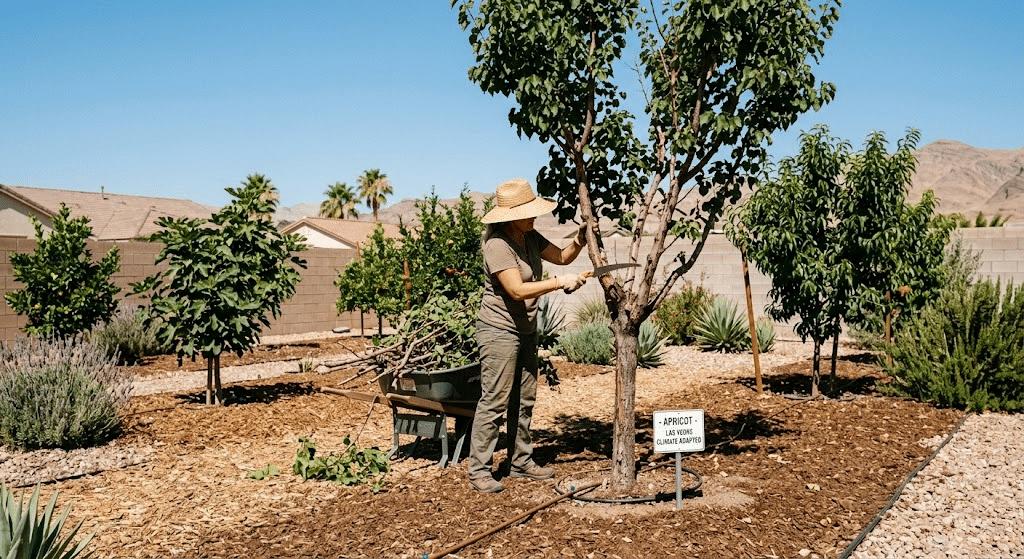
When and How to Prune Fruit Trees in the Mojave Desert
Pruning is an important part of maintaining healthy fruit trees in Las Vegas, and it should be done at the right time to avoid stressing the tree. For most deciduous fruit trees, the best window is late January through early February, after the coldest winter temperatures but before new buds begin to open. This helps prevent frost damage while supporting healthy spring growth.
Citrus trees require a lighter approach. Heavy pruning should be avoided in winter, with only light shaping done in early spring once frost risk has passed. In the Mojave Desert, pruning helps keep trees open and well-ventilated, which is especially important during extreme summer heat when dense canopies can trap heat and increase stress.
Common Problems With Fruit Trees in Las Vegas (and How to Fix Them)
The threats to fruit trees can vary depending upon the type of tree. Some will be endangered if the temperature drops at all. Here are the common problems with fruit trees:
Heat stress. Symptoms include scorched leaf edges, premature fruit drop, and wilting despite irrigation. Prevention is more effective than treatment, proper irrigation scheduling, mulching, and heat-tolerant variety selection is your best defense. New trees benefit from temporary shade cloth through their first Las Vegas summer.
Iron chlorosis. Yellow leaves with green veins are almost always a soil pH problem. Treat with chelated iron spray for quick results and address the root cause with sulfur amendments over time.
Pests. Aphids, scale insects, and spider mites are the most common fruit tree pests in Las Vegas. Bees and wasps will arrive when fruit ripens that’s unavoidable, but prompt harvesting reduces the attractant. For persistent insect pressure, Cacti Landscape’s preventative plant care service includes scheduled treatments timed to Las Vegas pest cycles.
Root rot from drainage failure. Almost always caused by undetected caliche or compacted clay. If a tree that seemed healthy starts declining rapidly after heavy irrigation, poor drainage is the likely culprit. Fixing it requires breaking through the hardpan layer and regrading if necessary.
Bark sunburn. The Las Vegas sun can scorch bark on young trees, particularly on south- and west-facing sides of the trunk. Tree wrap or whitewash through the first two summers prevents this.
Neglect. The most common cause of fruit tree failure in Las Vegas. These trees need regular attention through the growing season, not just when something looks wrong. If you’re not confident managing care through a Las Vegas summer, a landscape maintenance plan ensures consistent attention through the high-stress months.
Using fruit trees for landscaping is a wonderful way to get some produce from your garden as well as keeping it looking great!
FAQs
What fruit trees grow in Nevada?
The most reliable fruit trees in Nevada’s Las Vegas Valley include peaches (low-chill varieties like Desert Gold), figs (Brown Turkey, Black Mission), pomegranates (Wonderful, Granada), citrus (Valencia orange, Eureka lemon, Rio Red grapefruit), and apricots. Low-chill apple varieties such as Golden Dorsett and Anna can also grow successfully. The key factor is chill hours Las Vegas typically receives around 600–800 hours annually, so trees requiring more than that may not produce fruit reliably.
Can you do landscaping with fruit trees in the desert?
Yes, and it performs better than many people expect. Once established, figs and pomegranates are highly drought-tolerant. Peaches and citrus also do well in Zone 9b when supported with a proper drip irrigation system. The most important factors are correct soil preparation, choosing the right varieties, and keeping fruit trees in a dedicated irrigation zone.
What is the easiest fruit tree to grow in Las Vegas?
Fig trees are the easiest. They require no chill hours, tolerate extreme heat, and produce reliably with minimal maintenance. Pomegranates are a close second due to their drought tolerance and adaptability to desert soils.
What fruit trees grow fast in Nevada?
Figs and pomegranates establish quickly in desert conditions. Peach trees also grow at a fast rate in Zone 9b and can begin producing fruit within 2–3 years under proper care.
When should I plant fruit trees in Las Vegas?
Bare-root trees should be planted in January or February while dormant. Container-grown trees do best when planted in March or in the fall (October to November). Avoid planting during summer, as extreme heat can place severe stress on newly established root systems.
Do I need to water fruit trees differently in Nevada?
The hot, dry climate causes trees to lose moisture quickly, especially in summer. Most fruit trees require deep watering two to three times per week during peak heat. Irrigation schedules should also follow local water restrictions, so drip systems need to be adjusted seasonally.