Palm trees define the Las Vegas yard, but growing one here bears little resemblance to Florida or Southern California. You are dealing with alkaline soil, a rock-hard caliche layer underground, summer heat above 115°F, and SNWA watering rules that control when and how much you can irrigate.
Get the species right, prep the soil correctly, and plant at the right time of year. Do those three things and your palm will establish within one growing season. Skip any of them and you will spend years nursing a struggling tree.
Here’s what Las Vegas and Henderson homeowners need to know before they plant a palm tree
Best Palm Trees for Las Vegas Yards
Not every palm at the nursery will survive in Southern Nevada. Zone 9b conditions eliminate most tropical varieties before you even get started. The five species below are proven performers in the Las Vegas Valley.
| Species | Mature Height | Cold Hardy | Water Needs | Best For |
|---|---|---|---|---|
| Mexican Fan Palm | 70-100 ft | 20°F | Low | Large lots, fast height |
| California Fan Palm | 40-60 ft | 15°F | Low | Native-adapted, shade |
| Canary Island Date Palm | 50-60 ft | 18°F | Moderate | Statement planting |
| Mediterranean Dwarf Palm | 12-15 ft | 5°F | Very low | Small yards, HOA lots |
| Windmill Palm | 10-15 ft | 10°F | Low | Courtyards, tight spaces |
Mexican Fan Palm
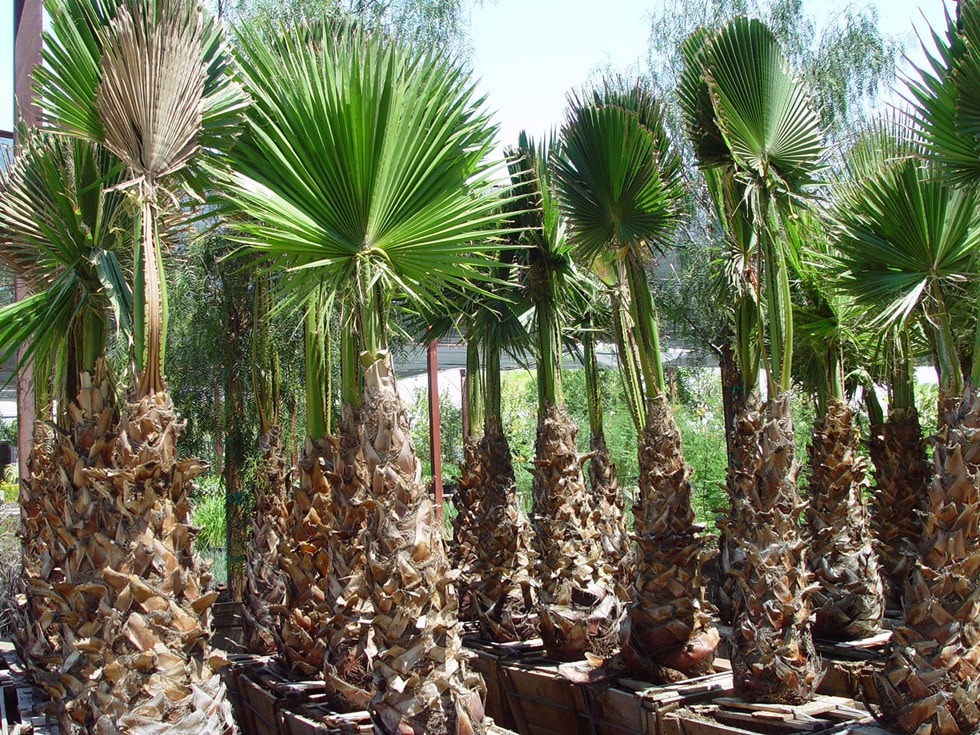
This is the tall, slender palm lining streets and commercial strips across the valley. It grows up to 5 feet per year and handles drought and alkaline soil without much fuss. Once established, it is one of the lowest-maintenance palms you can plant in Las Vegas.
One thing worth knowing before you buy: this species produces a persistent skirt of dead fronds that clings to the trunk rather than dropping cleanly. Left untrimmed, that skirt becomes a fire hazard and a nesting spot for pigeons and rodents, so budget for annual trimming once the tree gains height. It’s best suited to large lots and back property lines, where the eventual 100-foot height is an asset rather than a problem.
California Fan Palm
This is the most climate-appropriate palm on the list. It is native to desert oases across the Mojave and Sonoran Desert, which means it evolved for exactly the conditions your Las Vegas yard presents.
It handles alkaline soil, caliche drainage disruptions, and monsoon flooding better than any imported tropical species. Additionally, it grows slower than the Mexican Fan, tops out at 40 to 60 feet, and produces a broader canopy that provides real shade, being the best all-around choice for most Las Vegas homeowners.
Canary Island Date Palm
A thick, sculptural trunk, arching fronds up to 12 feet long, and a canopy that can spread 20 to 25 feet across make this the resort-style palm. It looks impressive, but it comes with maintenance requirements you need to plan for.
Prune only between early May and early June, before new seed stalks develop. Pruning outside that window creates extra work and attracts pests.
Keep it away from pool equipment, A/C units, and narrow side yards. Frond drop is continuous and the fronds are heavy enough to cause damage.
If you are still deciding where to place the palm on your property, our landscape design and installation team can assess your lot before you dig.
Before You Plant
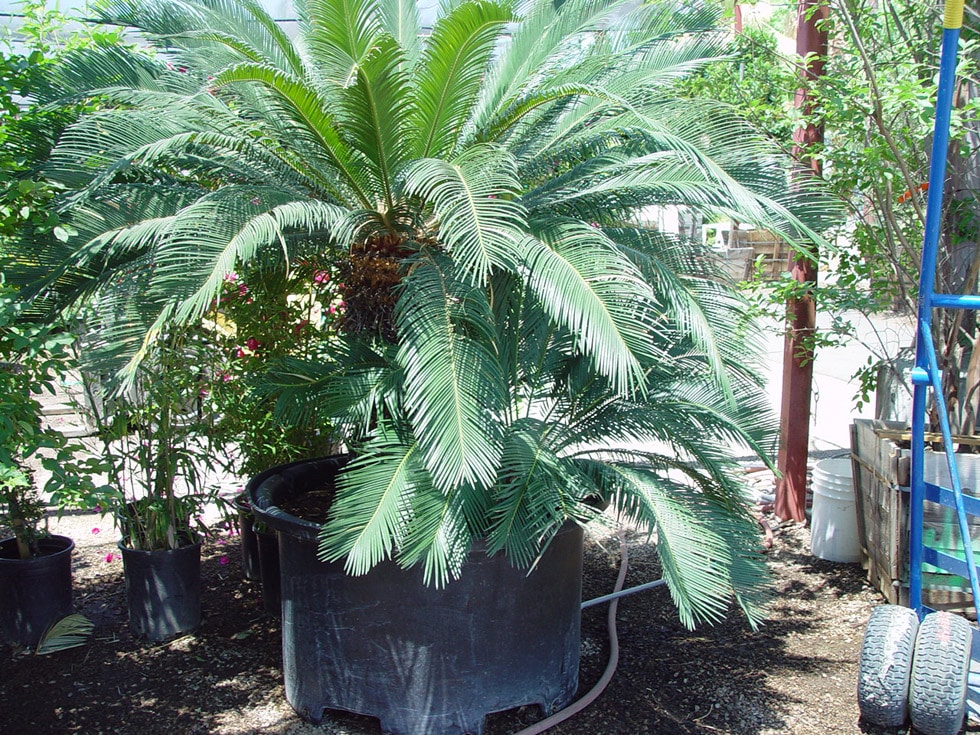
Caliche is the biggest planting challenge in the Las Vegas Valley. It’s a dense calcium carbonate layer sitting anywhere from a few inches to a few feet below the surface, and it doesn’t drain. Plant into unbroken caliche and water pools at the root zone instead of moving through the soil. Roots rot while the tree looks fine above ground for months.
To find it, scrape away a few inches of topsoil. Caliche appears as white or grey hardpan that can feel like concrete.
To fix it, break it up with a pickaxe or breaker bar, going down 18 to 24 inches across the full planting area. Then backfill with concrete sand mixed with a small amount of native soil. Standard planting mix and heavy organic amendments hold too much moisture in desert conditions; concrete sand drains fast and keeps the root zone aerated.
Before the palm goes in the ground, set up your drip lines. Position emitters at the edge of the root ball, not at the trunk. Use 2 to 4 GPH emitters. The small 0.5 GPH emitters sized for shrubs will not deliver enough volume for a tree. If your current system runs palms on the same zone as shrubs or lawn, separate them before planting. No timer setting correctly waters both at the same time.
Best Time to Plant
The two best windows are April through mid-May and September through October. Spring gives the root system a full warm season before winter. Fall uses warm soil temperatures while air temperatures drop, reducing transplant stress.
Avoid June through August. Peak Las Vegas summer puts a tree with a disturbed root system directly into 110°F heat. It can survive but will take twice as long to establish.
One factor most guides miss: monsoon season runs July through September and storms can drop an inch of rain in under 30 minutes. After any heavy storm, check for standing water at the base of the tree within 30 minutes. If water is pooling there, your drainage was not deep enough. Fix it before the next storm hits.
How to Plant a Palm Tree Step by Step
Once you’ve picked your species, prepped the soil, and timed it right, here’s exactly how to plant a palm tree in Las Vegas. If you’d rather have it done right the first time, our tree planting team handles species selection, soil prep, and installation in a single visit.
Step 1: Dig the Planting Hole and Break Through Caliche
Dig a hole 2 to 3 times as wide as the root ball, and the same depth. Palm roots spread sideways, not down, so width matters more than depth. When you hit the white caliche layer, break it up completely before going any further. A pickaxe works for shallow layers, but anything deeper than 18 inches needs a breaker bar or a crew. Do not plant around it. Unbroken caliche is the most common reason Las Vegas palms fail.
Step 2: Prepare the Backfill
Do not use native soil alone, bagged planting mix or heavy organic amendments. Use concrete sand mixed with a small amount of native soil. It drains fast, stays aerated, and creates the environment palm roots need to spread in desert conditions.
Step 3: Plant at the Right Depth
The top of the root ball should sit level with the surrounding grade. Never bury the trunk base. Even 2 inches too deep traps moisture against bark that is not built to stay wet. Set the tree carefully and confirm the depth before you start backfilling.
Step 4: Backfill, Stabilize, and Water
Fill in layers, tamping lightly to remove air pockets without compacting the soil. For palms over 15 feet tall, stake the tree during the first growing season to protect it from strong Las Vegas winds. After planting, water deeply enough to moisten the soil 18 to 24 inches below the surface.
Step 5: Apply Mulch
Spread 2 to 3 inches of mulch in a ring around the base of the tree extending to the canopy edge. Keep mulch at least 6 inches away from the trunk. Mulch touching the trunk holds moisture against bark and causes rot.
In Las Vegas summer heat, mulch installation helps to reduce soil temperature and slow evaporation during the months when both are working against you.
Watering a Newly Planted Palm in Las Vegas
The first month matters more than any other. The root ball has been disturbed, and the tree can’t yet pull water from the surrounding soil; it depends entirely on what you deliver.
First 30 days:
Summer planting (above 100°F): water 3 to 4 times per week, 15 to 20 gallons per session via drip.
Spring or fall planting: water 2 to 3 times per week for the first month, then taper to twice weekly in month two.
The most common first-year mistake is watering daily in small amounts. Daily shallow watering fills only the top few inches of soil and pushes oxygen out of the root zone, causing roots to suffocate. Water less often and deliver more volume each time; deep and infrequent is the correct approach, every time.
Long-Term Watering Schedule
Once a palm has made it through its first full growing season, watering shifts from an establishment schedule to a long-term maintenance schedule based on the
| Season | Months | Frequency | Volume Per Session |
|---|---|---|---|
| Spring | Mar-May | 1-2x per week | 15-20 gallons |
| Summer | Jun-Sep | 2-3x per week | 20 gallons |
| Fall | Oct-Nov | 1x per week | 15 gallons |
| Winter | Dec-Feb | Every 10-14 days | 15-20 gallons |
Do not shut off drip irrigation in winter. Established palms are drought-tolerant but drought-tolerant in Las Vegas still means scheduled watering. Rainfall alone is not enough.
Common Palm Planting Mistakes in Las Vegas
Planting too deep. Burying the trunk base by even 2 inches traps moisture against bark that is not designed to stay wet. Crown rot sets in slowly and the tree can look healthy for six months before symptoms appear.
Skipping caliche prep. Every time you water or it rains, the root zone floods. Roots rot from the bottom up over one to two years while the tree looks acceptable above ground.
Wrong backfill material. Native soil and bagged planting mix both hold too much moisture in desert conditions. Concrete sand is the correct backfill for Las Vegas palm planting.
Planting in peak summer. A tree planted in July has no established root system and immediately faces 110°F heat. Spring and fall planting eliminate this problem entirely.
No drip irrigation before planting. Installing drip after the fact means digging around new roots and losing weeks of establishment. Set up emitters before the palm goes in the ground.
Once your palm is properly planted and established, the next question is usually how to landscape around it; placing rock, groundcover, or a walkway without disturbing the root zone. Our guide to landscaping around trees covers how to do that without setting back what you just planted.
FAQs
What is the best palm tree to plant in Las Vegas?
The California Fan Palm is the best choice for most homeowners. It is native to Mojave Desert conditions, cold-hardy to 15°F, drought-tolerant once established, and better suited to alkaline soil and caliche disruptions than any other widely available species. For faster growth and height, the Mexican Fan Palm is reliable. For small yards and HOA communities, the Mediterranean Dwarf Palm or Windmill Palm are the better fits.
When is the best time to plant a palm tree in Las Vegas?
April through mid-May and September through October. Spring gives the tree a full warm season to establish roots. Fall uses warm soil temperatures while air temperatures drop. Avoid June through August. Peak summer heat makes establishment significantly harder and more expensive.
How deep should a palm tree be planted?
The top of the root ball should sit level with the surrounding grade after backfilling. Never plant deeper than the container the tree came in. Planting too deep is one of the leading causes of palm failure in the Las Vegas Valley.
How often should I water a newly planted palm?
During summer heat, water 3 to 4 times per week at 15 to 20 gallons per drip session. During spring or fall planting, water 2 to 3 times per week for the first month, then taper. Check soil moisture 6 inches down before running any irrigation cycle.