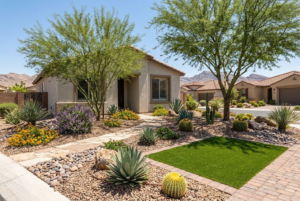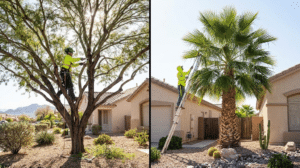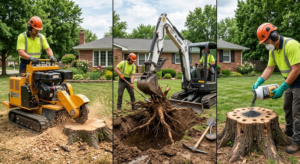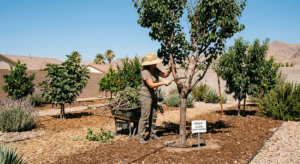

A shade garden works in Las Vegas when the plants are matched to desert soil and heat, not just low light. The spot under a mature tree or along a north-facing wall can become one of the lowest-maintenance parts of a yard, but only with species built for alkaline soil and minimal rainfall. Most shade garden guides recommend woodland plants that need consistent moisture Southern Nevada simply doesn’t have. Here’s what actually holds up here.
What Is a Shade Garden?
A shade garden is a landscape designed around plants that thrive in low-light conditions. Instead of fighting shady spots, you turn areas under trees or along fences into intentional garden spaces.
When we talk about shade, you need to know about the different light levels. Partial shade vs full shade makes a big difference when you’re picking plants. Partial shade means your garden gets about 4-6 hours of sun each day. Full shade means it receives under 2 hours of sun. Dappled shade happens under trees where sun spots move around throughout the day.
Benefits of Shade Gardens
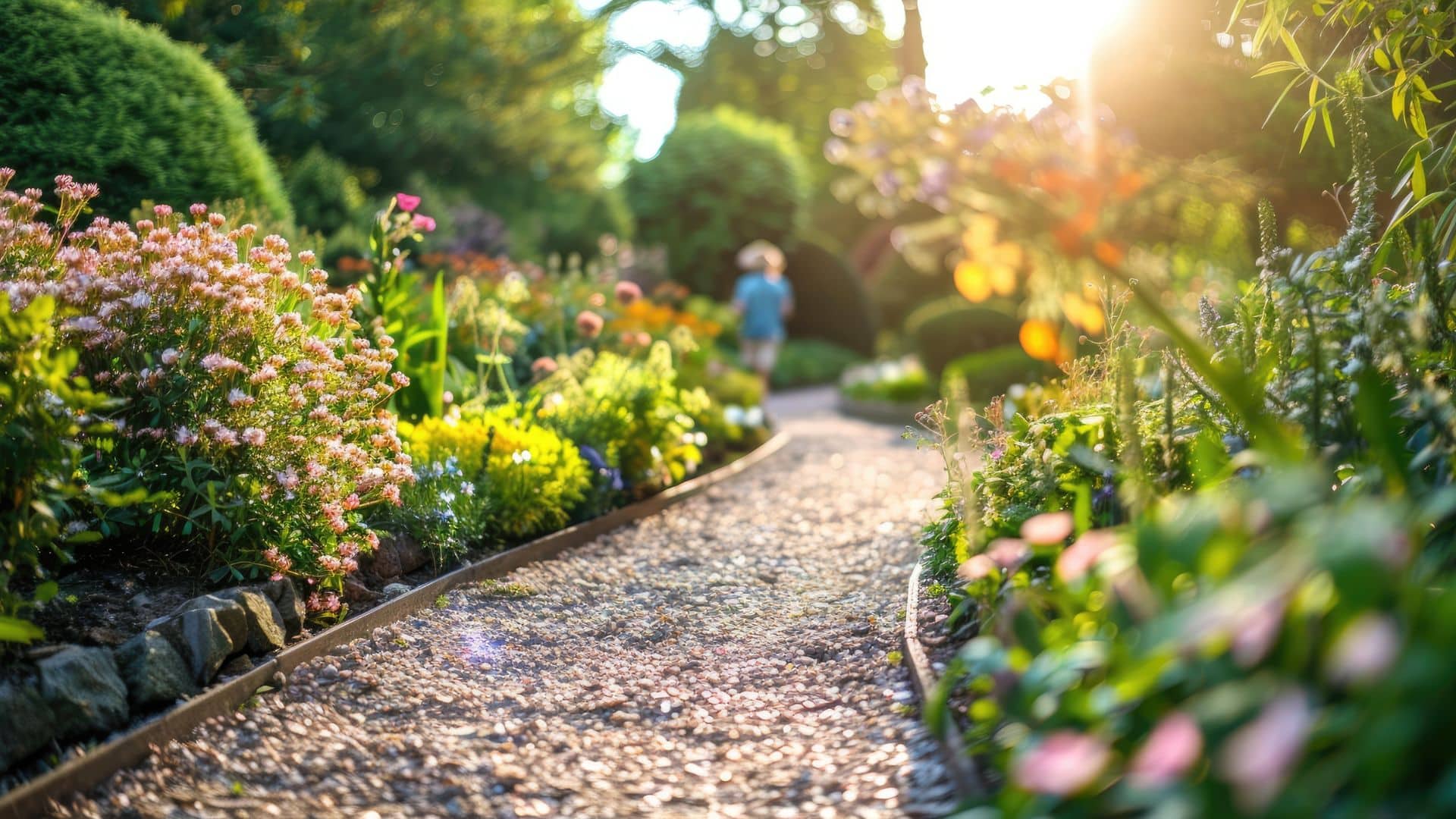
You might think shade gardens are just a way to deal with a tricky spot. But they come with some pretty great perks.
Cooling Effect & Energy Efficiency
Trees create their own cooling system through transpiration, a process that can drop surrounding air temperatures by 6-9 degrees. If you plant trees near your house, the U.S. Department of Energy says you could cut your air conditioning costs by 25%. Shaded surfaces can be 20-45 degrees cooler than spots in full sun.
Enhancing Curb Appeal in Low-Light Areas
Those bare patches where grass won’t grow look terrible. But turn that same spot into an intentional shade garden, and suddenly it looks like you hired a designer. These gardens have this peaceful, sophisticated vibe that actually makes sunny gardens look better by comparison. If you want professional help creating that polished look, Las Vegas landscapers know exactly which plants work in shady conditions.
Attracting Pollinators and Wildlife
Shade gardens bring in more wildlife than you’d expect. We’re talking songbirds, woodpeckers, wrens, even bats and squirrels. Plenty of shade-loving plants attract pollinators, too. According to the National Wildlife Federation, bee balm, columbine, woodland phlox, mountain mint, and sweet joe-pye-weed all do great in shade, and bees love them.
Low Maintenance Compared to Sun-Heavy Gardens
The soil stays moist longer because it’s not drying out in the sun all day. That means less watering. Weeds have a harder time getting started in shade, so you’ll spend less time pulling them. Most shade plants grow more slowly and don’t need as much fertilizer.
Choosing the Right Location
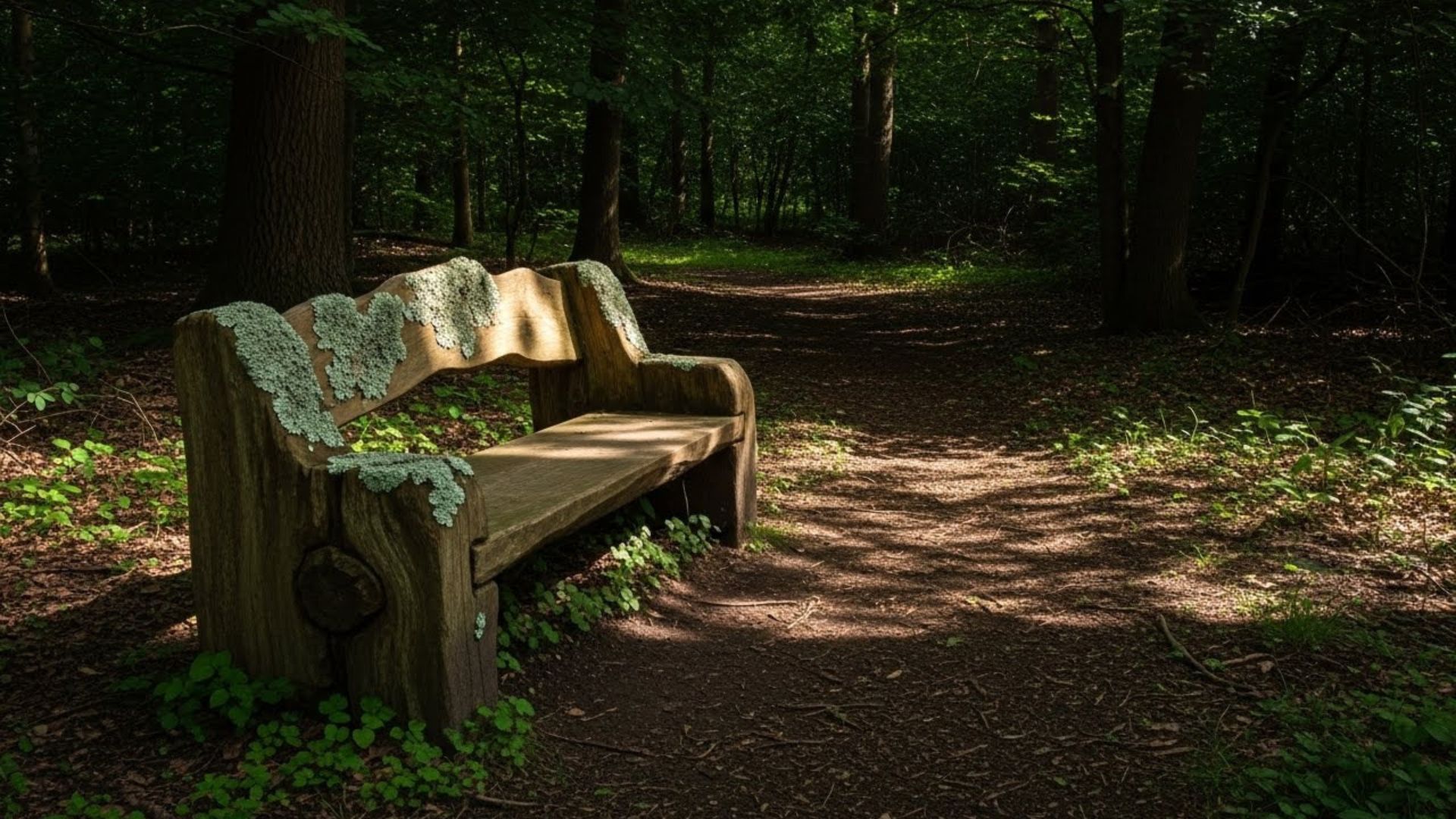
Before you start planting, spend some time just watching your yard. Light moves around during the day, and it changes with the seasons, too. Once deciduous trees drop their leaves, your shade garden might get more sun.
East-facing spots are usually better than west-facing ones. Morning sun is gentler than that hot afternoon blast. Check for puddles after it rains. If your yard doesn’t have a mature tree providing shade yet, tree planting is worth planning first. Choosing the right species and canopy shape now determines what you’ll be able to grow beneath it in a few years. Shade means slower evaporation, and some plants hate wet feet. Pay attention to soil moisture levels and how air moves through the space. If you’re dealing with a compact yard, these principles work well with small backyard landscaping ideas to maximize your available space.
Best Shade-Loving Plants for Stunning Shade Gardens
Even in the Mojave Desert, there are many plants that thrive in shaded areas. Choosing species adapted to lower light levels helps create a lush, low-maintenance shade garden while conserving water.
Foliage and Structure Plants
Red yucca holds up in filtered shade and gives a shade garden real architectural structure without needing the full sun it’s usually planted in. Desert spoon works the same way in lighter shade pockets, adding form without demanding water most shade plants need. Dwarf germander makes a solid groundcover under a tree canopy, spreading low and tolerating the drier soil that comes with root competition.
Flowering Plants for Shade
Baja fairy duster handles partial shade well and brings in hummingbirds with its red, feathery blooms. Chuparosa does the same in dappled light under a mesquite or palo verde canopy. Society garlic tolerates part shade and blooms through much of the year with minimal water. Trailing lantana fills in as a flowering groundcover in lighter shade, though it wants at least a few hours of direct sun to bloom well.
Groundcovers for Under Established Trees
Mexican honeysuckle is one of the better options for deeper shade, tolerating low light better than most flowering desert plants while still producing orange blooms that draw hummingbirds. It pairs well with rock or decomposed granite as a base rather than turf, which struggles in the same root-competing conditions.
Design Ideas to Elevate Your Shade Garden
Think about your garden layout like a natural woodland. Layer everything with trees, shrubs, perennials, bulbs, and annuals. Plant in bigger groups instead of one of everything. Mix up your plant shapes, sizes, colors, and textures to keep things interesting.
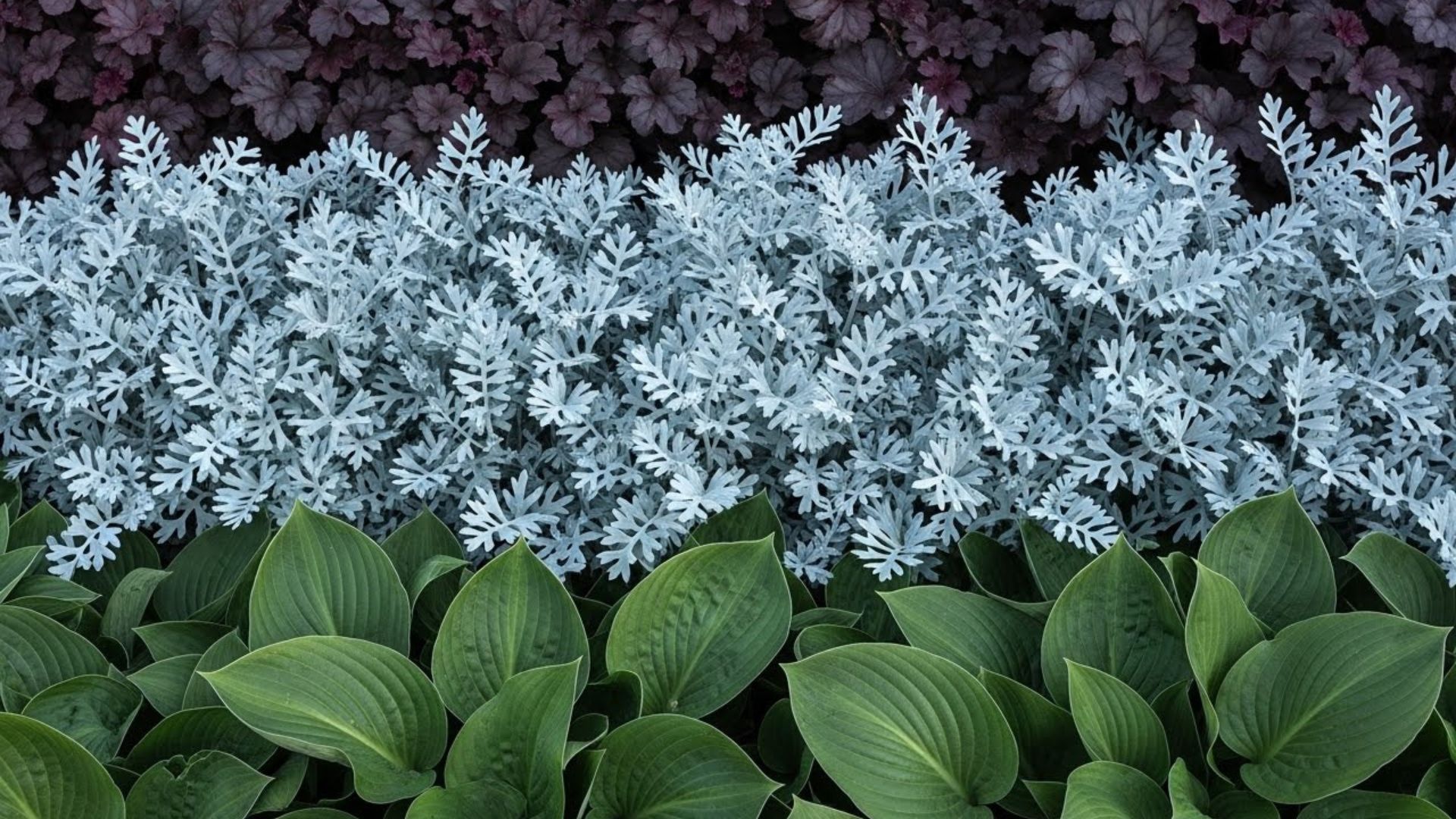
Want to make dark areas look brighter? Use plants with chartreuse, gold, silver, or variegated leaves. White or yellow flowers help too. Add some height with shade-tolerant vines like clematis, climbing hydrangea, or Virginia creeper climbing up a trellis or fence.
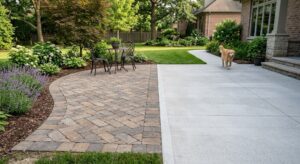
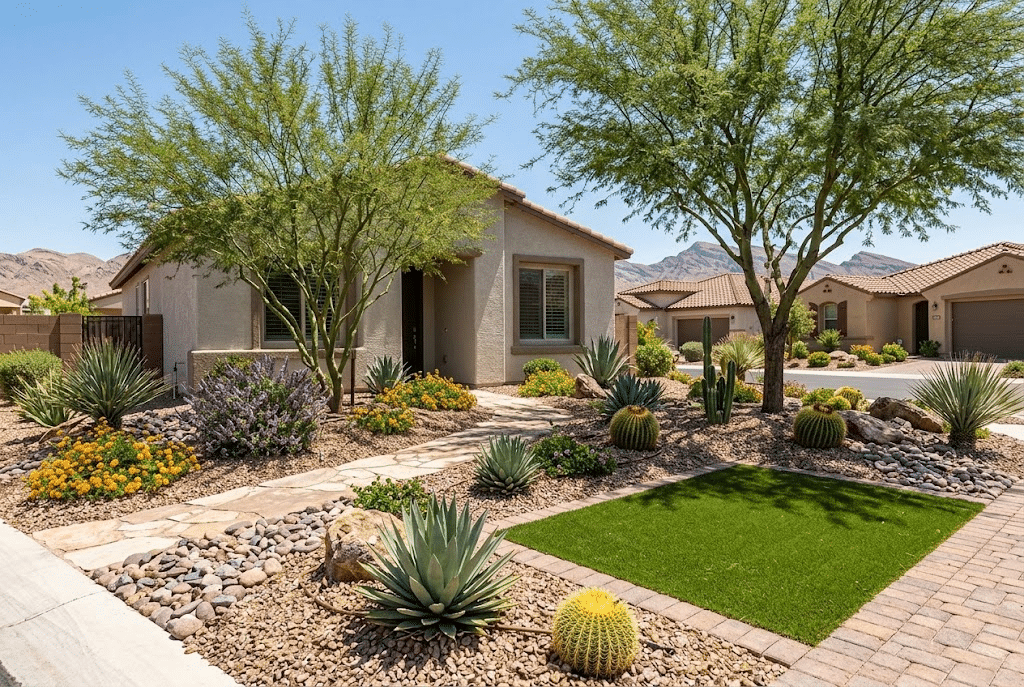
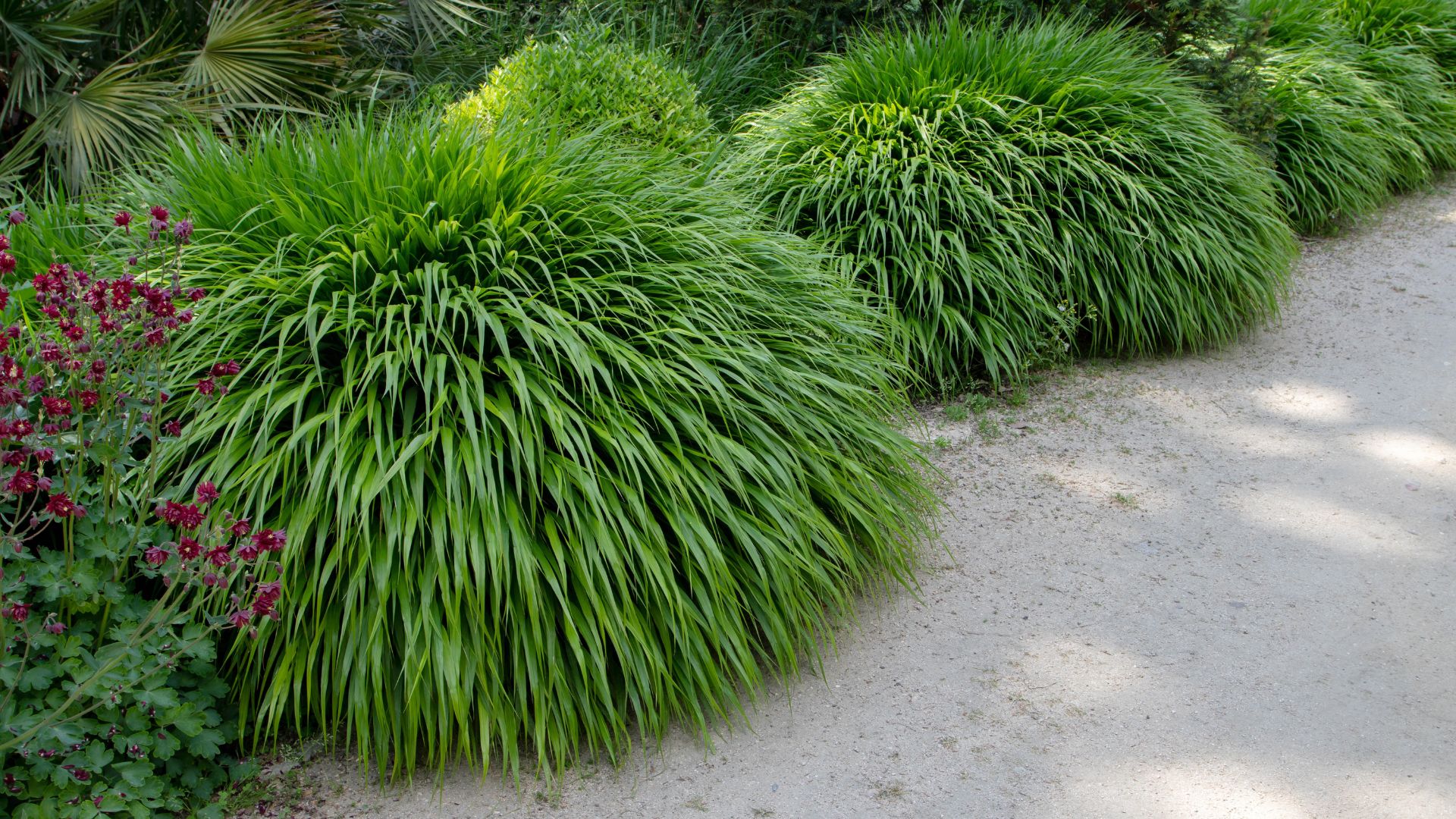
For your backyard design, hardscaping makes a big difference. Add a pathway, maybe a little patio area, some boulders, or a bench. These elements give structure to the space. If your grass is struggling in shade, just get rid of it. Replace it with ground covers or attractive stone work that actually looks intentional. This is the same principle behind xeriscape design: work with what the site gives you instead of fighting it.
Maintaining a Shade Garden
Shade gardens are low-maintenance, but they’re not no maintenance. Each season has a few basic tasks.
In spring, rake up all the dead leaves and winter debris. Cut back any dead plant parts and add compost or fresh mulch. Summer means checking your mulch and adding more if needed. Water in the morning so plants dry off during the day. Deadhead spent flowers to keep things neat.
Fall’s a good time to plant bulbs for spring color. Divide any crowded perennials and put down another layer of mulch before winter. Before monsoon season, check that mulch hasn’t washed away from a heavy summer storm, and confirm drip emitters are still positioned at the root zone rather than buried by shifting soil. Don’t have time for seasonal upkeep? Professional landscape maintenance in Las Vegas can handle everything your shade garden needs.
Shade gardens solve a problem and create something beautiful at the same time. They need less water, fewer weeds, and less fuss than sunny gardens. They cool down your property, bring in wildlife, and make your yard look way better. The key is understanding what kind of shade you’re working with, picking plants that’ll thrive there, and designing with layers and textures in mind.
FAQs
What plants work in a shade garden in Las Vegas?
Desert-adapted species like red yucca, Baja fairy duster, chuparosa, and Mexican honeysuckle tolerate filtered shade and Las Vegas heat. Traditional woodland shade plants like hostas and ferns generally don’t survive here.
How much shade does a mesquite or palo verde canopy provide?
Both give filtered, dappled shade rather than dense cover, which suits part-shade plants better than deep-shade species that need consistent low light.
Can I still have color in a shady desert yard?
Yes. Chuparosa, Baja fairy duster, and society garlic all flower in partial shade and need far less water than sun-loving desert bloomers require in full exposure.
Building a shade garden that actually survives a Las Vegas summer comes down to matching plants to the site, not just the light level. Cacti Landscapes has been helping Las Vegas and Henderson homeowners choose desert-appropriate plants since 2002. If you want a shade garden plan built around your yard’s specific trees and exposure, contact us or call (702) 370-5000.