Most homeowners know when their yard isn’t working. Drainage pulls the wrong direction. Nothing planted survives the first summer. There’s no shape to the space, no logic to how it was put together.
Landscape construction is where that changes. Not planting a few things and hoping, but building an outdoor space with intention: one that drains correctly, holds up to the climate, and actually functions the way a yard should.
What Is Landscape Construction?
Landscape construction is the planned process of designing and building outdoor spaces using both structural elements and living materials. It’s where landscaping and construction meet, covering everything from site grading and drainage to hardscape installation and softscape planting.
What is a landscape construction project in practical terms? In practical terms, landscape construction looks different for every property. Some homeowners are starting from scratch on bare dirt. Others are converting turf to desert-compatible materials. Others need structure first: retaining walls, proper drainage, defined pathways, before plants enter the conversation at all.
The through-line in every case: decisions made early determine what’s possible later. A yard graded without proper attention floods. One installed without a weed barrier doubles its maintenance cost within a year.
The Landscape Construction Process Step by Step
Experienced contractor landscaping teams approach each project in a defined order, and that order exists for practical reasons. Skipping steps or reversing them creates problems that cost more to fix than they would have cost to prevent.
Site Evaluation and Planning
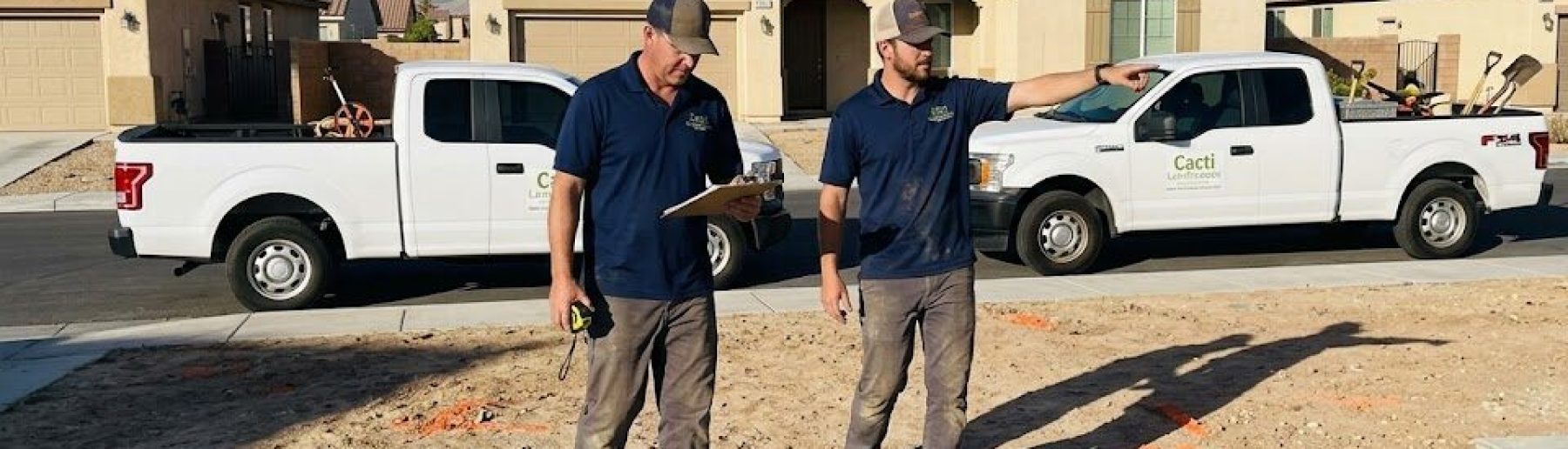
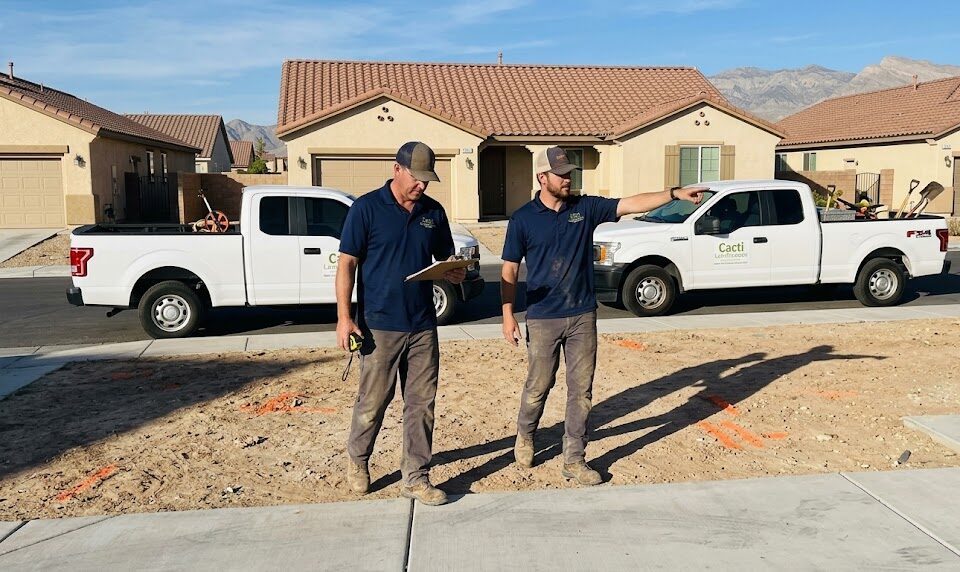
Site evaluation determines what the project can realistically become. Before any work begins, the team walks the property, measures the space, and assesses slope, drainage, soil conditions, and existing utilities. In Las Vegas, that assessment almost always turns up caliche: the dense, calcified layer just below the surface that blocks water and resists root penetration. Finding it early changes the excavation plan, and the budget along with it.
Landscape Design and Permits
This is where the project takes shape on paper. The contractor produces a site plan, 2D for standard projects and 3D for complex builds or HOA documentation, specifying where retaining walls sit, how pathways route, and where irrigation zones divide.
Permit approval is required for certain structural work depending on local code. In Las Vegas, SNWA compliance may apply for xeriscape or grass-to-desert conversions. For expert landscape design services that include 2D and 3D site planning, Cacti Landscapes manages both the design and permitting process.
Site Preparation and Grading
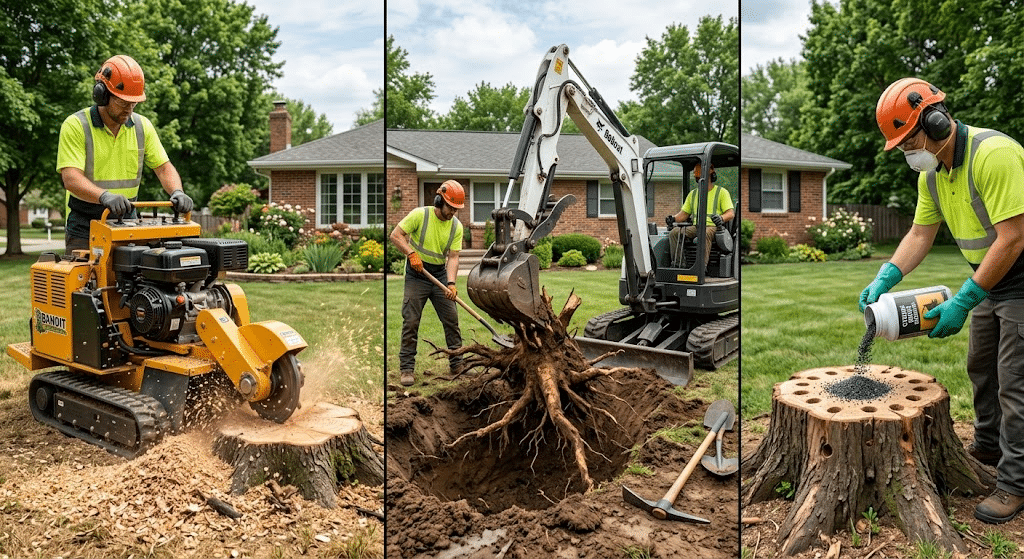
Site grading determines where water goes when it rains. The crew clears existing vegetation, removes debris, and shapes the surface to direct runoff away from the structure. Get it wrong and water moves toward the foundation instead.
In Vegas, where rainfall is infrequent but intense when it arrives, a poorly graded slope causes real damage fast.
Hardscape Construction
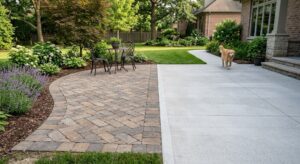
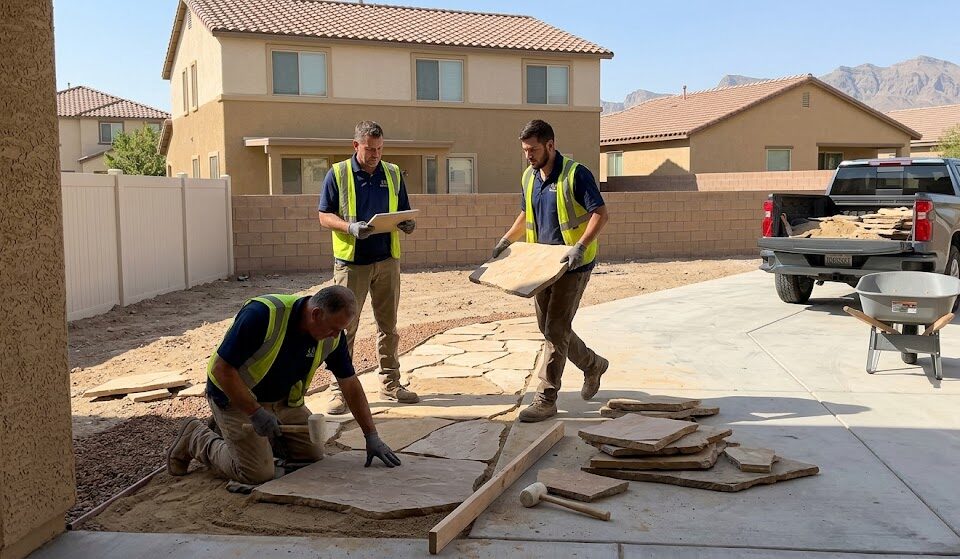
Hardscape is always the first phase of construction. Equipment is still moving, materials are still being delivered, and anything planted or laid before the structural work is finished risks damage. Patios, retaining walls, walkways, and edging go in first because everything else organizes around them.
Irrigation and Drainage Installation
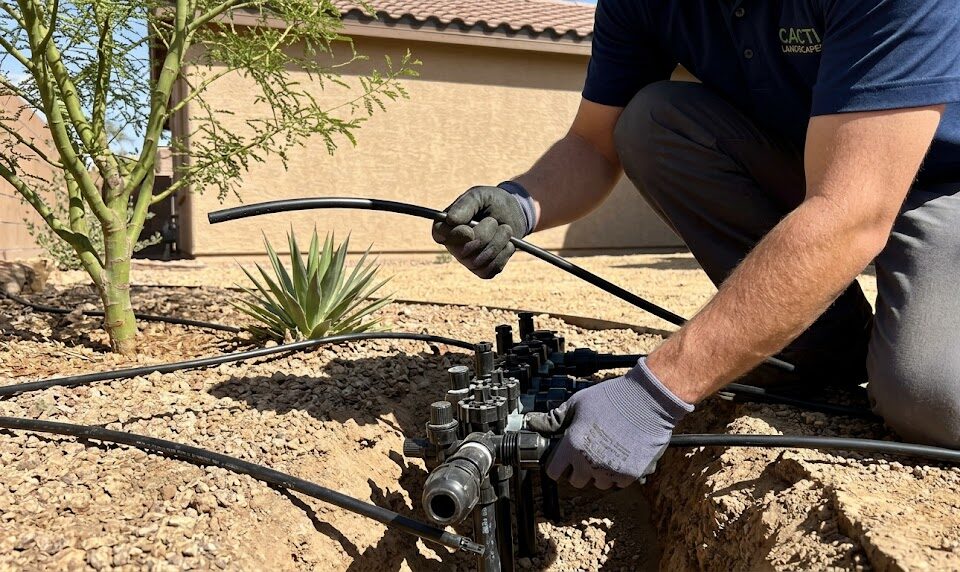
Drip irrigation lines get trenched and placed before surface materials go down. Drainage installation is finalized at this stage: French drains, catch basins, or surface channels for storm runoff. Drip systems are standard for Las Vegas desert installs: low-volume, precise delivery to individual plants rather than broadcast watering.
Planting and Softscape Installation
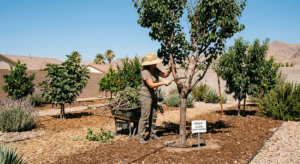
Planting follows a sequence: trees first, then shrubs, then groundcovers, with decomposed granite or decorative rock filling the surface over a weed barrier. In Las Vegas, timing matters as much as order. Spring and fall installations give new material the best chance of establishing before summer heat arrives.
Final Inspection and Finishing Touches
A proper final inspection protects the investment made at every prior stage. Irrigation gets tested zone by zone, uneven areas get corrected, and the crew walks the finished property with the homeowner. Adjustments happen here before the crew leaves.
How Long Does Landscape Construction Take?
Most homeowners asking this question are working around a deadline: a home sale, an HOA notice, an upcoming event. Timeline depends on project size, site conditions, and whether permit approval is required before ground breaks.
Small Landscape Projects
Small projects, a front yard conversion, a single-zone re-rock, or an install under 1,000 sq ft typically finish in 1–3 days.
Medium Landscape Renovations
Projects involving multiple zones, retaining walls, or a combination of hardscape and softscape typically run 3–7 days of installation. Add 1–2 weeks for design and permitting before any work begins on-site.
Full Yard Landscape Construction
Whole-property builds covering front and back yards, full drip irrigation, and structural hardscape typically run 1–3 weeks on the ground. Design, permitting, and material lead times extend the total, and weather will shift the schedule.
Landscape Construction Ideas for Desert Homes
Las Vegas has conditions that eliminate most conventional landscaping approaches. Heat, low rainfall, SNWA water restrictions, and alkaline soil make non-desert designs a poor long-term investment. These three directions work with the climate instead of against it.
Xeriscape Landscaping Designs
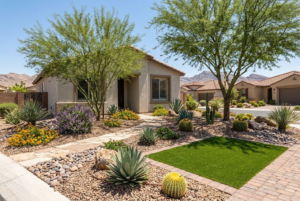
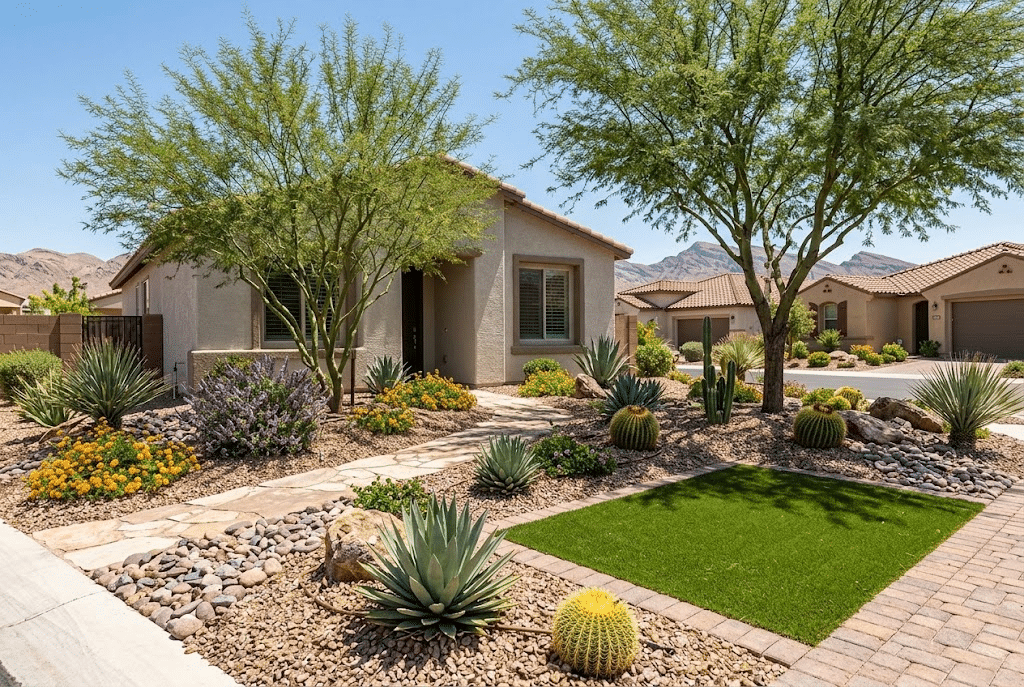
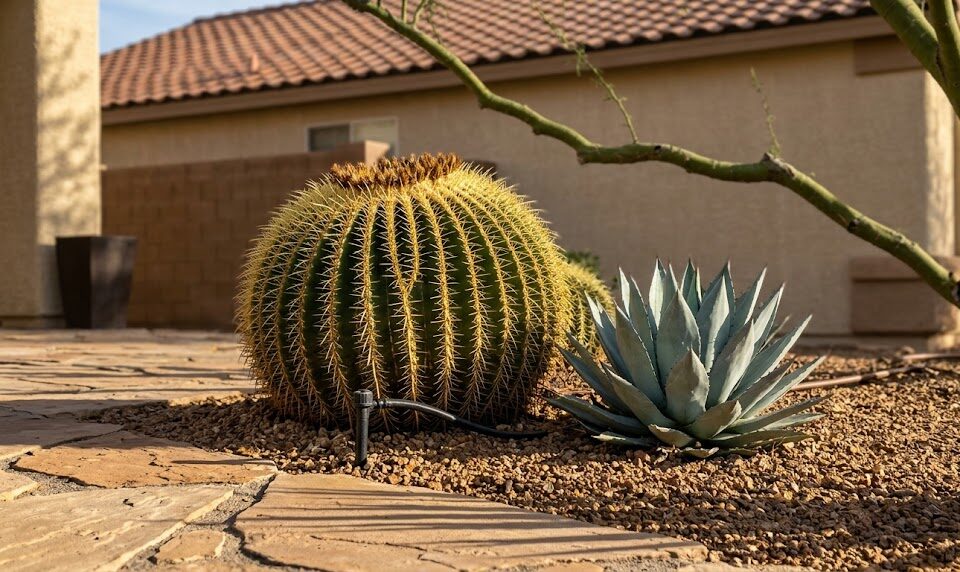
Xeriscape is a water-efficient approach built around drought-tolerant plants, native species, and precision drip irrigation. Best materials for Las Vegas xeriscape landscaping design ideas include decomposed granite, boulders, and low-water native shrubs adapted to Mojave conditions.
A 500–1,000 sq ft xeriscape installation runs $3,950–$7,900 depending on scope. It works in Las Vegas because the SNWA rebate program offsets installation costs, and properly designed xeriscape reduces water usage by 50%–75% compared to conventional turf.
Rock and Gravel Landscapes
Rock landscapes use gravel, decomposed granite, boulders, and flagstone to create durable, low-maintenance surfaces. Local materials like Arizona river rock and Las Vegas decomposed granite handle extreme heat without cracking and need no irrigation once placed.
Basic installs start around $4,750. For homeowners weighing long-term value, rock and gravel landscapes deliver strong curb appeal without water costs or ongoing maintenance overhead, making them one of the most practical investments in the valley.
Drought-Tolerant Plant Gardens
Desert-adapted species like agave, palo verde, yellow bells, and lantana thrive in Las Vegas conditions and need minimal water once established. Paired with drip irrigation, decomposed granite mulch, and permeable weed barrier, they form a planting scheme that requires almost no intervention once it’s in.
A typical installation with 20–30 plants, drip system, and decorative rock runs $4,750–$5,200. Drought-tolerant plant gardens work in Las Vegas because they survive summer without supplemental water and hold year-round visual interest without the maintenance overhead of traditional landscaping.
Landscape Construction vs Landscape Maintenance
Building a landscape requires real investment. It happens once and sets the structural foundation for everything that follows.
What is a landscaping maintenance plan? It’s the ongoing care irrigation adjustments, plant trimming, weed treatment, rock debris removal that keeps a finished yard performing the way it was designed to.
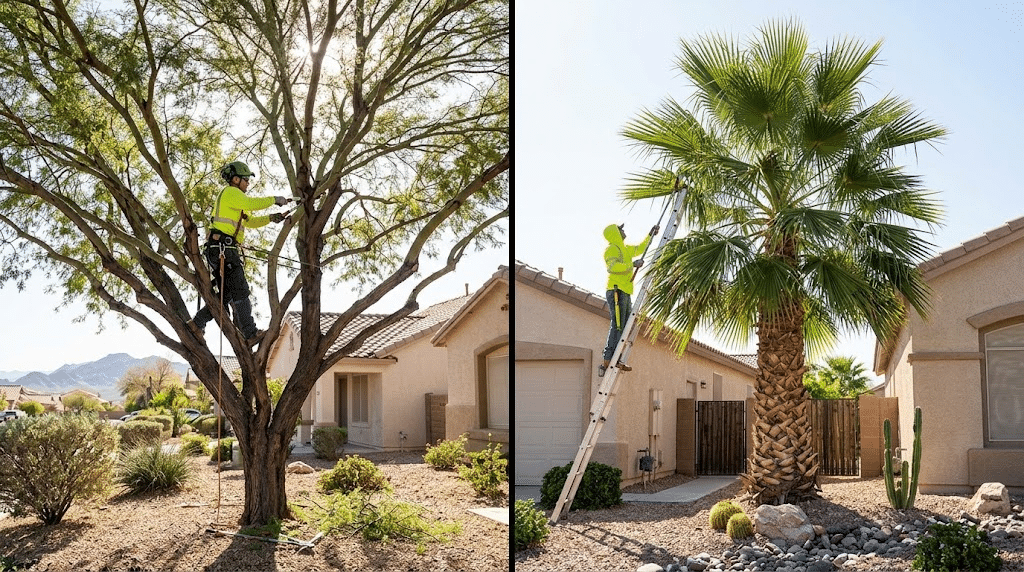
Construction without maintenance is a depreciating asset. Ongoing yard maintenance for desert landscapes extends the life of the install and catches small problems before they become expensive ones.
Average Landscape Construction Costs
National landscaping cost figures don’t reflect Las Vegas reality. Local labor rates, desert soil conditions, and the excavation that caliche soil requires all push numbers in directions national averages can’t account for. The ranges below come directly from Cacti Landscapes’ published pricing:
- Basic rock and plant conversion (500 sq ft): $3,950–$5,200
- Mid-range build with trees, drip, and rock (1,000 sq ft): $5,200–$7,900
- Full yard with synthetic turf (2,000 sq ft): $10,000–$12,400+
- Xeriscape with SNWA rebate-eligible design: $3,950–$8,100 before rebate
How to Choose the Right Landscape Contractor?
Nevada requires a State Contractors Board license for landscape construction work. That license number is public record, and complaint history is searchable on the NSCB website. Ask for both before signing anything. A contractor who hesitates to provide either is a signal worth taking seriously.
Beyond licensing: does the contractor provide a site plan before breaking ground? Can they document HOA compliance with 2D or 3D plans? Do they give written estimates with no hidden fees? Qualified contractors answer these questions before you ask.
The Las Vegas landscaping experts at Cacti Landscapes have handled installs from single-zone projects to full-property builds since 2002, with zero complaints on record at the Nevada State Contractors Board.
FAQs
What are the stages of landscaping?
The main stages are site evaluation, design and permits, site preparation and grading, hardscape construction, irrigation and drainage installation, softscape planting, and final inspection.
How long will landscaping take?
Small projects finish in 1–3 days. Medium renovations run 3–7 days on-site. Full-yard builds take 1–3 weeks of installation, plus design and permitting lead time before any work begins.
What are the 5 basic elements of landscaping?
Line, form, texture, color, and scale. These guide how both hardscape and softscape elements are combined and how the finished outdoor living space reads from different distances.
What landscaping adds the most value to a home?
In Las Vegas, xeriscape conversions, quality hardscape, and established tree placement return strong value. Water-efficient designs appeal to buyers in an SNWA-regulated market where long-term water costs factor into purchasing decisions.