
Henderson summers don’t ease in. By late May, afternoon temperatures routinely cross 100°F, and any weakness in your irrigation, mulch, or plant selection shows up quickly. The yards that survive July and August in good shape are prepared in April.
This Henderson yard summer preparation checklist walks through seven specific tasks, in order, plus the regulatory dates and timing windows that matter. Practical guidance on what to do, when to do it, and when to call in help before the heat locks in.
Why Summer Prep Is Critical for Henderson Yards
Once surface temperatures hit triple digits, your yard stops responding to corrections the way it does in spring. Heat-stressed plants can’t recover from aggressive pruning. Dry, cracked soil won’t absorb deep watering. A broken drip emitter in June turns into a dead shrub by July.
Desert yards in Henderson run on a tighter tolerance than most homeowners realize. Prep buys you the margin.
Get it right in April, and you spend summer maintaining a healthy yard. Skip it, and you spend summer replacing plants and fighting your water bill. Homeowners who don’t want to manage seasonal prep themselves often hire professional Henderson landscaping services.
When to Start Prepping (April Is the Window)
Start in early April. That usually gives you about four weeks before SNWA summer watering restrictions kick in on May 1, and another four to six weeks before true desert heat arrives. Waiting until May compresses everything. Waiting until June means doing prep work on plants already in survival mode.
Block off two Saturdays in April. That’s usually enough time for most homeowners to finish this checklist without the weather working against them.
The steps below are sequenced the way they should actually be done.
Henderson Summer Yard Maintenance: Step-by-Step Tips
Work through these seven steps in order. Each one builds on the last, and skipping ahead usually means redoing something later. The full sequence takes most homeowners two weekends, maybe three if the yard is larger or you find problems along the way. Finish before the end of April.
Step 1: Audit & Service Your Irrigation System
Turn your system on zone by zone and walk the entire yard. Look for broken heads, clogged drip emitters, misaligned sprinklers spraying onto concrete, and wet spots that suggest an underground leak. Check your timer programming and confirm the clock is set to your summer schedule.
Most Henderson yards show at least one issue after winter, often more. Mineral buildup clogs drip emitters. Rodents chew drip lines, and in bad winters, they can damage multiple lines across a property. Pressure fluctuations crack heads over time.
If you find more than three or four problems, a professional evaluation is worth the cost. An $80 flat-rate full-property irrigation assessment typically pays for itself in avoided water waste. Yard maintenance in Henderson plans cover irrigation audits as part of the monthly service.
Once the system is solid, update your schedule.
Step 2: Update Your Henderson Watering Schedule
Reprogram your irrigation clock by April 30. SNWA mandatory summer watering rules take effect May 1 and run through August 31.
Your Henderson watering schedule summer setup:
- Watering is allowed Monday through Saturday. Sunday watering is prohibited valley-wide.
- No landscape irrigation between 11 a.m. and 7 p.m.
- For drip-irrigated plants and trees, SNWA recommends four days a week in summer.
- SNWA suggests three 4-minute cycles per watering day for sprinklers, allowing water to penetrate compacted soil.
Find your assigned watering group (A through F) through the Southern Nevada Water Authority website or on your monthly water bill. Then, cut back anything that will show stress once temperatures start climbing.
Step 3: Prune, Trim & Shape Before the Heat Arrives
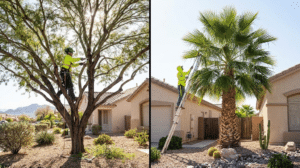
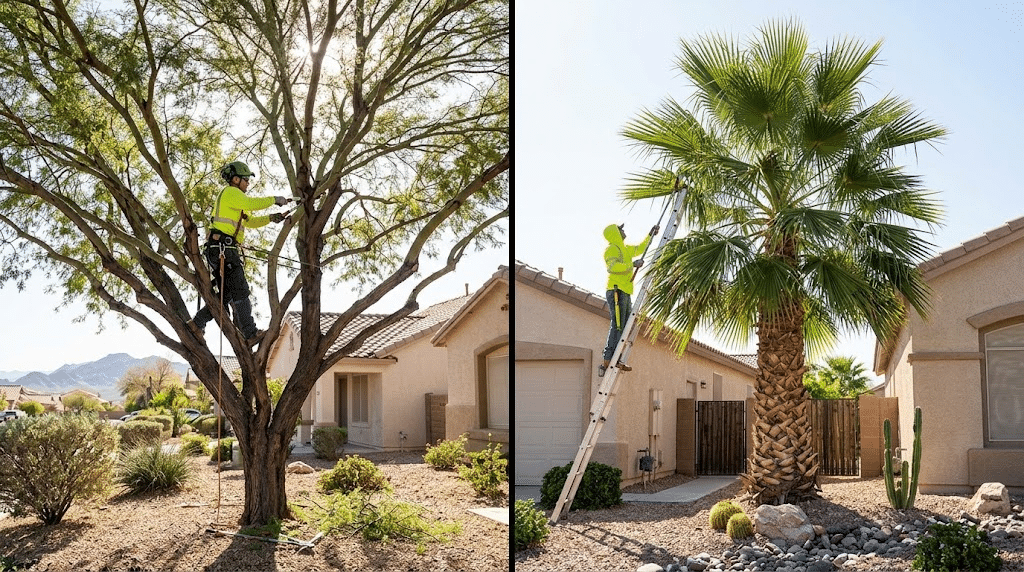
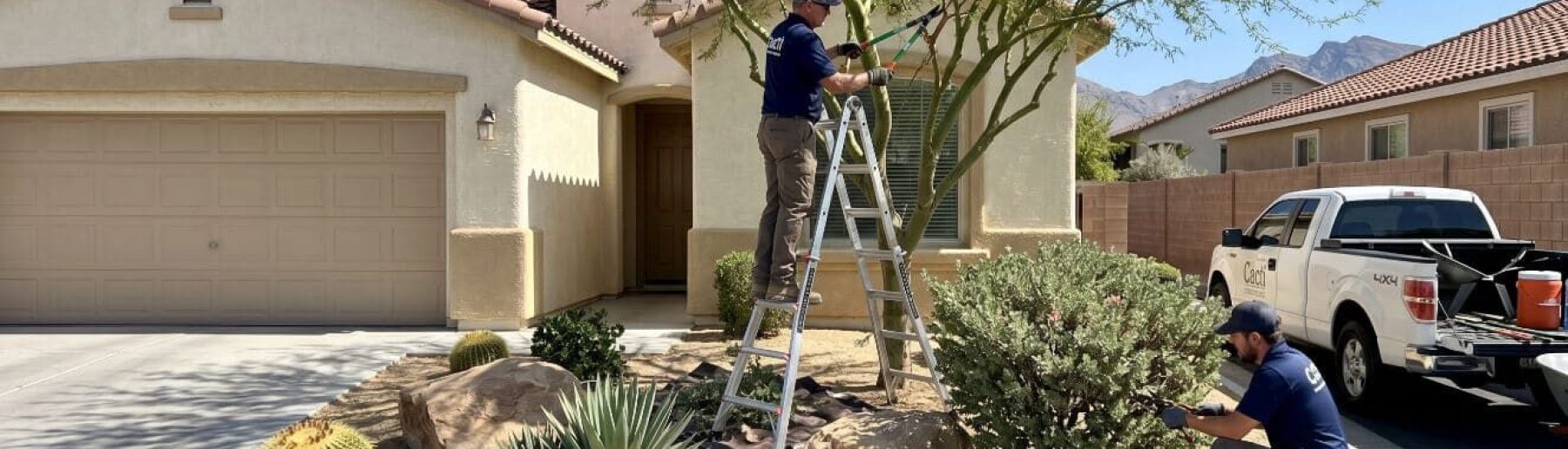
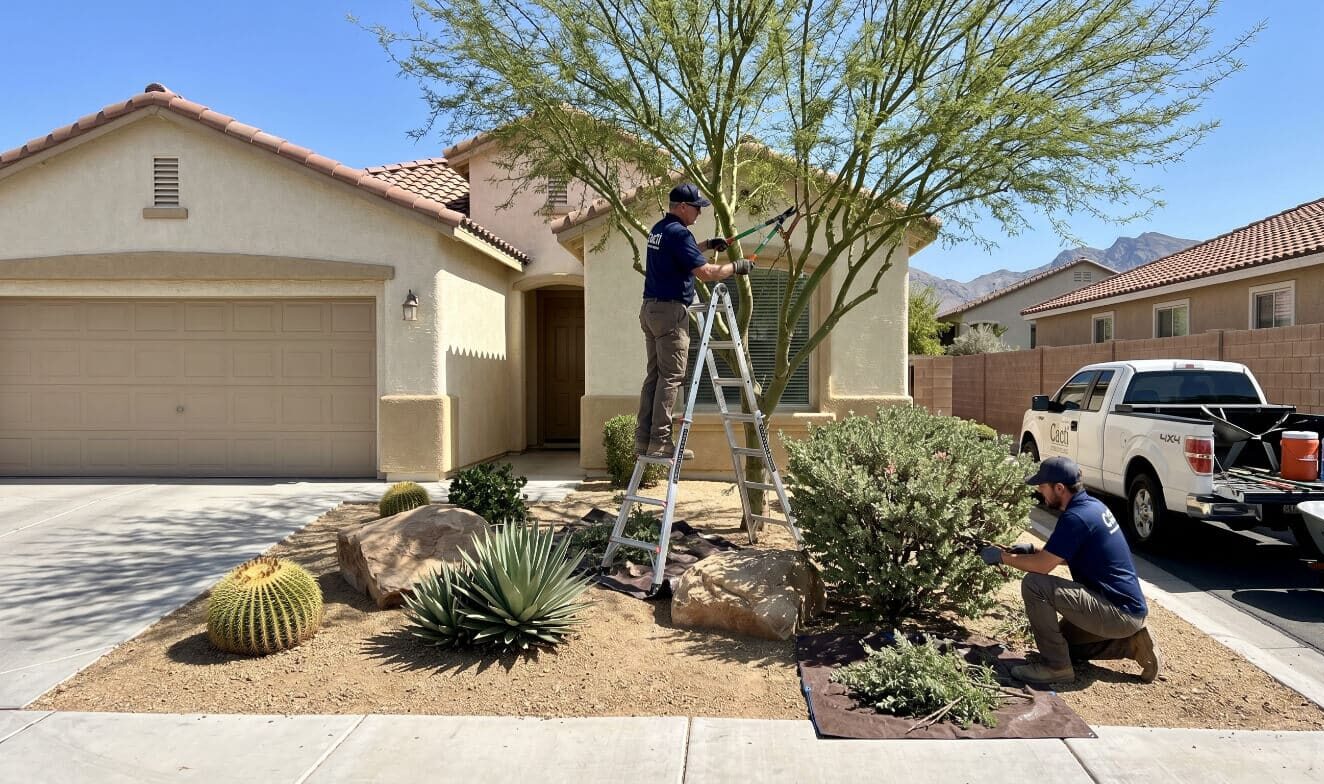
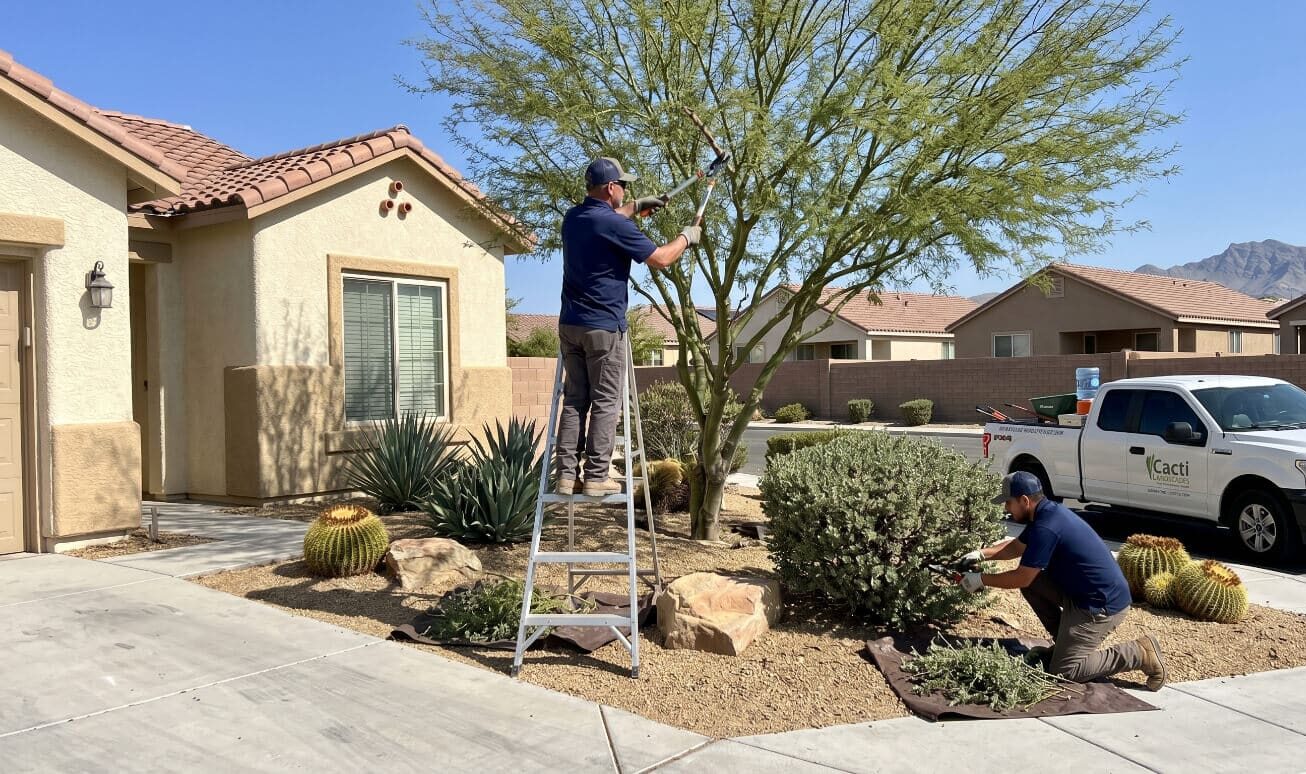
Prune deciduous shrubs and trees before the end of April. Once daytime temperatures pass 90°F, cutting live growth increases plant stress and sun exposure in ways that take the rest of summer to recover from.
Focus this pass on three things:
- Dead wood
- Crossing branches
- Growth blocking irrigation spray or drip access
Aesthetic shaping can wait until fall. This pass is about plant health and summer survival. Leave cacti and succulents alone unless you’re removing dead pads or visibly damaged sections.
Mesquites, Palo Verdes, desert willows, oleanders, and sages all benefit most from this April window. Once the cutting is done, move to the ground layer.
Step 4: Refresh Your Mulch Layer
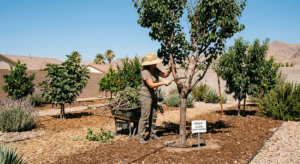
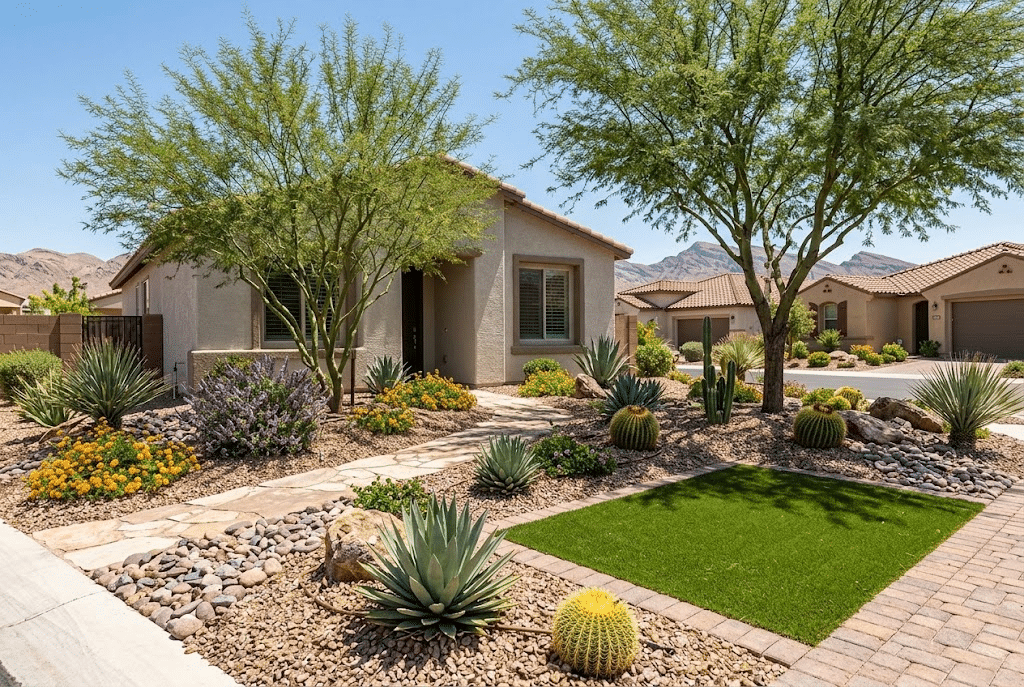
Add 2–3 inches of mulch across every planted area. In 110°F heat, mulch is what keeps root zones cool and prevents moisture from evaporating before it reaches plant roots.
Before adding new material, check what’s already there:
- Less than 2 inches deep: top it up.
- Thinned or scattered: redistribute before adding more.
- Too close to stems or trunks: pull back 2–3 inches to prevent rot and pest habitat.
For rock yards, the same principle applies. Thin or displaced rock exposes bare soil, which heats up fast and stresses root zones underneath.
Homeowners moving toward xeriscaping in Henderson often find that mulch coverage is the single biggest factor in how a desert yard performs in July.
With the ground layer reset, check the plants themselves.
Step 5: Assess Your Plants for Summer Survival
Walk the yard and inspect every plant carefully. Look for winter damage, fungal issues, or plants simply not thriving. A weak plant in April is a dead plant by August.
Make decisions now. Replace struggling plants with established desert varieties before the heat sets in.
University of Nevada Reno Extension research shows that deep watering to depths of 18–24 inches for shrubs and trees, and 12–18 inches for perennials and grasses, produces root systems that survive summer stress far better than frequent shallow watering. That means plant selection matters as much as watering habits.
Ocotillo, desert spoon, red yucca, and Texas sage handle Henderson summers without constant attention. Before replacing any struggling plant, it’s worth reviewing the best desert shrubs for Henderson to make sure the replacement is suited to the specific exposure and soil conditions.
The next threat is what grows around your plants.
Step 6: Weed Control Before Summer Growth Explodes
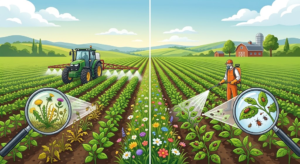
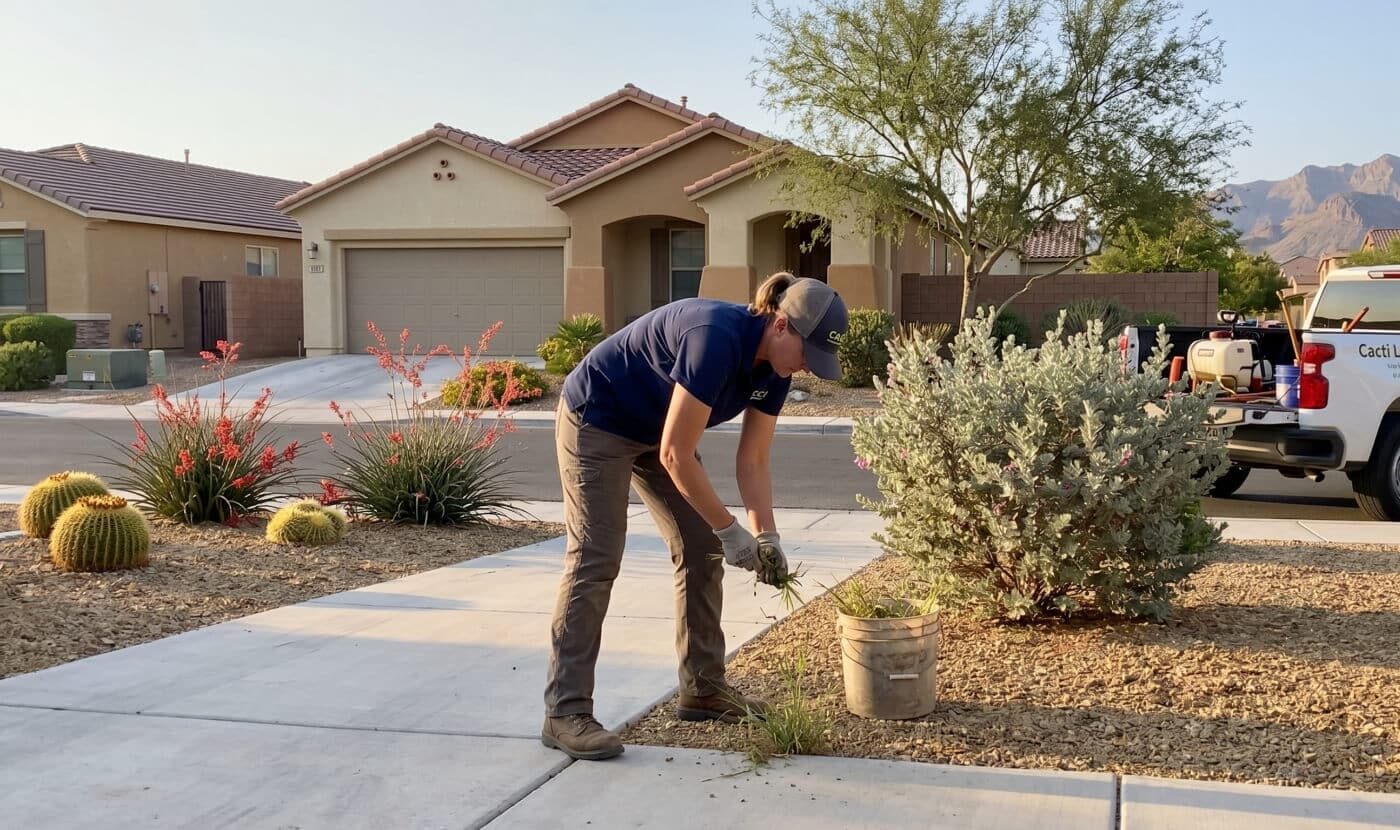
Handle weeds before temperatures rise and growth accelerates. A small patch in April often becomes a significantly larger problem by summer.
Start with a walkthrough of these areas:
- Gravel beds and decomposed granite pathways
- Planting areas and fence lines
- Bare soil between plants where wind-blown seeds collect
Pull existing weeds while they’re still young, before they establish deeper roots or go to seed. For larger areas or recurring problems, apply a pre-emergent herbicide according to label directions. Timing matters, as pre-emergent products work best before seeds actively germinate.
Removing weeds now reduces competition for water and nutrients during the months when your plants need every advantage.
Once weeds are under control, turn your attention to the hardscape that frames the rest of the yard.
Step 7: Protect Hardscape & Rock Areas
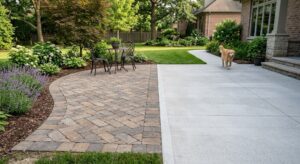
Inspect pavers, flagstone, concrete, and rock features for cracks, shifting, or sun damage. Henderson’s freeze-thaw winter cycles can gradually work on hardscape materials in ways that aren’t obvious until spring.
Address what you find before summer locks in:
- Reseal concrete and pavers if they haven’t been treated in the last 2–3 years.
- Touch up faded stain or color treatment.
- Replace loose or settled pavers before they become tripping hazards.
- For rock yards, redistribute displaced material and check for torn or exposed landscape fabric underneath.
Larger hardscape repairs can run higher than most homeowners expect. Reviewing landscaping cost in Henderson benchmarks before committing to bigger scope work helps avoid mid-project surprises.
If any of this exceeds a weekend project, that’s usually your signal.
When to Call a Professional for Summer Yard Prep in Henderson
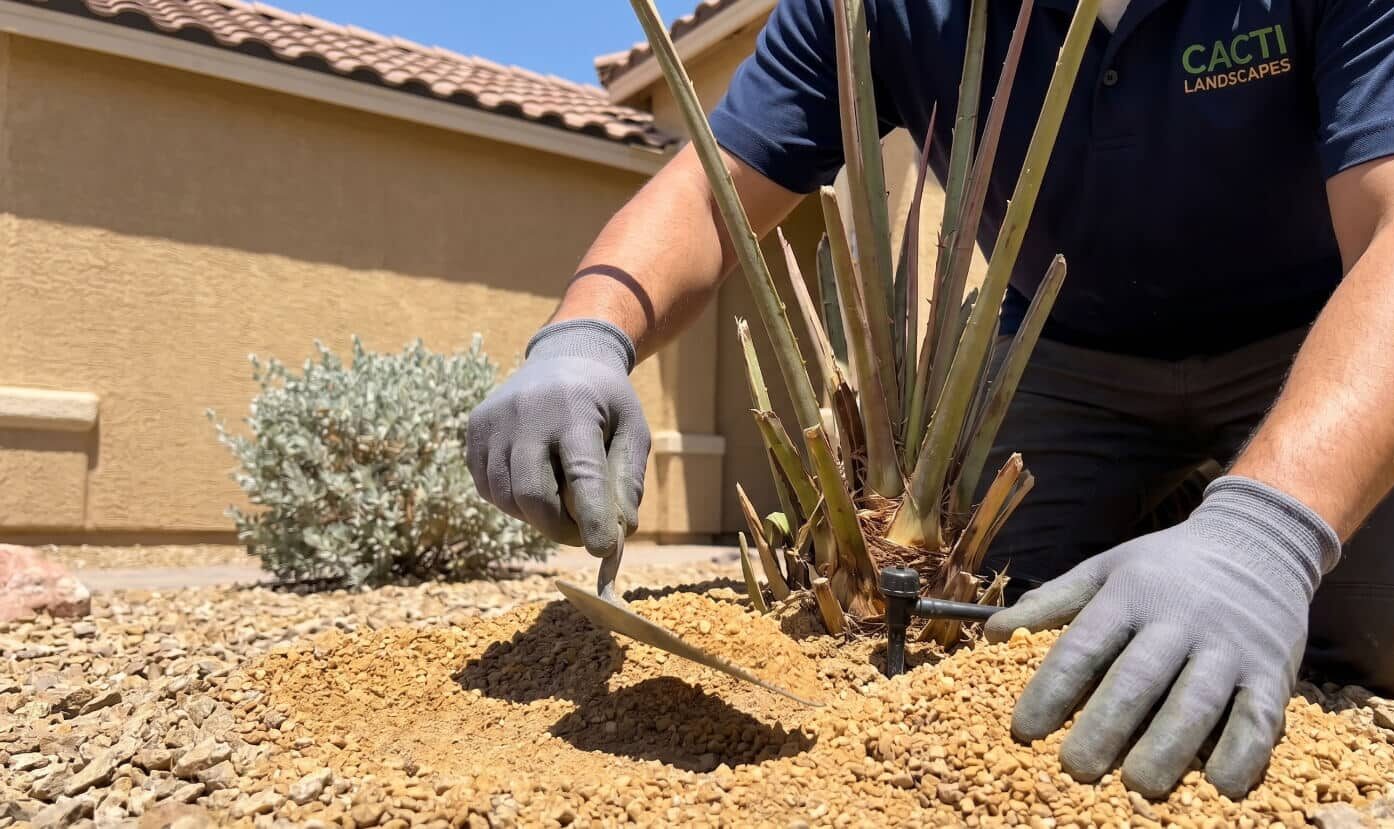
Some scope is worth handling yourself. Irrigation audits, routine pruning, and mulching are manageable weekend work for most homeowners. Beyond that, the time and equipment required usually make professional help the more practical call.
Common triggers worth bringing in a pro: more than one irrigation zone with problems, significant plant replacement, hardscape repair, or a yard that has gone more than one season without attention.
Cacti Landscapes has served the Las Vegas Valley since 2002, licensed by the Nevada State Contractors Board with zero complaints, insured, and certified as an SNWA Water Smart Contractor. Most Henderson service calls start with a full property assessment covering irrigation, plant health, and system efficiency in a single visit.
Get a free estimate in Henderson or call 702-370-5000 to schedule one.
Key Takeaways
- Start summer prep in early April. By May, you’re working against the clock and against SNWA’s schedule.
- SNWA summer rules run May 1 through August 31: Monday–Saturday only, no watering between 11 a.m. and 7 p.m., no Sunday watering ever.
- Service your irrigation system before summer, not during. Small issues in April turn into major losses by July.
- Mulch at 2–3 inches deep is the single highest-impact move for a desert yard in summer heat.
- Henderson yard summer preparation is a checklist, not theory. The calendar doesn’t wait.
FAQs
These are the questions Henderson homeowners ask most often about summer yard care, with answers grounded in current SNWA rules and desert horticulture guidance.
When should I start preparing my Henderson yard for summer?
Start in early April. That window gives you time to audit irrigation, prune, mulch, and update your watering schedule before May 1, when SNWA summer restrictions begin.
What are Henderson’s summer watering restrictions?
From May 1 through August 31, Henderson residents water Monday through Saturday only, never on Sundays. Landscape irrigation is prohibited between 11 a.m. and 7 p.m. These rules apply valley-wide.
How often should I water desert plants in summer in Henderson?
SNWA recommends watering drip-irrigated plants and trees four days a week in summer. Established desert plants often need less. Water deeply to push roots down 18–24 inches, which improves drought tolerance significantly.
Should I fertilize my yard before summer in Henderson?
Fertilize in early April, not later. Fertilizing during summer heat stresses plants and risks fertilizer burn. Use a slow-release formula designed for desert conditions, and water thoroughly after application.
What type of mulch works best in Henderson’s desert heat?
Decomposed granite, desert rock, and shredded bark at 2–3 inches deep all work well. Rock mulch resists wind displacement but retains less moisture than organic mulch. Organic mulch feeds soil but needs replacing every 1–2 years.
How do I find my Henderson watering group?
Enter your address on the Southern Nevada Water Authority website, or check the watering group letter (A through F) printed on your monthly water bill. The group assignment determines which days you can water Monday through Saturday.
Can I water my Henderson yard on Sundays in summer?
No. Sunday watering is prohibited across the entire Las Vegas Valley, every week of every year, regardless of season. Violating this restriction can result in a water waste fee.
What plants survive Henderson summers without extra watering?
Established native and adapted desert plants, including ocotillo, desert spoon, red yucca, Texas sage, and creosote, survive summer with minimal supplemental watering. New plantings, even drought-tolerant ones, need regular watering for the first year or two to establish roots.