
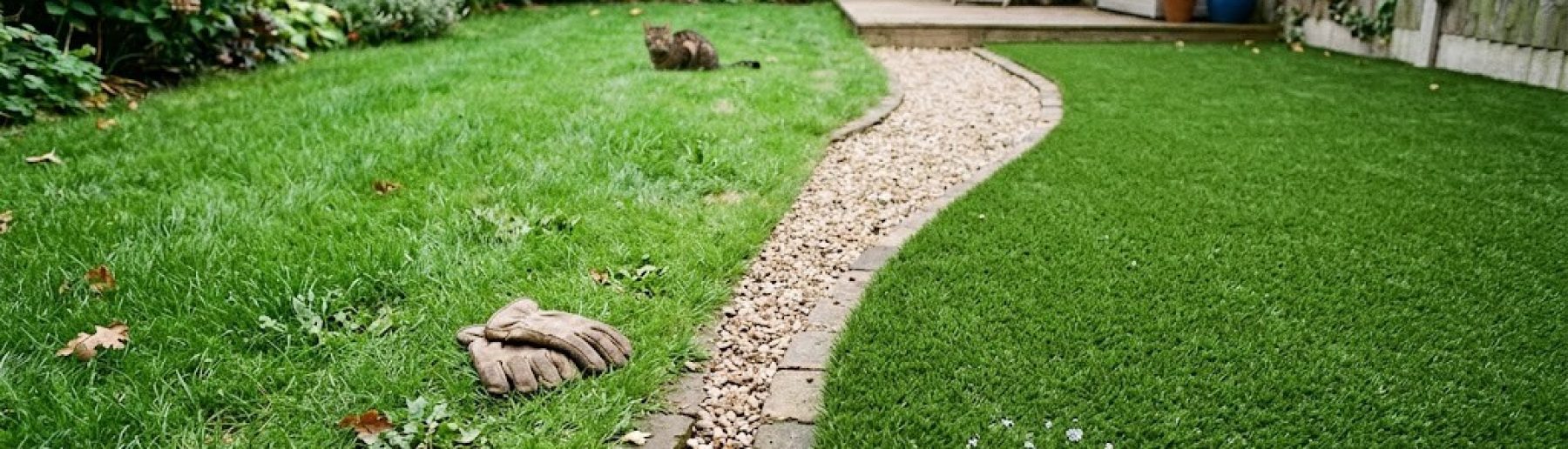
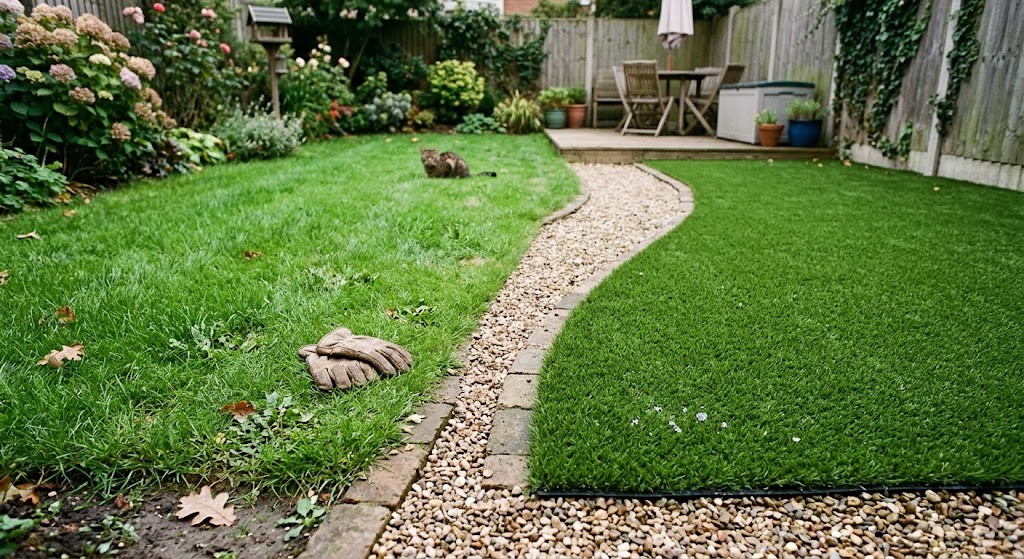
If you’re weighing artificial grass vs. sod for your Las Vegas yard, artificial grass wins on water use and long-term upkeep, while sod wins on upfront cost and natural feel. Which one actually makes sense for your property depends on your budget, how much time you want to spend on lawn care, and how your yard fits under current Southern Nevada Water Authority (SNWA) turf rules. Here’s how the two options really compare once you factor in Las Vegas heat, caliche soil, and local water restrictions.
Artificial Grass vs. Sod at a Glance
| Factor | Artificial Grass | Sod |
| Installed cost | $8–$17 per sq ft | $1.50–$4 per sq ft |
| Lifespan | 15–20 years | Indefinite, with ongoing care |
| Water use | Near zero | 15,000+ gallons/year for a 500 sq ft lawn |
| Monthly upkeep | Occasional rinsing, infill top-off | Weekly mowing, fertilizing, aeration |
| Surface heat | Can exceed 150°F on peak summer days | Stays close to ambient temperature |
| Best for | Low-maintenance, water-conscious homeowners | Homeowners who want a natural lawn and don’t mind the upkeep |
What Sod Costs and How It Holds Up in Las Vegas
Sod installation in Las Vegas typically runs $1.50 to $4 per square foot, which makes it the cheaper option upfront compared to artificial grass. The catch is what’s underneath your yard. Most Las Vegas properties sit on caliche, a hardened calcium carbonate layer a few inches below the surface that blocks water and root growth. Sod laid over untreated caliche will fail within a season, so proper soil prep isn’t optional here. Our step-by-step guide to installing sod in Las Vegas walks through exactly how to break up that layer before sod goes down.
If you go with sod, warm-season grasses like Bermuda hold up far better in Las Vegas summers than cool-season varieties like Kentucky bluegrass or ryegrass, which struggle once temperatures climb past 100°F. Even with the right grass type, a healthy sod lawn in this climate needs a properly programmed irrigation system. This is where a lot of Las Vegas lawns quietly fail: an outdated or poorly zoned sprinkler system either drowns the roots or leaves them stressed in the heat. Our $80 flat-rate irrigation evaluation checks exactly that before you spend money on sod that won’t survive the summer.
What Artificial Grass Costs and How It Holds Up in Las Vegas
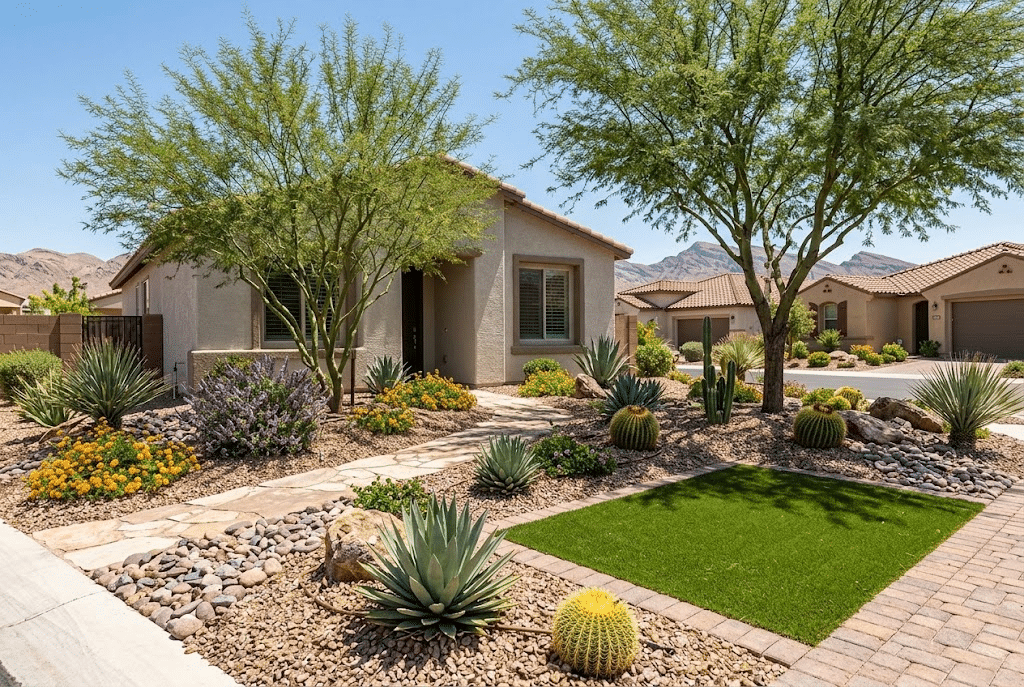
Artificial grass installed in Las Vegas runs $8 to $17 per square foot, depending on pile height, backing type, and base preparation. That’s a bigger investment than sod, but it comes with 15 to 20 years of use without watering, mowing, or fertilizing. Not all turf performs the same way in desert heat: the different types of artificial grass vary in which materials and pile heights hold up best for Las Vegas lawns versus play areas or pet zones.
For homeowners tired of fighting caliche and summer heat just to keep a lawn alive, the trade-off is often worth it. The one real drawback is surface heat. Standard flat-blade turf can get hot enough to burn bare feet on a 105°F day. Newer W-shaped blade designs reflect more sunlight and run 15 to 20 degrees cooler than older flat turf, which matters if you have kids or pets using the yard. Base prep also matters more here than people expect, since a properly compacted base with adequate drainage prevents pooling during Las Vegas monsoon season. Getting these details right is really about choosing artificial turf for extreme heat from the start, rather than fixing a bad installation later.
Water Use and SNWA Rules: The Factor Most Comparisons Skip
This is where the artificial grass vs. sod decision gets more complicated than a simple cost comparison. A 500 square foot sod lawn can use upward of 15,000 gallons of water a year in Las Vegas, and SNWA has tightened turf rules significantly over the past few years.
New residential construction has been barred from installing irrigated front-yard grass since a December 2021 SNWA resolution, and many existing neighborhoods cap how much rear and side yard turf is allowed. Existing single-family lawns are generally grandfathered in, but if you’re planning new sod anywhere on your property, it’s worth confirming what’s allowed before you commit.
SNWA also offers a rebate for homeowners who remove existing sod and convert to artificial turf or desert-friendly landscaping, which can offset a meaningful chunk of installation cost. As a certified SNWA Water Smart Contractor, we handle that conversion process regularly and can tell you during a site visit whether your property qualifies and what the rebate would look like.
Maintenance: What You’re Actually Signing Up For
Sod maintenance in Las Vegas means weekly mowing during growing season, regular fertilizing, periodic aeration to fight compacted soil, and dealing with weed pressure that thrives in irrigated turf. Left unchecked, weeds spread fast in a watered lawn, which is why most sod owners end up needing routine weed control alongside their regular mowing schedule. Dead or thin patches from heat stress or irrigation gaps need to be reseeded or resodded, and that’s an ongoing cost most homeowners underestimate when they compare artificial grass vs. sod purely on installation price.
Artificial grass maintenance is lighter but not zero. You’ll need to rinse it periodically to clear dust, brush high-traffic areas to keep the blades upright, and top off infill every few years. There’s no mowing, no fertilizing, and no dead patches to worry about from a broken sprinkler head.
Which Holds Up Better in Las Vegas Heat?
Both materials face real stress in Zone 9b summers, just in different ways. Sod’s biggest enemy is inconsistent watering combined with caliche soil that won’t let roots establish deep enough to survive heat spikes. Artificial grass’s biggest challenge is surface temperature and drainage during monsoon downpours, both of which come down to installation quality rather than the material itself.
A properly built turf system with the right blade type and base prep, and a properly irrigated sod lawn planted in the right grass variety, can each perform well here. A rushed installation of either one will struggle by year two.
Artificial Grass vs. Sod: How to Decide
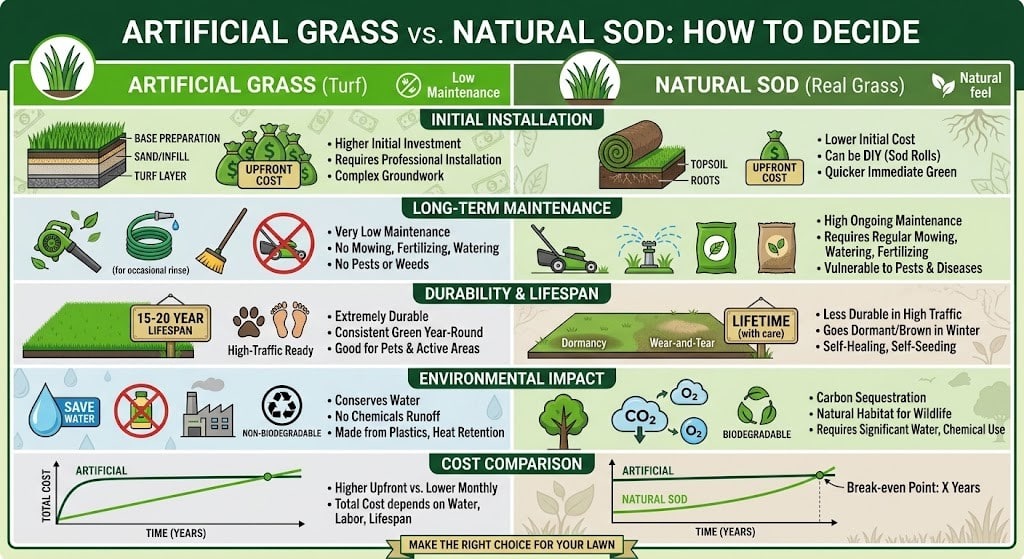
- Choose sod if: you want the lowest upfront cost, don’t mind weekly maintenance, and are willing to invest in proper irrigation and soil prep.
- Choose artificial grass if: you want to cut your water bill, minimize weekly yard work, and don’t mind a higher installation cost for a 15+ year payoff.
- Either way: get your existing irrigation checked before making a decision, since a failing system will undermine sod and can complicate a proper turf conversion if drainage isn’t addressed first.
If you’re still deciding between a natural lawn and synthetic alternatives more broadly, our artificial turf vs. natural grass comparison breaks down the trade-offs from a different angle before you commit either way.
FAQs
Is sod illegal in Las Vegas?
No. Existing sod lawns at single-family homes are not affected by current turf restrictions. What’s restricted is new irrigated grass in front yards of newly built homes and certain nonfunctional turf on commercial and HOA-managed properties.
How long does sod last in Las Vegas heat?
With the right grass variety, proper caliche remediation, and consistent irrigation, sod can last indefinitely with normal seasonal care. Without those three things, most Las Vegas sod lawns show serious stress or die back within one to two summers.
Does artificial turf get too hot to walk on in Las Vegas?
Older flat-blade turf can get uncomfortably hot on peak summer days. Newer W-shaped blade turf reflects more sunlight and stays noticeably cooler, which is why blade type matters more in Las Vegas than in milder climates.
Can I get a rebate for switching from sod to artificial grass?
Yes, in many cases. SNWA offers rebates for converting existing sod to artificial turf or desert-friendly landscaping. Eligibility depends on your property and current turf setup, which we can confirm on-site.
Whether you stick with sod or switch to artificial grass, the right call starts with knowing what your yard and your current irrigation system can actually support. Cacti Landscape is a licensed Nevada contractor (License #84942) and certified SNWA Water Smart Contractor serving Las Vegas and Henderson.