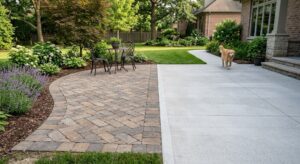

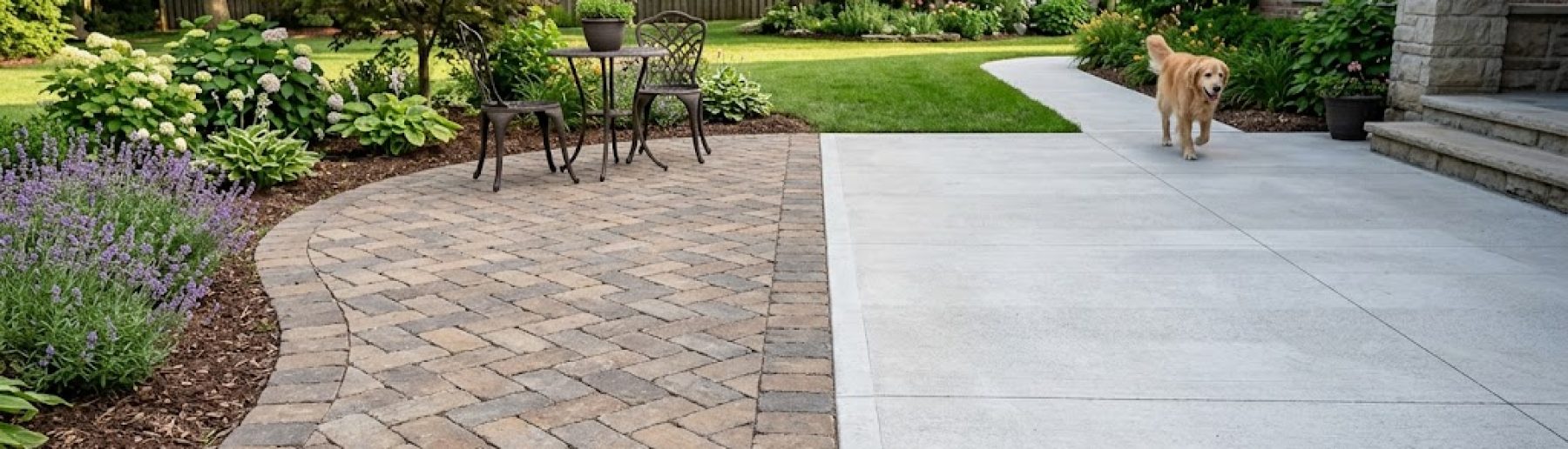
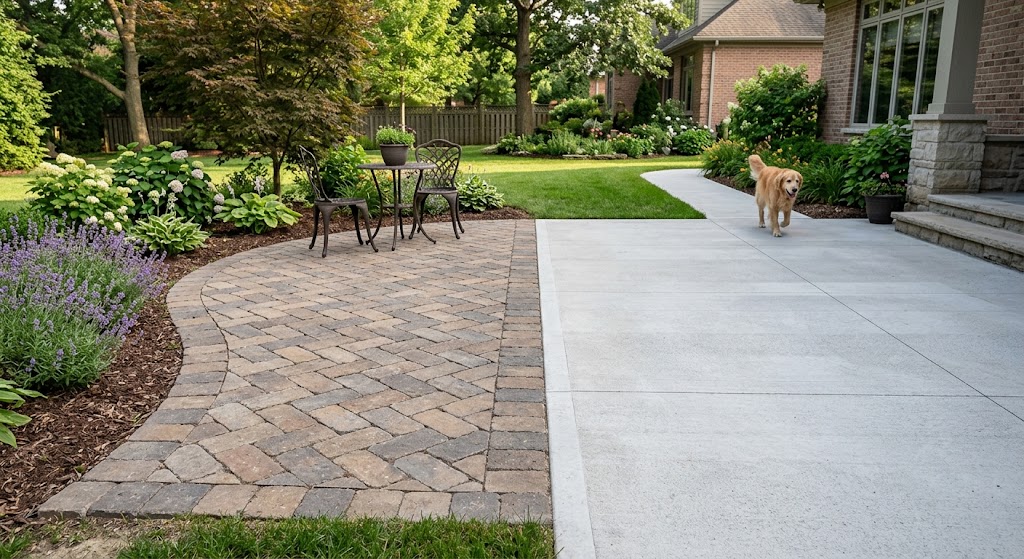
If you’re comparing pavers vs concrete for a patio, walkway, or driveway, the short answer is this: pavers hold up better in Las Vegas because they flex with the ground instead of cracking against it. Concrete is cheaper upfront, but desert soil and heat work against a solid slab in ways most homeowners don’t find out about until year three or four.
Here’s a full breakdown so you can pick the right material for your yard, not just the cheaper one.
Pavers vs. Concrete: Quick Comparison
| Factor | Pavers | Concrete |
| Upfront cost | Higher | Lower |
| Cracking risk in Las Vegas soil | Low | High |
| Repair method | Replace individual pieces | Patch, resurface, or repour |
| Surface temperature | Cooler underfoot | Absorbs and holds heat |
| Design options | Wide range of colors, patterns | Limited, or stamped for texture |
| Lifespan (Las Vegas conditions) | 25+ years | 10-15 years before major cracking |
| Drainage | Water moves through joints | Water pools on the surface |
Why Las Vegas Soil and Heat Change the Answer
In Las Vegas, the pavers vs concrete decision comes down to soil more than anything else. A lot of the valley sits on caliche, a hard, calcium-rich soil layer that doesn’t compact evenly and doesn’t drain the way normal soil does. When temperatures swing from 45 degrees in January to 110-plus in July, the ground underneath a slab expands and contracts. Concrete can’t move with it, so it cracks. Pavers can, because they’re installed as individual units over a flexible base instead of one solid piece.
This is also why patch jobs on concrete driveways in Las Vegas rarely last. The crack you fix this year almost always reopens once the soil shifts again next summer. If drainage is already an issue in your yard, that same soil problem often needs to be addressed with a proper yard drainage system before any new hardscape goes in.
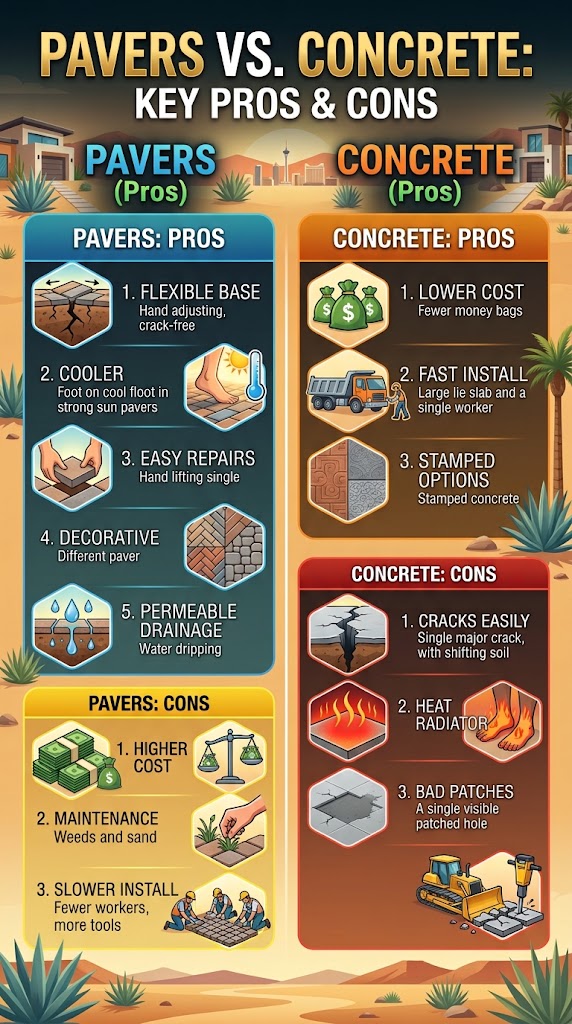
Pavers: Pros and Cons for Las Vegas Homes
Pros:
- Flex with caliche soil movement instead of cracking
- Stay cooler underfoot during peak summer heat
- Damaged pavers can be pulled and replaced individually, no demo required
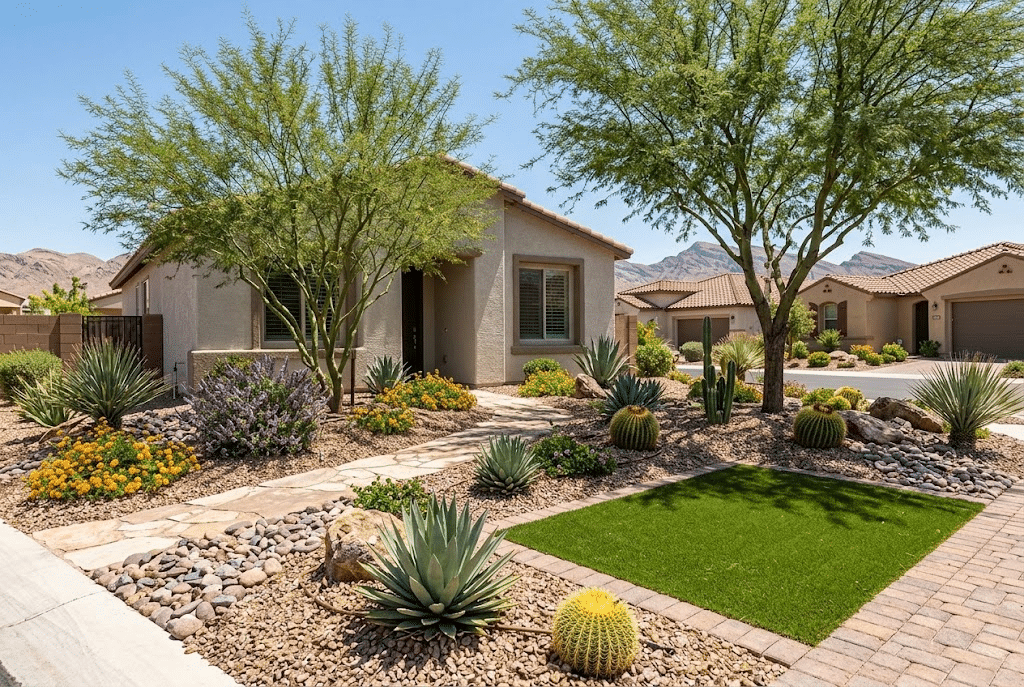
- Wide range of colors and patterns to match desert landscaping or a xeriscape design
- Joints allow water to drain through instead of pooling
Cons:
- Higher installation cost than a poured slab
- Occasional joint sand replenishment or weed treatment between pavers
- Installation takes longer than a straightforward concrete pour
Concrete: Pros and Cons for Las Vegas Homes
Pros:
- Lower upfront cost
- Fast installation for large, flat areas like driveways
- Can be stamped or stained for a decorative look
Cons:
- Cracks more easily over caliche soil and shifting ground
- Absorbs and radiates heat, making surfaces hot to the touch by mid-morning in summer
- Repairs are visible. Patched sections rarely match the original color or texture
- Full replacement is often the only fix once cracking spreads
Cost Comparison: Pavers vs. Concrete in Las Vegas
Concrete usually wins on day one. It costs less to install and goes down fast. But cost over time tells a different story. A concrete driveway or patio in Las Vegas typically needs resurfacing, patching, or full replacement within 10-15 years because of soil movement and heat exposure. Pavers cost more upfront but rarely need more than a spot repair, and a quality paver installation can last 25 years or longer here. If you’re planning to stay in your home long-term, pavers usually cost less per year even though they cost more to install.
Which One Should You Choose?
Choose pavers if you want a surface that holds up long-term against Las Vegas heat and soil movement, especially for driveways, pool decks, and high-traffic walkways. Choose concrete if you’re working with a tight budget, you need a large area covered quickly, or you’re doing a lower-traffic area like a side yard path. Either way, working the material into a full landscape design and installation plan helps it fit the rest of your yard instead of looking like an afterthought.
If you’re planning a patio or driveway you won’t want to touch again for two decades, paver installation is the stronger investment for most Las Vegas homeowners.
Frequently Asked Questions
Do pavers really last longer than concrete in Las Vegas?
Yes. Pavers typically last 25 years or more in Las Vegas conditions, while concrete slabs often start cracking within 10-15 years due to caliche soil movement and extreme heat cycles.
Can concrete be repaired as easily as pavers?
Not really. Concrete repairs usually mean patching or resurfacing, and the repaired section rarely matches the original color or texture. Pavers can be individually removed and replaced without disturbing the surrounding surface.
Which is better for driveways: pavers or concrete?
Pavers generally perform better for Las Vegas driveways because they handle soil shifting and heavy vehicle weight without cracking the way a solid concrete slab does over time.
Do pavers get as hot as concrete in the summer?
No. Pavers stay noticeably cooler underfoot than concrete, which absorbs and holds heat throughout the day in direct Las Vegas sun.
Ready to see which option fits your yard? Cacti Landscape is a licensed Nevada contractor (License #84942) with paver installation experience across Las Vegas and Henderson. Contact us or call (702) 370-5000 for a free quote on your patio, walkway, or driveway project.