

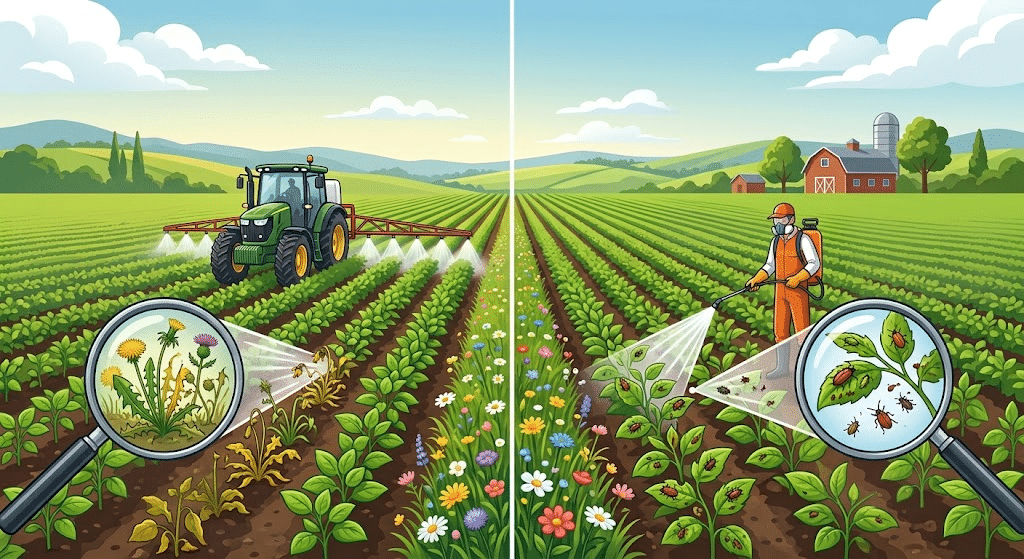
If you’ve stood in the garden aisle wondering about herbicide vs pesticide, here’s the short version: a pesticide is the umbrella term for anything that kills unwanted pests, and a herbicide is one specific type of pesticide made to kill weeds. Every herbicide is a pesticide, but not every pesticide is a herbicide. That distinction matters more in Las Vegas than most places, because using the wrong product on desert-adapted plants can do real damage fast.
Here’s what each one actually does, and how to use them safely in a desert yard.
Herbicide vs Pesticide: The Core Difference
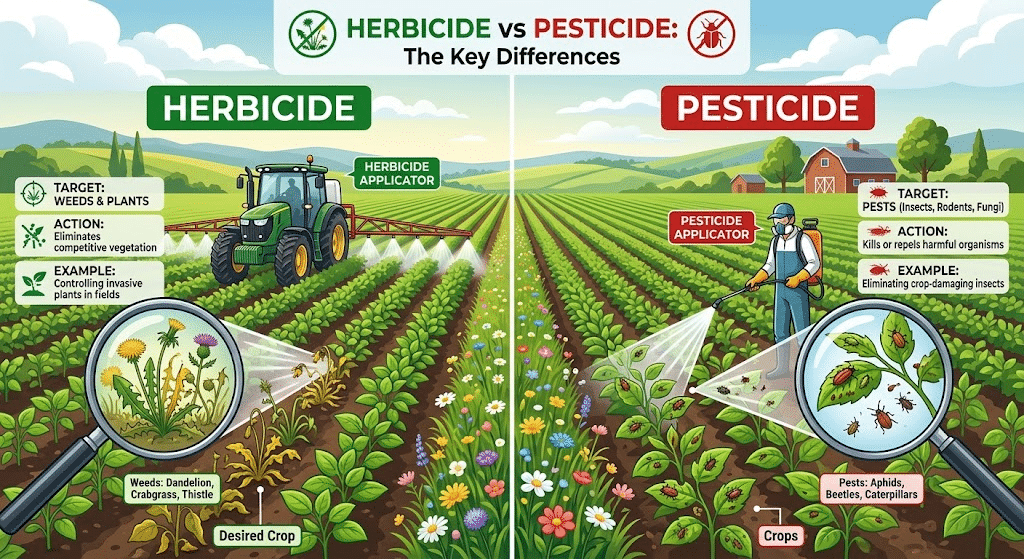
Pesticide is the broad category. It covers herbicides, insecticides, fungicides, and rodenticides: anything designed to control a living thing you don’t want in your yard. Herbicide is the narrow category underneath it, built specifically to target unwanted plants like weeds, grasses, and invasive growth. If a product’s job is to kill a plant, it’s a herbicide. If its job is to kill an insect, fungus, or another pest, it’s a different type of pesticide entirely.
What Herbicides Do
Herbicides target unwanted vegetation. In a Las Vegas yard, that usually means weeds pushing up through rock beds, grass creeping into gravel areas, or invasive growth competing with desert plants for water.
Common Uses in Las Vegas Yards
Homeowners typically reach for herbicides to clear weeds from rock landscaping, prep a yard for weed control maintenance, or kill off grass before converting a lawn to xeriscape under the SNWA rebate program.
Where Herbicides Can Go Wrong on Desert Plants
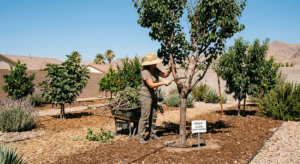
Desert-adapted plants like cacti, succulents, and native shrubs don’t respond to herbicide exposure the way turf grass does. Root systems sit closer to the surface in rock beds, and overspray or runoff can stress or kill nearby desert plants that weren’t the target. Reading the label for plant compatibility before spraying anywhere near cacti, agave, or ornamental grasses matters more here than in a typical lawn-and-turf climate.
What Pesticides Do
Pesticides outside the herbicide category target insects, fungus, and other pests that damage plants or structures.
Common Uses in Las Vegas Yards
In the valley, this usually means treating for grubs in turf, aphids and scale on shrubs, or fungal issues on trees from overhead irrigation. This is where the difference between herbicide and pesticide use matters most: a weed problem calls for herbicide, an insect or fungus problem calls for a different pesticide, and using the wrong one wastes money without fixing anything. Most treatments are timed to spring and early summer, before pests establish for the season.
Insects and Pests to Watch For in the Desert
Spider mites are the most common offender on ornamental plants here, thriving in hot, dry conditions. Aphids and scale cluster on new growth where they’re easy to miss. Grub activity shows up in turf as dead patches that don’t respond to watering, a symptom often mistaken for a weed problem when it’s really a pest issue. Olive trees are a particular concern in this climate, vulnerable to olive fruit fly and scale if not caught early. The weed killer vs pesticide distinction matters here too: none of these insect problems will respond to a herbicide, no matter how well it kills weeds.
Herbicide vs Pesticide: Side-by-Side Comparison
| Factor | Herbicide | Pesticide (general) |
| Target | Weeds and unwanted plants | Insects, fungus, rodents, and other pests |
| Common use in Las Vegas | Rock bed weed control, turf removal for xeriscape conversion | Insect and fungal treatment on trees and shrubs |
| Risk to desert plants | Higher if applied too close to cacti or succulents | Lower, but still requires correct product match |
| Application timing | Pre-emergent or post-emergent, season dependent | Varies by pest life cycle |
| Licensing in Nevada | Regulated by Nevada Department of Agriculture | Regulated by Nevada Department of Agriculture |
Are Herbicides and Pesticides Safe for Desert Landscaping?
Used correctly, yes. Used carelessly, they can damage the exact desert plants you’re trying to protect. Every product carries a label spelling out where it’s safe to apply, how far to stay from ornamental plants, and what conditions to avoid, and that label is the deciding factor, not a general assumption that “weed killer is weed killer.”
Reading the Label Before You Spray
Before applying anything, check the label for plant compatibility, wind and temperature restrictions, and reentry timing. Las Vegas heat changes how fast a product evaporates or drifts, so timing and application method matter as much as the product itself.
Products That Fit SNWA Water Smart Guidelines
If you’re removing grass as part of an SNWA Water Smart conversion, SNWA compliant weed control means using a systemic, non-residual herbicide, not just any product labeled “weed killer.” SNWA specifically recommends a glyphosate-based herbicide, since it’s absorbed through the leaves and kills the grass down to the root without leaving soil-active residue behind. A residual or “soil sterilant” herbicide, by contrast, can linger in the ground and damage the desert plants and rock landscaping you’re about to install.
Timing matters too. Treat the grass while it’s actively growing, wait the period listed on the product label for the herbicide to fully translocate to the root, and confirm the grass is dead before removal begins. Pulling or tilling too early is one of the most common reasons homeowners see regrowth push through new rock beds months later, and it can complicate SNWA rebate inspections if the conversion doesn’t hold up.
Choosing a product labeled for residential turf removal and giving it time to work before installation keeps the conversion compliant and durable.
When to Handle It Yourself vs. Call a Professional
Spot-treating a few weeds in a rock bed is a reasonable DIY task. Larger weed pressure across a full yard, pest issues on mature trees, or any application near desert plants you can’t afford to lose is where it makes sense to bring in a licensed applicator. A professional knows which products are labeled for use near cacti and succulents, and how to apply them without overspray drifting onto plants that weren’t the target.
Why Homeowners Choose Cacti Landscape for Weed and Pest Control
Cacti Landscape handles weed control and preventative plant care for homes across Las Vegas and Henderson, using products matched to desert landscaping instead of one-size-fits-all treatments. That means fewer callbacks for damaged plants and weed control that actually holds up in rock beds and xeriscape yards.
FAQs
Is Roundup a herbicide or a pesticide?
Roundup is a herbicide. It’s formulated specifically to kill unwanted plants and weeds, which makes it a subcategory of the broader pesticide classification, not a general-purpose pest control product.
Can herbicides kill my desert landscaping plants?
Yes, if applied too close or without checking the label for plant compatibility. Cacti, succulents, and other desert plants can be damaged by overspray or runoff from herbicides meant for weeds or turf grass.
Do I need a license to apply pesticides in Nevada?
Homeowners can apply many over-the-counter products on their own property, but commercial application for hire requires licensing through the Nevada Department of Agriculture. Hiring a licensed contractor ensures products are applied correctly and legally.
What’s the difference between a weed killer and an insecticide?
A weed killer is a type of herbicide, targeting unwanted plants. An insecticide is a different pesticide category entirely, targeting insects rather than vegetation.
How often should I treat my yard for weeds and pests in Las Vegas?
It depends on the season and what’s growing, but most Las Vegas yards benefit from a pre-emergent herbicide application in early spring and fall, with pest treatments scheduled around specific insect activity rather than on a fixed calendar.
Have questions about what’s safe to use in your yard? Cacti Landscape is a licensed Nevada landscape contractor (License #84942) offering weed control and plant care across Las Vegas and Henderson. Contact us at (702) 370-5000.