
Fruit tree care in Las Vegas comes down to three things: deep, infrequent watering, alkaline soil correction, and heat protection during peak summer months. Unlike fruit trees grown in milder climates, trees planted in the Las Vegas Valley face intense sun, low humidity, and caliche soil that traps water and blocks root growth. Get those three factors right and most fruit trees, from citrus to figs to stone fruit, will produce reliably year after year.
What follows covers how to care for fruit trees in our specific desert conditions, with dedicated sections on citrus fruit tree care and fig fruit tree care since those are the two most commonly planted fruit trees in Las Vegas yards.
Why Fruit Tree Care Looks Different in the Desert
Most general fruit tree advice online is written for growers in the Midwest or Pacific Northwest, where rainfall, soil composition, and humidity levels are nothing like ours. Applying that advice directly in Las Vegas usually leads to root rot from overwatering, sunburned bark, or trees that never fully establish.
Here’s what makes Las Vegas different:
- Soil is alkaline and often sits on a layer of caliche, a hardpan that blocks drainage and root expansion.
- Summer temperatures regularly exceed 105°F, which stresses young trees and can scorch trunks and leaves.
- Annual rainfall is under 5 inches, so trees depend almost entirely on irrigation.
- Low humidity accelerates water loss through the leaves, especially in trees with larger leaf surfaces like citrus and fig.
Fruit trees selected and cared for with these conditions in mind will outperform anything planted using generic care instructions. If you’re still deciding what to plant, it helps to understand which trees struggle here and why before you invest in a tree that isn’t suited to the valley.
How to Care for Fruit Trees: Soil Preparation
Before planting or addressing an existing tree’s decline, soil is the first thing to check. Caliche and heavy alkaline clay are the two most common issues in Las Vegas yards, and both interfere with the roots’ ability to take up oxygen and water.
Steps to prepare soil for fruit trees:
- Dig a planting hole two to three times wider than the root ball, but no deeper, so the tree doesn’t sit in a bowl that collects water.
- Break through any caliche layer with a pick or auger; if the layer is more than a few inches thick, drainage may need to be engineered rather than dug through.
- Amend native soil lightly with compost, but avoid replacing it entirely with rich potting soil, which can create a “container effect” that discourages roots from spreading outward.
- Test drainage before planting by filling the hole with water and timing how long it takes to drain; anything slower than an inch per hour signals a drainage problem that needs correcting first.
If your soil consistently drains poorly or your trees show yellowing leaves despite regular watering, it’s worth a closer look. Improving soil quality in Las Vegas yards covers amendment strategies specific to our native soil profile.
Watering Fruit Trees the Right Way in Las Vegas
Overwatering and underwatering often produce the same symptoms in fruit trees: yellowing leaves, leaf drop, and stunted fruit. The difference usually comes down to how the water is delivered.
Fruit trees in Las Vegas do best with deep, infrequent watering rather than shallow daily watering. A mature citrus or fig tree needs water to reach 2 to 3 feet down, encouraging roots to grow deep where soil temperatures are more stable. Watering shallowly every day trains roots to stay near the surface, where they’re exposed to heat stress and more vulnerable to drought.
General watering guidelines by season:
- Summer: deep watering every 5 to 7 days for established trees
- Spring and fall: every 10 to 14 days
- Winter: every 3 to 4 weeks, or less if rain occurs
- Newly planted trees: more frequent watering for the first two summers while roots establish, tapering off as the tree matures
Drip irrigation is the most efficient method for fruit trees since it delivers water slowly and directly to the root zone without wetting the trunk or foliage, which reduces fungal risk. If your current irrigation system wasn’t designed with fruit trees in mind, or you’re not sure your existing zones are delivering the right amount of water, it’s worth a check. Our $80 flat-rate irrigation evaluation identifies exactly what needs adjusting, whether that’s emitter placement, zone timing, or a system that’s simply undersized for mature trees. You can request one through our irrigation services page.
Citrus Fruit Tree Care in Las Vegas
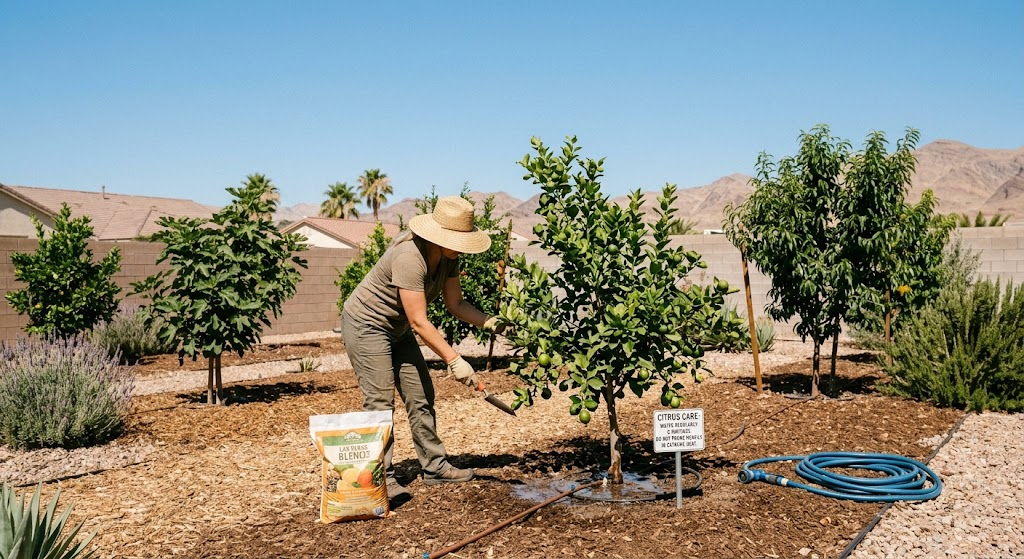
Citrus fruit tree care in Las Vegas is possible and popular, but citrus trees need more protection here than in warmer coastal climates where they originate. Lemon, lime, orange, and grapefruit trees can all thrive with the right setup.
Key citrus care points for our climate:
- Plant on the east side of the home for morning sun with afternoon shade, or use shade cloth on south- and west-facing trees during the hottest stretch of summer.
- Wrap trunks or apply tree paint to prevent sunscald on young or thin-barked citrus varieties.
- Fertilize with a citrus-specific formula in early spring and again in late summer; citrus is a heavy feeder and alkaline soil can lock out micronutrients like iron and zinc.
- Watch for frost risk in winter; even in Las Vegas, occasional freezes can damage citrus, so cover young trees on nights below 32°F.
- Water deeply but let the top few inches of soil dry between waterings; citrus roots are sensitive to constantly saturated soil.
Yellowing leaves with green veins on citrus usually point to iron chlorosis, a common issue in our alkaline soil. A chelated iron soil treatment typically resolves it within a few weeks.
Fig Fruit Tree Care in Las Vegas
Fig fruit tree care in Las Vegas tends to be more forgiving than citrus since fig trees are naturally suited to hot, dry, Mediterranean-like climates. Once established, fig trees are one of the more drought-tolerant fruit trees for our region.
Fig tree care essentials:
- Figs tolerate our alkaline soil better than most fruit trees but still benefit from a layer of organic mulch to regulate soil temperature and retain moisture.
- Prune in late winter while the tree is dormant, removing dead or crossing branches to improve airflow and sun exposure to developing fruit.
- Established fig trees can handle less frequent watering than citrus, but consistent moisture during fruit development (typically June through August) improves fruit size and reduces splitting.
- Protect young fig trees from full afternoon sun for the first year; mature trees generally tolerate full sun without issue.
- Watch for fig rust, a fungal issue that shows up as orange spots on leaves during humid stretches like monsoon season; improving airflow through pruning is the most effective prevention.
Pruning and Seasonal Maintenance
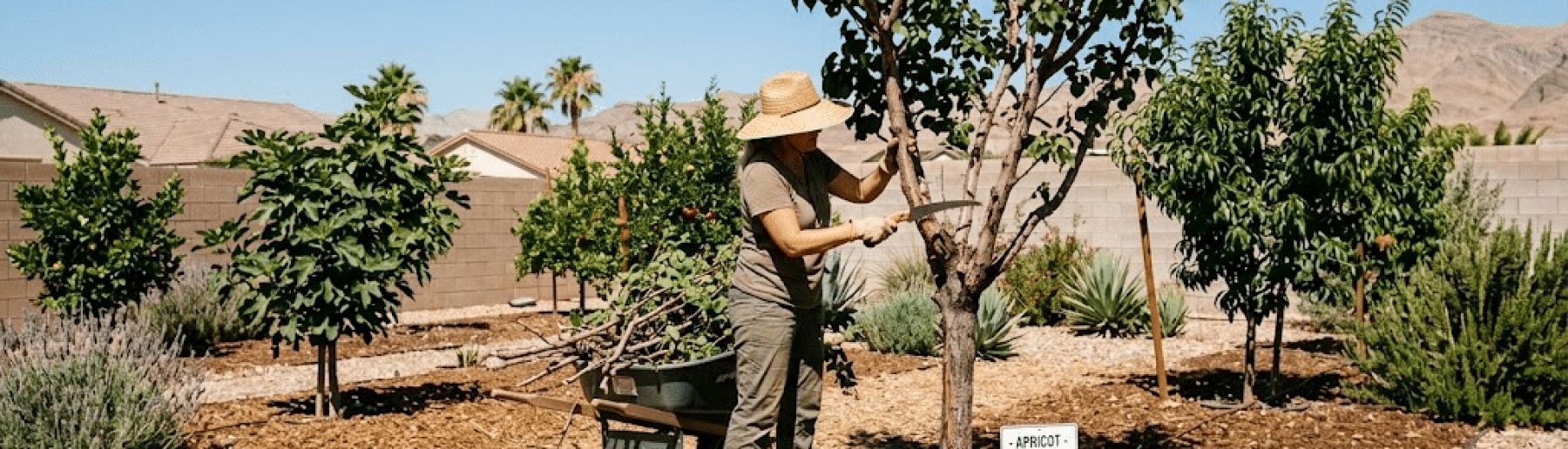
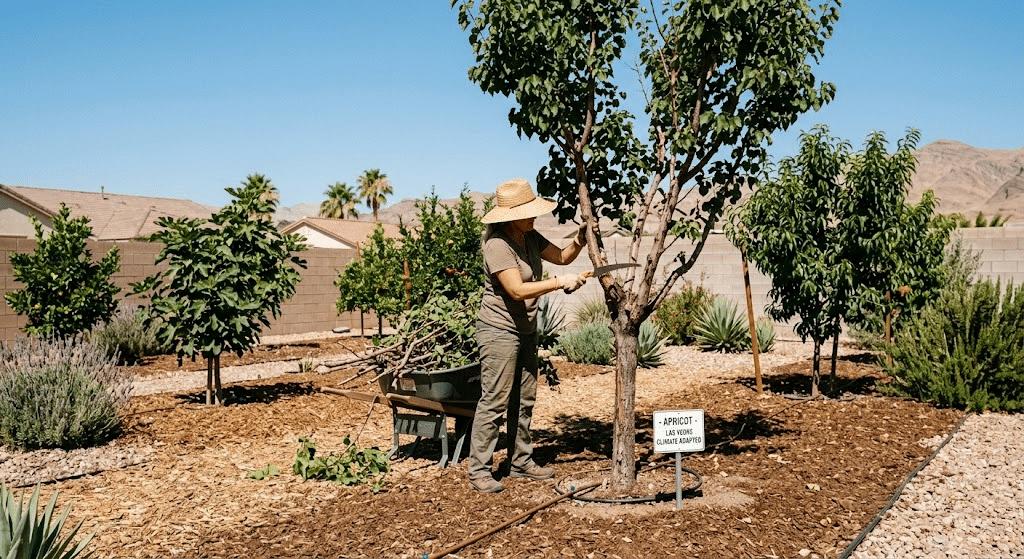
Pruning timing matters as much as technique. Prune too early and you risk frost damage to new growth; prune too late and you cut off the current season’s fruiting wood. Knowing the best time to trim trees in Las Vegas starts with dormancy: most fruit trees here should be pruned from December through February, with light shaping cuts allowed in summer to manage size or remove damaged growth.
Seasonal fruit tree maintenance checklist:
- Late winter: prune dormant wood, apply dormant oil spray if pest pressure was an issue the prior year.
- Spring: fertilize, check irrigation emitters before the heat ramps up, apply fresh mulch.
- Summer: monitor watering closely, watch for sunscald and pest activity, harvest fruit as it ripens.
- Fall: reduce watering frequency gradually, clean up fallen fruit to limit pest and disease pressure over winter.
Common Fruit Tree Problems in Las Vegas Yards
A few issues show up repeatedly in fruit trees across the valley:
- Sunscald: cracked or discolored bark on the south and west sides of the trunk, usually from insufficient shade or a tree planted in too exposed a spot
- Iron chlorosis: yellow leaves with green veins, most common in citrus, caused by alkaline soil locking out iron
- Root rot: wilting and leaf drop despite adequate watering, usually from poor drainage or overwatering in heavy or caliche-heavy soil
- Fruit drop: often a stress response to inconsistent watering rather than a disease; steady irrigation resolves most cases
If a tree is showing decline you can’t diagnose, a professional evaluation can catch soil, irrigation, or pest issues before they become fatal to the tree.
Get Professional Fruit Tree Care Support in Las Vegas
Whether you’re planting your first citrus tree or trying to save a struggling fig, fruit tree care in Las Vegas is easier with the right soil prep, watering schedule, and seasonal maintenance in place. Cacti Landscape is a licensed Nevada contractor (License #84942) serving Las Vegas and Henderson, NV, with tree planting, irrigation, and maintenance services built around our desert climate.
If your fruit trees need a planting plan, an irrigation check, or ongoing seasonal care, our tree planting and maintenance services cover all of it. Call (702) 370-5000 to schedule a visit.
Frequently Asked Questions
How often should I water fruit trees in Las Vegas?
Established fruit trees need deep watering every 5 to 7 days in summer, tapering to every 3 to 4 weeks in winter. Newly planted trees need more frequent watering during their first two summers.
What is the best fruit tree for Las Vegas yards?
Fig, pomegranate, and citrus (especially lemon and lime) tend to perform the most reliably in Las Vegas soil and climate with proper care.
Why are my citrus tree’s leaves turning yellow?
Yellow leaves with green veins usually indicate iron chlorosis, a common issue in Las Vegas’ alkaline soil. A chelated iron treatment typically corrects it within a few weeks.
When should I prune fruit trees in Las Vegas?
Most fruit trees should be pruned during dormancy, from December through February, to avoid removing fruiting wood or exposing new growth to frost.
Can fig trees survive Las Vegas summers?
Yes. Fig trees are naturally suited to hot, dry climates and are one of the more drought-tolerant fruit tree options for the valley once established.