
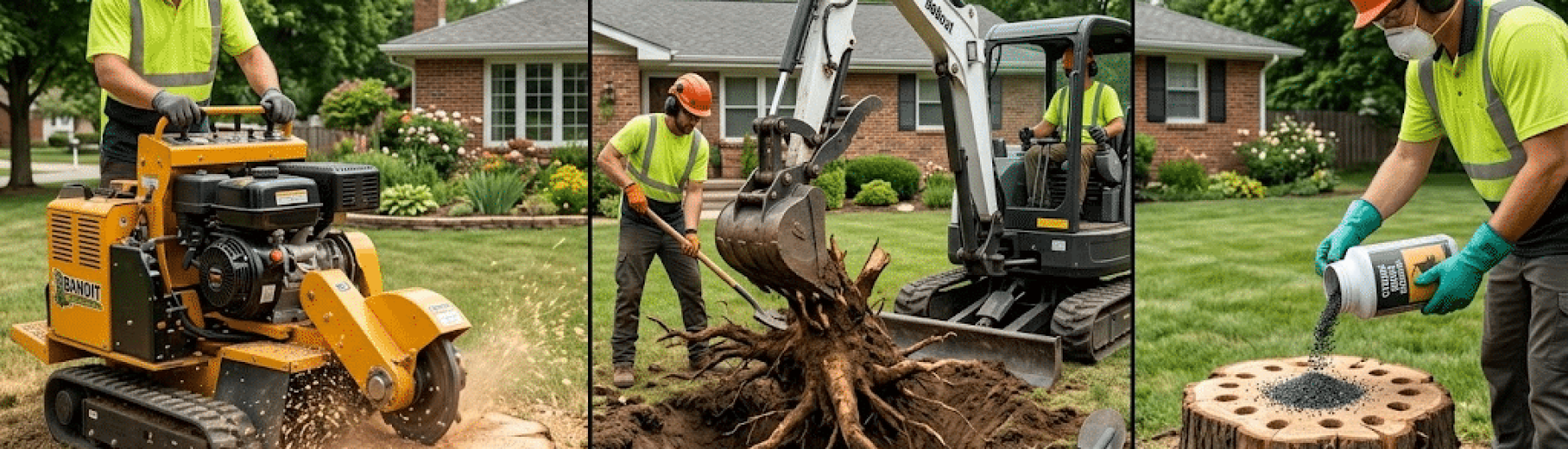
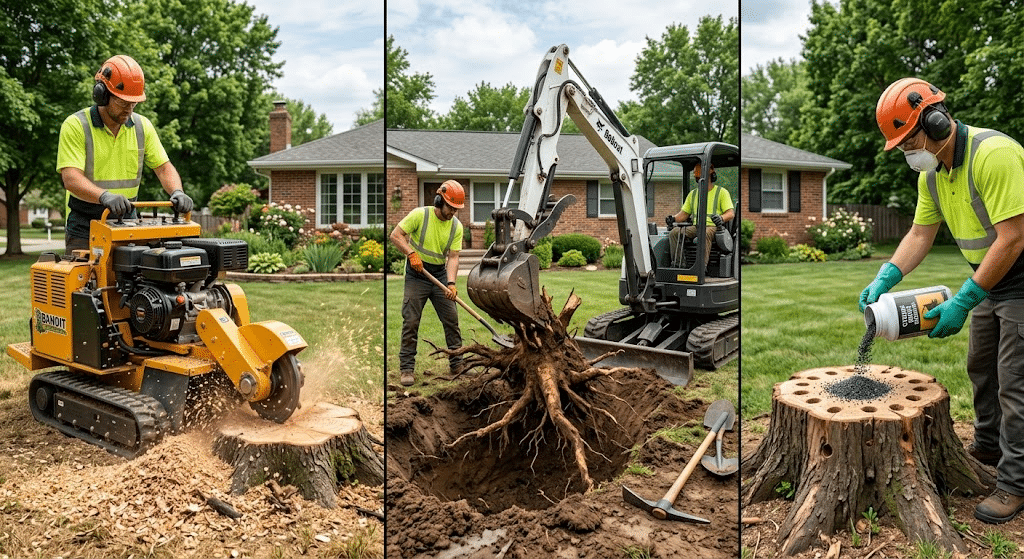
If you’re wondering how to remove a stump, the short answer is that you have four real options: dig it out by hand, use a chemical accelerant to speed up decay, burn it down, or grind it out with a stump grinder. For most homeowners, stump grinding is the fastest and safest choice, especially in Las Vegas where a hard caliche layer sits just below the topsoil and makes manual digging far more difficult than it looks online.
This guide walks through every method, what each one actually costs, and where DIY stump removal tends to go wrong in desert soil.
Do You Need to Remove a Stump?
A leftover stump isn’t just an eyesore. It can send up new shoots for years, block mowing or a redesign, and become a magnet for termites and other wood-boring pests. In the Las Vegas area, dry conditions push desert termites toward any decaying wood source they can find, and an old stump left in the yard is an easy target.
Common reasons homeowners remove a stump:
- Preventing regrowth from the root system
- Reducing termite and pest risk
- Clearing space for new landscaping or turf
- Removing a mowing or foot-traffic obstacle
How to Remove a Tree Stump: Methods Compared
There isn’t one right way to remove a tree stump. The best method depends on the stump’s size, how much time you have, and whether you want the roots gone completely or just the visible stump out of the way.
Manual Digging and Removal
You dig around the root ball, cut through the major roots with a saw or root axe, and pry the stump free. This works on small, shallow-rooted trees but is slow and physically demanding, especially once you hit compacted desert soil.
Chemical Stump Removal
A potassium nitrate-based product is drilled into the stump to speed up natural decay. It’s low effort but slow, often taking several weeks to months before the softened wood can be broken apart and removed.
Burning the Stump
Once a stump is dry and chemically treated or drilled full of holes, it can be burned down over time. This method carries fire risk and is often restricted by local ordinance, so it’s worth checking Clark County burn regulations before attempting it.
Stump Grinding
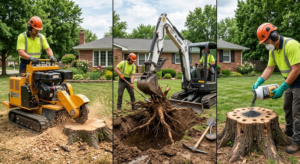
A gas-powered grinder shreds the stump down below ground level in a single visit. This is the method most professionals use because it’s fast, leaves the yard usable immediately, and doesn’t require waiting on decay.
| Method | Time Required | Difficulty | Best For |
|---|---|---|---|
| Manual digging | 1 to 2 days | High | Small, shallow-rooted stumps |
| Chemical removal | 4 to 10 weeks | Low effort, slow | Homeowners in no rush |
| Burning | Several days, plus prep | Moderate, restricted | Where permitted, dry stumps |
| Stump grinding | 1 to 3 hours | Low (with rental) to none (pro) | Most residential stumps |
How Much Does Stump Removal Cost?
Stump removal cost depends mainly on the stump’s diameter, root depth, and how accessible it is for equipment.
Cost by Stump Diameter
| Stump Diameter | Estimated Cost |
| Under 12 inches | $75 to $150 |
| 12 to 24 inches | $150 to $350 |
| 24 inches and larger | $350 to $700+ |
Grinding vs. Full Removal
Stump grinding chips the visible stump and top roots down below soil level, which is usually enough for regrowth prevention and lawn use, and it’s the more affordable option. Full stump removal excavates the entire root ball, which costs more but is worth it if you’re planning to build, plant a new tree in the same spot, or install sod over the area.
What Raises Cost in Las Vegas
Three things push stump removal pricing above national averages here:
- Caliche layer: the dense, hardened soil beneath most yards resists both digging and grinding, which slows the job down.
- Root spread: desert-adapted trees like mesquite and palo verde send roots wider and deeper than expected for their trunk size.
- Limited access: tight side-yard or backyard access can mean extra labor to get equipment where it needs to go.
DIY Stump Removal vs. Hiring a Professional
DIY stump removal is possible for small stumps under about 12 inches, but it requires the right tools: a mattock or root axe, a chainsaw, a rented stump grinder if you’re not digging by hand, and a chemical accelerant if you’re going that route. Rental grinders alone typically run $100 to $200 for a half day, which narrows the savings gap compared to hiring a pro, especially once you factor in your own time.
The most common DIY mistake in this area isn’t the tool choice; it’s underestimating the ground. Caliche can stop a shovel cold a foot down, and desert tree roots often spread two to three times wider than the canopy suggests. What looks like a weekend project can quickly turn into several exhausting days once you hit either one.
Step-by-Step: How to Remove a Small Stump Yourself
If you’re tackling a small stump on your own, here’s the general process:
- Clear the area around the stump of rocks, mulch, and debris.
- Use a chainsaw to cut the stump as close to ground level as possible.
- Dig around the base to expose the major roots, working outward in a circle.
- Cut through exposed roots with a root saw or axe as you go.
- Rock the stump back and forth to loosen it, then pry it free with a digging bar.
- Remove the stump, backfill the hole with fresh soil, and prep the soil for planting if anything new is going in.
- Level and compact the area before planting or laying new sod.
Why Stump Removal Is Harder in Las Vegas Yards
Most stump removal guides are written for softer, moisture-rich soil found elsewhere in the country, and the advice doesn’t fully hold up here. Las Vegas yards commonly sit on a layer of caliche, a hardened calcium carbonate deposit that can be as tough as concrete and sits anywhere from a few inches to a couple feet below the surface. Digging through it by hand is slow and can dull or break standard tools.
Desert-adapted species like mesquite and palo verde are also built to survive on minimal water, which means their root systems spread out wide and deep to find whatever moisture is available. A stump that looks compact above ground can have a root network several times larger underground. If you’re using a chemical accelerant, extreme summer heat can actually speed up decay, but it also dries the wood out unevenly, sometimes leaving stubborn roots only partially softened underneath.
When to Call a Professional for Stump Removal
DIY works fine for small, isolated stumps, but it’s worth calling a professional when:
- The stump is over 12 to 15 inches in diameter.
- It’s close to a foundation, fence, or irrigation line.
- You’re clearing multiple stumps at once.
- The tree was mesquite, palo verde, or another wide-rooting desert species.
- You want the area ready for new sod, turf, or landscaping right away.
Our crews deal with caliche and desert root systems on a regular basis, which means we can size up the right method and get it handled in one visit instead of a multi-week DIY project. If you’re already planning a yard refresh after stump removal, it’s also a good time to book our irrigation evaluation to make sure your system is sized correctly before new sod or plants go in. For a full quote on your project, reach out to our team or call (702) 370-5000. We’re licensed (#84942) and insured for jobs of any size.
FAQs
How long does it take for a stump to rot on its own?
Left untreated, a stump can take anywhere from 3 to 7 years to fully decompose naturally, depending on the tree species and local climate. Dry desert conditions in Las Vegas tend to slow natural rot compared to more humid regions.
Is it cheaper to grind a stump or dig it out?
Grinding is almost always cheaper and faster than full excavation. Digging out the entire root ball requires more labor and equipment time, which raises the cost, but it’s the better option if you need the roots completely gone.
Will a tree stump grow back if not fully removed?
Yes, many species can send up new shoots from a stump or remaining roots if it isn’t ground down far enough or treated. Grinding below ground level or applying a stump killer after cutting helps prevent regrowth.
Can I remove a stump without a grinder?
Small stumps can be removed by hand with digging tools, and larger ones can be broken down over time with a chemical accelerant. Neither is as fast as grinding, and both get significantly harder once you hit a caliche layer.
How deep do you need to remove tree roots?
For most residential purposes, grinding 4 to 6 inches below ground level is enough to prevent regrowth and allow for replanting or sod installation. Full root excavation goes deeper but is rarely necessary unless you’re building on the site.
Does homeowners insurance cover stump removal?
Typically no, unless the tree fell due to a covered event like a storm and the stump removal is part of that cleanup. Routine stump removal is generally considered a landscaping expense.
What’s the average cost to remove a small stump in Las Vegas?
Most small stumps under 12 inches in diameter run between $75 and $150 to grind out, though caliche soil and root depth can push that estimate higher on individual jobs.