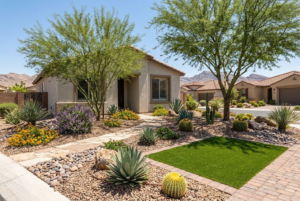

Las Vegas gets about 4 inches of rain per year. Combine that with 115°F summers, soil that hits caliche within the first foot, and a water authority actively paying homeowners to pull out grass. The plant selection question essentially answers itself. The wrong plants don’t struggle quietly; they die fast and cost money to replace.
The plants below are organized by type. Each entry includes water requirements and a planting note specific to Mojave Desert soil conditions.
What Are the Best Drought-Tolerant Plants for Landscaping in Las Vegas?
Las Vegas falls in USDA Hardiness Zone 9a–9b, which supports a wide range of drought-tolerant plants for landscaping native or adapted to Mojave Desert conditions. The best options handle extreme heat, alkaline pH, and caliche-heavy soil while requiring minimal irrigation once established.
Top 10 drought-tolerant plants for Las Vegas:
- Desert Willow
- Palo Verde
- Mesquite (Thornless Chilean)
- Texas Ranger (Purple Sage)
- Brittlebush
- Yellow Bells
- Agave Parryi
- Prickly Pear Cactus
- Desert Marigold
- Trailing Lantana
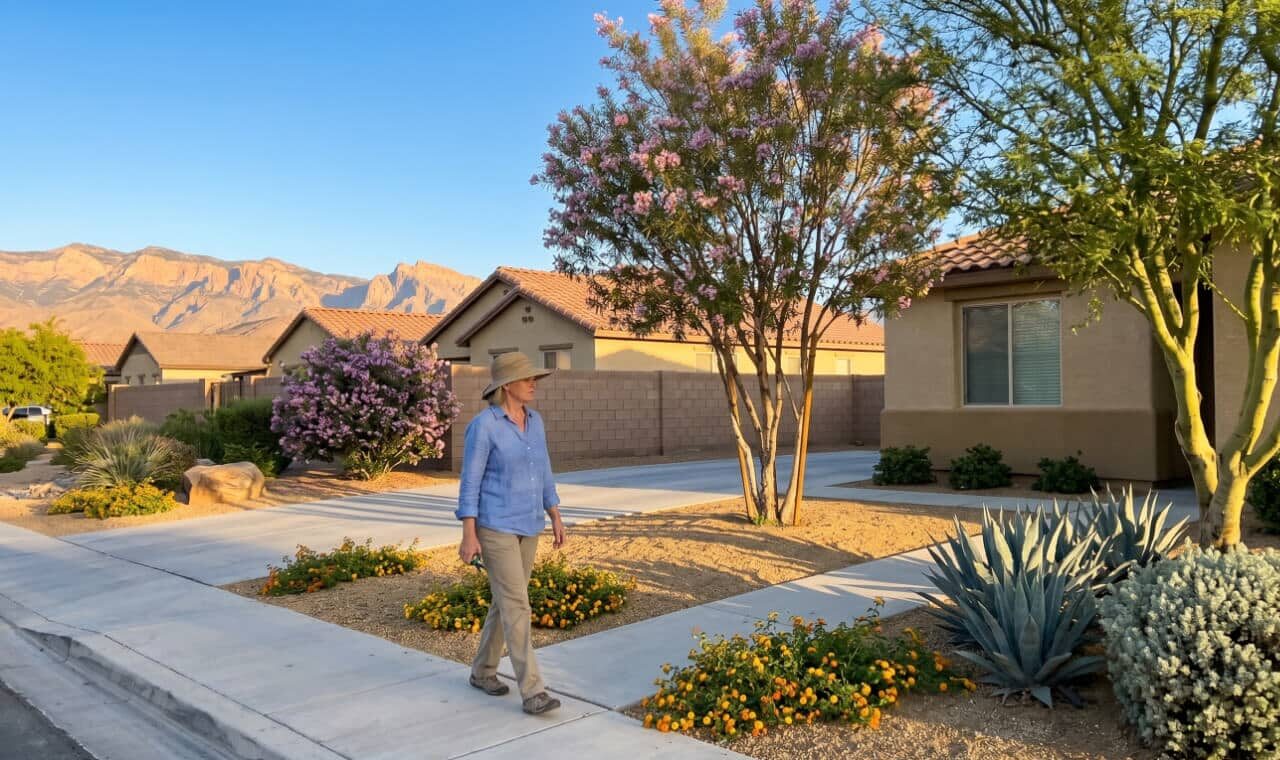
Top Drought-Tolerant Plants for Las Vegas
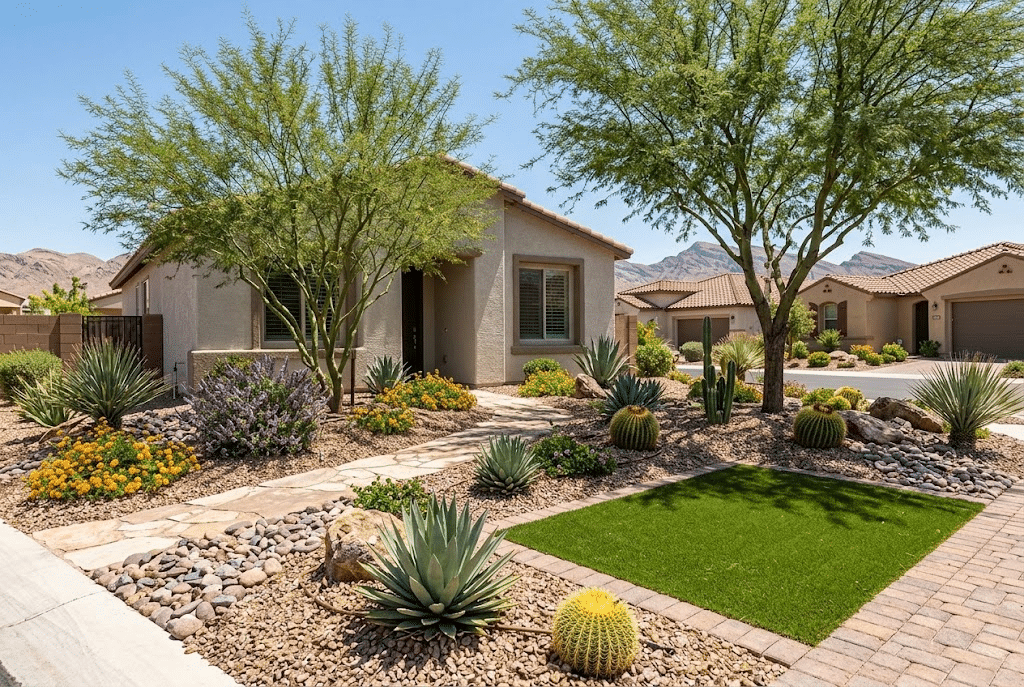
The drought-tolerant plants for landscaping below cover four functional roles in a Las Vegas yard: structural shade, mid-layer color and texture, architectural focal points, and groundcover. Species selection matters, but so do spacing and layering, both of which fall under the broader category of desert landscaping ideas that determine how well a yard comes together over time.
Best Drought-Tolerant Trees for Las Vegas
The best shade trees for Las Vegas yards do more than block sun; they lower ground temperature, protect smaller plants beneath, and reduce cooling costs. The five entries below focus specifically on drought tolerance and Mojave soil compatibility.
Desert Willow
A slender, multi-trunk tree reaching up to 25 feet, with trumpet-shaped blooms in pink, lavender, and white that appear from spring through early fall. One of the more visually distinctive choices for desert landscaping Las Vegas properties without fighting the climate.
Water needs: 10–15 gallons every 2–3 weeks in summer / once a month in winter.
Planting tip: Caliche is the main obstacle. Break through at least 3 feet and amend with sulfur before backfilling, so roots have room to establish below the hardpan.
Palo Verde
The Palo Verde’s green trunk continues photosynthesis even when the tree sheds leaves in drought stress. Spring bloom turns the entire canopy yellow. Filtered shade from the fine-leafed canopy is gentler on plants below than a dense-canopy tree.
Water needs: 8–10 gallons every 2–3 weeks in summer / once a month in winter.
Planting tip: Plant on a slight berm. Flat Mojave soil holds moisture longer than the surface suggests, and Palo Verde won’t tolerate standing water.
Mesquite (Thornless Chilean)
Fast-growing at 3–4 feet per year when young, eventually providing dense shade at 30–40 feet. The thornless variety is the practical choice near walkways. Roots run deep and aggressive; keep 10–15 feet from irrigation lines and hardscape.
Water needs: 15–20 gallons every 3–4 weeks in summer / once a month in winter.
Planting tip: Dig twice as wide as the root ball to break up lateral caliche. Stake young trees in exposed areas to prevent lean during the first summer.
Shoestring Acacia
An evergreen weeping-form tree with long, pendulous photosynthetic stems (technically not leaves) and pale yellow blooms in late winter. One of the better options for privacy screens and wind mitigation in desert landscaping.
Water needs: 10–12 gallons every 2–3 weeks in summer / once a month in winter.
Planting tip: Performs well in poor, alkaline soil. Avoid heavy organic amendments; this tree is conditioned for lean desert conditions.
Desert Museum Palo Verde
A thornless, near-seedless hybrid of three native Palo Verde species that blooms more heavily and longer than single-species varieties. It holds a naturally rounded form with minimal pruning. It ranks among the most requested trees that Las Vegas landscaping services teams install for new desert yard builds across the valley.
Water needs: 8–10 gallons every 2–3 weeks in summer / once a month in winter.
Planting tip: Allow at least 10 feet from walls to accommodate the wide canopy spread. Most plants root well within two summers and need minimal supplemental irrigation after the first year.
Olive Tree (Fruitless)
Silver-green foliage, multi-trunk structure, evergreen year-round. The fruitless olive handles reflected heat from stucco walls well, particularly on the west and south exposures common across Las Vegas homes. Drought-tolerant once established and long-lived.
Water needs: 10–15 gallons every 4–6 weeks in summer / 4–6 weeks in winter.
Planting tip: Las Vegas caliche suits fruitless olive well. Focus on improving drainage rather than soil richness. Roots prefer dry conditions between waterings.
Best Drought-Tolerant Shrubs
Shrubs carry the mid-layer of any desert landscape: structure, color, and texture between trees and groundcovers. The six drought-tolerant shrubs for desert landscapes below handle Las Vegas summers, alkaline soil, and reflected stucco heat without needing supplemental irrigation past year two.
Texas Ranger (Purple Sage)
Blooms in clouds of purple-pink after monsoon humidity triggers it, even during Las Vegas’s marginal rainy season. Silver foliage holds year-round at 5–8 feet, making it one of the most reliable drought resistant plants in Southern Nevada.
Water needs: 5–7 gallons every 2–3 weeks in summer / once a month in winter.
Planting tip: Don’t over-irrigate. Blooms are triggered by heat and humidity swings. Consistent drip keeps the plant green but often prevents flowering entirely.
Brittlebush
A compact, silver-gray mounding shrub with bright yellow daisy flowers from late winter through spring. A true Mojave native, it goes summer-dormant, which can look like stress but isn’t. Works naturally along rock borders and desert plant groupings.
Water needs: 2–3 gallons every 2–3 weeks in summer / minimal in winter.
Planting tip: Full sun only. Partial afternoon shade in Las Vegas measurably reduces bloom production. South and west-facing exposures are where this plant earns its place.
Cassia
Blooms in bright yellow in fall and early winter, a useful contrast to the spring-dominant bloom calendar most desert landscapes produce. Grows 4–8 feet, handles reflected wall heat, and stays evergreen in mild Las Vegas winters.
Water needs: 5–7 gallons every 2 weeks in summer / once a month in winter.
Planting tip: Adapts well to poor, alkaline soil. Like most desert shrubs, Cassia declines faster from overwatering than underwatering.
Baja Fairy Duster
Produces red powder-puff blooms nearly year-round in warm Las Vegas exposures and reliably attracts hummingbirds. Stays compact at 3–5 feet, making it a strong choice for mixed borders or along hardscape edges.
Water needs: 3–5 gallons weekly in summer / every 3–4 weeks in winter.
Planting tip: Benefits from a small amount of compost worked into the planting hole; it tolerates slightly richer soil than most desert shrubs during establishment.
Yellow Bells (Tecoma stans)
Golden tubular blooms from spring through fall, one of the longest bloom seasons among low-water plants Nevada homeowners can access. Reaches 6–10 feet and benefits from a hard cutback to 12–18 inches each late winter.
Water needs: 5–8 gallons weekly in summer / every 2–3 weeks in winter.
Planting tip: Young plants need 6–8 inches of cleared caliche in the planting hole. Established plants handle native soil without amendments.
Lantana (Shrub Varieties)
Blooms in yellow, orange, and red through the entire warm season. Grows 3–5 feet and handles reflected stucco heat, a combination that rules out many other flowering shrubs in desert landscaping Las Vegas yards.
Water needs: 3–5 gallons weekly in summer / every 2–3 weeks in winter.
Planting tip: Cut back to 12 inches each late February before new growth pushes. Plants that skip the annual cutback turn woody and sparse at the base within two seasons.
Best Succulents and Architectural Desert Plants
Long-lived structural pieces that shrubs cannot replicate. The following five options of succulents and cacti for desert landscaping cover the most common architectural roles: tight rosettes, vertical spikes, sculptural cacti, and morning-sun specimens.
Agave Parryi
Forms a tight blue-gray rosette to about 2 feet wide with bold architectural presence. Cold-hardy to 0°F, which is a meaningful quality given Las Vegas winter cold snaps.
Water needs: 2–3 gallons every 2–3 weeks in summer / minimal to none in winter.
Planting tip: Mix 30% gravel into the planting hole and never bury the crown. Crown rot from excess moisture at the base is the most common cause of agave failure in residential settings.
Desert Spoon
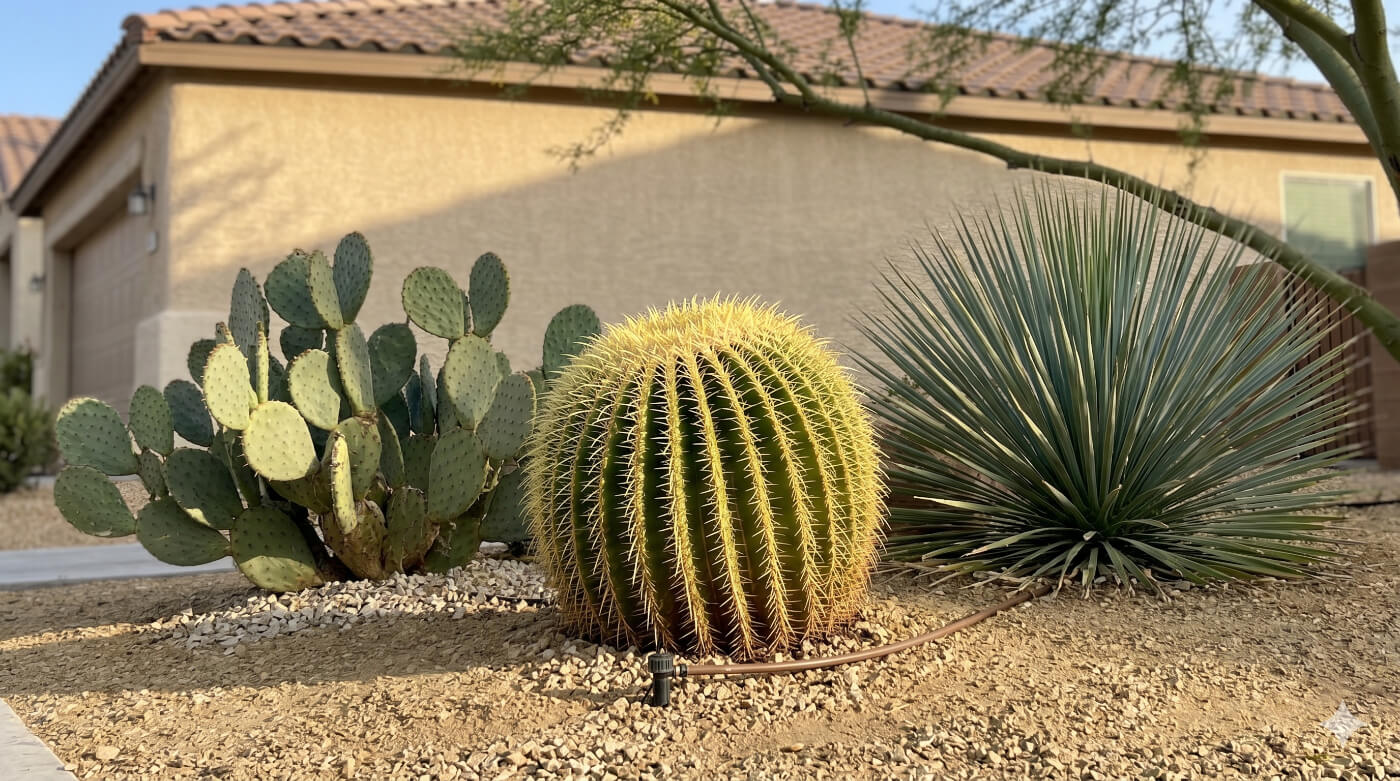
A dense sphere of spiky blue-green leaves with a single tall flower spike every several years. Desert Spoon (Dasylirion wheeleri) grows slowly and requires almost zero maintenance once in the ground.
Water needs: 2–3 gallons every 2–3 weeks in summer / minimal in winter.
Planting tip: Plant slightly proud of grade; the crown should sit a half-inch above surrounding soil. Do not amend heavily, as the plant prefers lean, dry conditions.
Prickly Pear Cactus
Yellow, orange, or magenta blooms in spring with edible fruit in summer. Flat paddle segments spread to 5–6 feet over time, making it one of the most recognizable desert plants across the Southwest.
Water needs: 1–2 gallons monthly in summer / none in winter.
Planting tip: Use gravel mulch, not bark, around the base. Bark holds moisture against the pads and invites fungal rot. Glochids are harder to remove than the large spines. Wear leather gloves when planting.
Barrel Cactus
Leans south as it matures, acting as a natural compass and a distinctive sculptural element. Yellow or orange flowers ring the top in summer, being long-lived with essentially no care requirements.
Water needs: 1–2 gallons monthly in summer / none in winter.
Planting tip: The south lean is normal and permanent. Do not try to correct it. Caliche beneath is acceptable provided water doesn’t pool against the base after irrigation.
Aloe Vera
Handles Las Vegas summers well in east-facing or morning-sun beds. Full western afternoon exposure can scorch leaves in July and August. Best in sheltered patios, alcoves, and east-facing borders.
Water needs: 2–3 gallons every 2 weeks in summer / minimal in winter.
Planting tip: Avoid south-facing walls. Reflected stucco heat can exceed even aloe’s tolerance in peak summer. East-facing placement works best in most Las Vegas residential settings.
Best Low-Water Groundcovers for Las Vegas Landscaping
Groundcovers reduce bare soil temperature, suppress weeds, and stabilize decomposed granite between plantings. They are often the primary source of seasonal color in xeriscaped yards and a core element in any low maintenance landscaping plan that aims for visual interest without weekly upkeep.
Trailing Lantana
Spreads 4–6 feet wide at 12–18 inches tall with purple or yellow blooms through most of the warm season. Excellent on slopes where coverage and erosion control both matter.
Water needs: 2–4 gallons weekly in summer / every 2–3 weeks in winter.
Planting tip: Space plants 3–4 feet apart; they fill in reliably. Cut back to several inches each late February. Trailing stems reaching decomposed granite will self-root; plan for the spread.
Desert Marigold
Blooms bright yellow from spring through fall and reseeds reliably in established beds. A Mojave native that requires almost no intervention after planting. It’s genuinely self-sufficient.
Water needs: 1–2 gallons weekly in summer / minimal in winter.
Planting tip: Decomposed granite mulch at 2–3 inches is ideal. Heavy organic mulch holds too much moisture at the crown during summer heat.
Damianita Daisy
Compact mounding form with yellow button flowers and aromatic foliage. Stays 12–18 inches, handles full Las Vegas sun without complaint, and qualifies as one of the more reliable year-round plants for Las Vegas that most homeowners haven’t considered.
Water needs: 1–2 gallons every 2 weeks in summer / minimal in winter.
Planting tip: Break up caliche 8–10 inches at the planting site. Damianita roots spread laterally and need loose, draining soil to establish quickly.
Ice Plant
Forms a dense, low mat with magenta spring flowers. Works well in morning-sun beds and suppresses weeds through sheer coverage density. Avoid full western afternoon exposure where summer heat is most intense.
Water needs: 1–2 gallons every 2 weeks in summer / minimal in winter.
Planting tip: Drainage is non-negotiable. Caliche within 12 inches of the surface holds water against roots and kills ice plants. Break through it before planting.
Creeping Rosemary
Evergreen, fragrant, and functional along path edges and low borders. Holds its form through Las Vegas winters without aggressive cutbacks and requires minimal seasonal adjustment.
Water needs: 2–3 gallons every 2 weeks in summer / once a month in winter.
Planting tip: Las Vegas alkaline soil suits rosemary well. Skip acidic amendments. Plant on slopes or raised areas where water drains away from the root zone naturally.
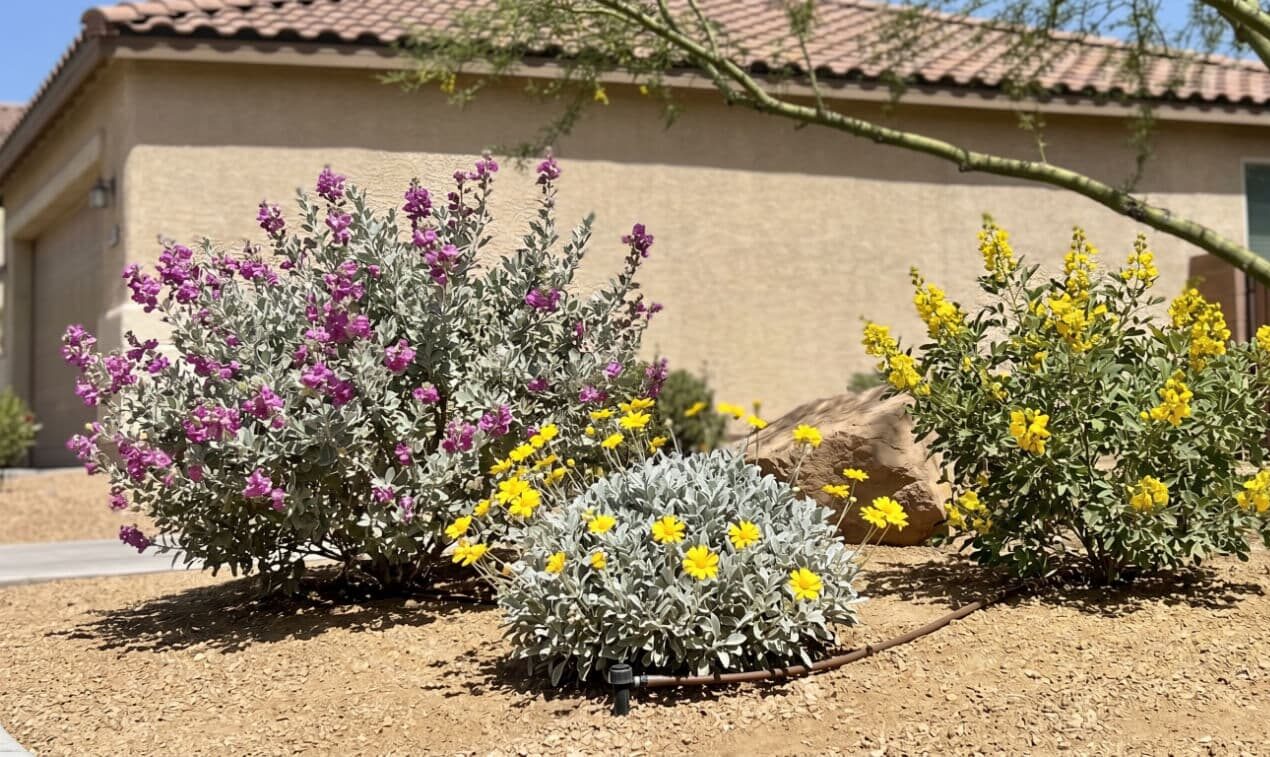
Watering Guide for Desert Landscaping Plants
Overwatering is the leading cause of plant failure in Las Vegas landscapes. Established desert plants need far less water than most homeowners provide.
- Water deeply and infrequently. A long soak every 2–3 weeks pushes roots downward where heat stress is lower. Frequent shallow watering keeps roots near the surface, the worst possible place during a Las Vegas summer.
- Cut irrigation by 50–75% from October through February. Most succulents and cacti need nothing from November through February.
- Use drip over spray. Surface evaporation in July is significant enough to make overhead irrigation genuinely wasteful.
- Adjust your schedule seasonally. A system calibrated for July will over-irrigate well into fall if left untouched.
For seasonal scheduling, soil prep, and plant grouping in detail, the xeriscaping guide covers each step. Professional plant maintenance plans include the irrigation audits that keep those schedules accurate as plants mature.
Common Mistakes When Planting Drought-Tolerant Plants in Las Vegas
Most failures come down to three things:
Planting at the wrong time. Summer installation in Las Vegas is brutal. Most plants set in July don’t survive their first August. Fall planting, October through November, gives roots a full cool season to establish before facing summer heat. Spring works too. Summer mostly doesn’t.
Not breaking through caliche. Las Vegas caliche layers sit 6–18 inches down and stop roots cold. If you hit pale, cement-hard soil while digging, break through it. A caliche bar costs less than replacing a dead tree.
Overwatering new plants. New installations need regular water for the first 2–3 weeks, then sharply reduced irrigation as roots develop. Root rot from overwatering looks identical to drought stress: the plant wilts, you add water, it gets worse. The instinct to keep watering just in case is where most desert plants get killed.
Las Vegas is uniquely positioned for drought-friendly landscaping, with strong water conservation incentives and conditions that naturally favor desert-adapted plants. Instead of fighting the climate, homeowners can work with it, reducing water use, lowering maintenance, and creating landscapes that last.
With the right plant choices, a sustainable, low-water yard isn’t just possible in Las Vegas; it’s the most practical long-term approach.