
Installing sod in Las Vegas is not the same as installing it anywhere else in the country. Between SNWA water restrictions, caliche soil, and summer heat that can bake fresh sod before it roots, there are real factors that determine whether your new lawn survives or dies in the first two weeks.
This guide covers everything Las Vegas homeowners need to know before buying a single pallet of grass, whether you’re doing it yourself or hiring it out. If you’d rather skip the labor, Cacti handles sod installation in Las Vegas from soil prep through establishment.
What Las Vegas Homeowners Need to Know Before Installing Sod
Before installing sod in Las Vegas, it’s important to understand Southern Nevada Water Authority (SNWA) regulations and soil conditions.
SNWA Restrictions and the New-Build Rule
Nevada’s turf restrictions come from Assembly Bill 356, later amended by AB 220. The law prohibits using Colorado River water to irrigate nonfunctional turf, effective January 1, 2027. “Nonfunctional turf” means decorative grass in areas not used for recreation, such as street medians, HOA common areas, and commercial or multifamily properties.
The important detail for most homeowners: this restriction does not apply to existing single-family home lawns. If you’re installing sod in your own front or backyard, you are not subject to this ban, regardless of when your home was built. Functional turf used for recreation, pets, or family activity remains permitted throughout Southern Nevada.
Because these rules have been amended before and can vary in how they’re applied locally, confirm current requirements with SNWA before installation, especially if your property includes an HOA or shared common areas. If reducing your long-term water use is still a priority, it’s worth exploring water-smart alternatives to sod that work with the desert climate rather than against it.
The LVVWD New Sod Watering Exemption
The Las Vegas Valley Water District allows a temporary watering exemption for newly installed sod. During the establishment period, which typically runs two to four weeks, you can water outside the standard restricted schedule. You need to register for the exemption before you start, and it applies specifically to the establishment phase. Once the sod roots in, your irrigation drops back to the standard schedule.
Check with LVVWD to confirm current exemption requirements and duration before your installation date.
Caliche Soil and Why It Changes Everything
Caliche is a hardened calcium carbonate layer found throughout the Las Vegas valley. In many yards it sits just a few inches below the surface and acts like concrete. Water cannot penetrate it, roots cannot push through it, and sod laid directly over untreated caliche will fail.
Before you do anything else, test your soil. Drive a rebar stake or screwdriver into the ground. If you hit resistance at four to six inches, you have caliche. Breaking it up with a rotary tiller and amending with compost and topsoil is non-negotiable for sod to survive here.
Why Your Irrigation System Comes First
Las Vegas receives roughly 4 inches of rain per year. New sod needs to be watered multiple times daily during establishment. If your sprinkler system is outdated, has broken heads, or has uneven coverage, your sod will fail in patches before you even notice.
Evaluate your irrigation system before laying sod to check coverage, pressure, and timing.
Best Sod Varieties for Las Vegas
Choosing the right sod variety is essential for long-term success in the Las Vegas climate. The best options can withstand extreme heat, recover from wear, and perform well with proper irrigation and maintenance.
Bermuda Sod
Bermuda is the most common warm-season sod in Las Vegas for good reason. It handles extreme heat, goes dormant in winter rather than dying, and recovers well from drought stress once established. Hybrid Bermuda varieties like Tifway 419 and TifTuf perform particularly well in desert conditions, offering finer texture and better density than older common Bermuda strains. Bermuda also spreads aggressively, which helps it fill in bare spots on its own, but the same trait means it will invade planting beds if not edged consistently.
Tall Fescue
Tall fescue is the primary cool-season option for Las Vegas homeowners who want green grass year-round. It stays green through winter when Bermuda goes dormant. The tradeoff is water use. Tall fescue requires significantly more irrigation than Bermuda during the summer and can struggle during extended heat waves above 110 degrees. It works best in areas with afternoon shade.
What to Avoid in the Las Vegas Climate
St. Augustine struggles in Las Vegas heat and is not widely available locally. Kentucky bluegrass and ryegrass are not suited for desert summers as primary lawn varieties. Zoysia can work in some microclimates but establishes slowly and is harder to find from local sod farms.
If you’re still weighing a real grass lawn in Las Vegas against low-water alternatives, that comparison breaks down the tradeoffs before you commit to sod.
Can You Install Sod Over Existing Grass?
No. Do not lay new sod over existing grass. The dead layer underneath will prevent the new sod from making soil contact, which is required for rooting. Moisture will get trapped between layers and create conditions for fungal disease. The surface will be uneven, making it impossible to roll the sod flat.
Old grass must be killed completely and removed before the new sod goes down. This typically means applying a non-selective herbicide, waiting 7 to 10 days, and then removing the dead material mechanically or by hand before soil prep begins.
How to Install Sod in Las Vegas: Step-by-Step
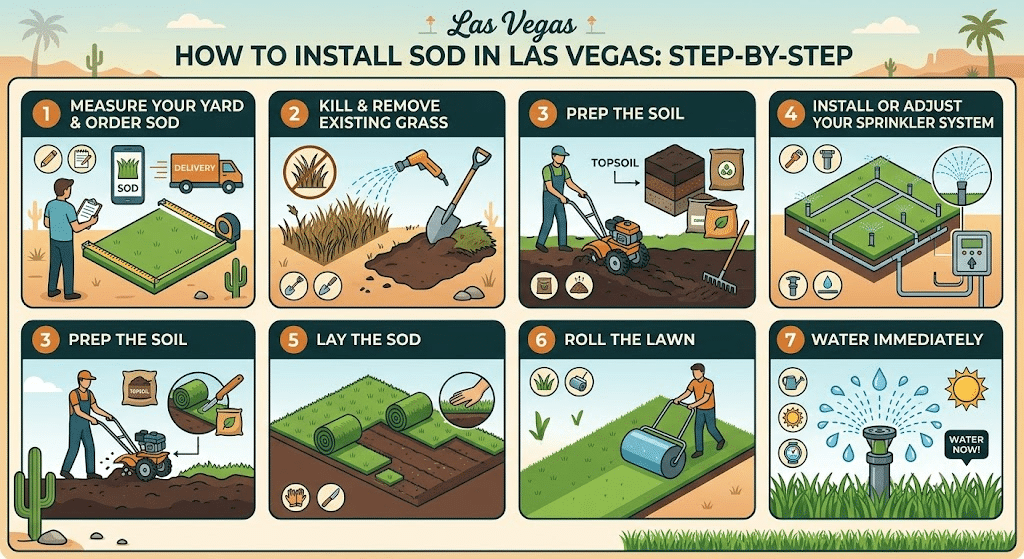
Proper sod installation gives your new lawn the best chance to establish deep roots and thrive in the Las Vegas climate. Following the right steps helps ensure healthy growth and long-lasting results.
Step 1: Measure Your Yard and Order Sod
Measure your lawn area in square feet. Add ten percent to account for cuts around curves, edges, and obstacles. For a sense of what this project typically runs, see our sod installation cost breakdown. Order from a local sod farm rather than a home improvement store when possible.
Step 2: Kill and Remove Existing Grass
Apply glyphosate or another non-selective herbicide to the existing lawn. Wait 7 to 14 days for full kill. Water the area lightly a few days before removal to soften the soil. Remove dead grass with a sod cutter, flat shovel, or power rake. Haul the debris out completely and do not till it back into the soil.
Step 3: Prep the Soil
This step matters more in Las Vegas than almost anywhere else. Till the existing soil to a depth of four to six inches. If you hit caliche, break it up and amend heavily. Add 2 to 3 inches of quality compost or topsoil and till it in. Grade the soil so it drains away from your foundation, with no low spots where water pools. Rake the surface smooth and level. The finished grade should sit about one inch below sidewalks and edging so the sod surface ends up flush after installation.
Step 4: Install or Adjust Your Sprinkler System
If you are adding or relocating sprinkler heads, this is the time to do it before sod goes down. Adjust head height so spray nozzles will sit just above the finished sod surface. Test the system for full coverage with no dry zones. Any area the sprinklers miss will brown out within days in Las Vegas summer temperatures. If you have not had your system inspected recently, book an $80 irrigation evaluation before this step so coverage issues are identified and fixed before the sod arrives.
Step 5: Lay the Sod
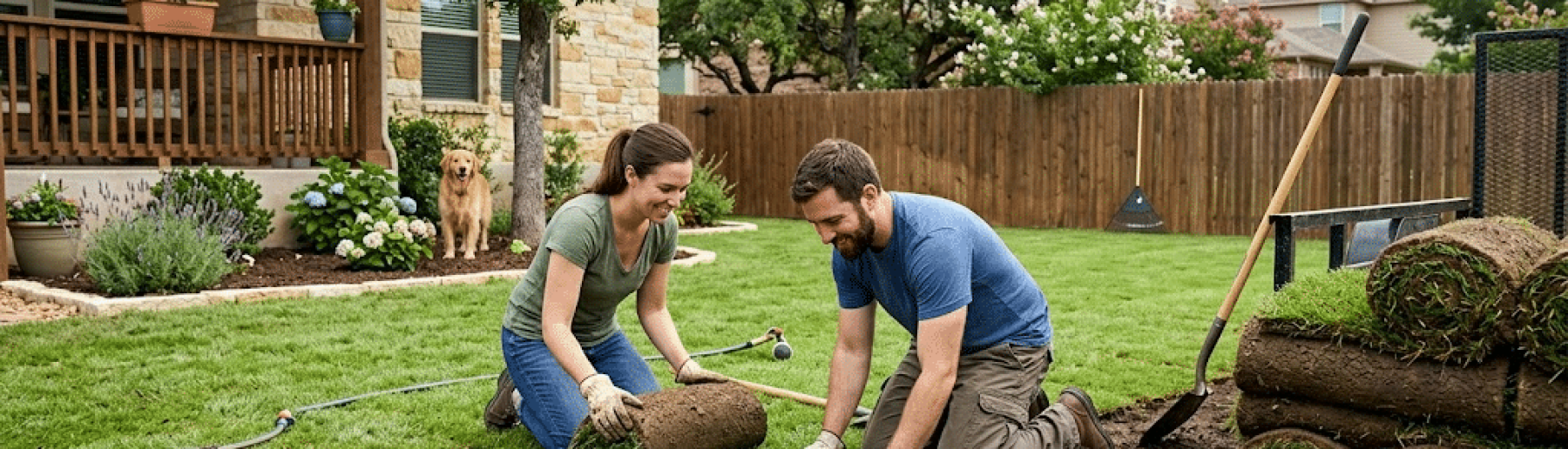
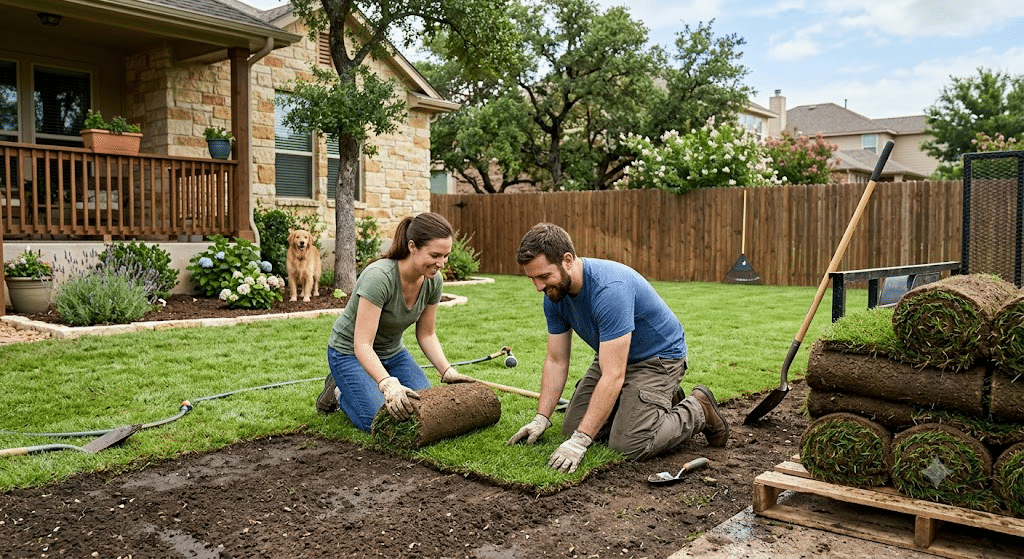
Start along the longest straight edge, typically a fence line, driveway, or sidewalk. Lay rolls end to end in a straight line, then stagger the next row like bricks so seams don’t line up. Butt edges tightly together with no gaps or overlapping. Trim pieces with a sharp knife or sod cutter around curves, edges, and obstacles. Work from a board placed on the sod you’ve already laid so you’re not walking directly on fresh pieces and compressing the soil beneath them.
Step 6: Roll the Lawn
Rent a lawn roller from a local equipment supplier. Fill it halfway with water and roll the entire sod surface. This presses the sod into full contact with the soil underneath, which is essential for rooting. Rolling also flattens any edges that are lifting and helps identify low spots that need to be addressed before you begin watering.
Step 7: Water Immediately
Water the sod as soon as each section is laid, not after the whole yard is finished. The top inch of soil should be wet but not puddling. In summer, sod can begin to dry out and pull back at seams within an hour if it is not watered as you go. After the full installation, run your irrigation system long enough to saturate the top 2 to 3 inches of soil.
New Sod Aftercare in Las Vegas
Once the sod is down, consistent aftercare is what determines whether it roots or fails. For homeowners who want help through this phase, ongoing lawn maintenance in Las Vegas keeps new grass on track through the first growing season and beyond.
The Tug Test
Starting around 10 to 14 days after installation, gently tug on the sod in a few spots around the yard. If it resists and holds to the soil, the roots are beginning to establish. If it lifts easily like a mat, it needs more time and consistent watering before you reduce irrigation frequency.
First Mow
Wait until the sod passes the tug test before mowing. The first mow should be set high, removing no more than one-third of the blade height at a time. Use a sharp blade; a dull blade tears rather than cuts and can uproot sod that has not fully established. Avoid mowing when the sod is wet.
Fertilizing
Wait four to six weeks before applying any fertilizer. New sod has enough nutrients from the farm to carry it through initial establishment. Applying fertilizer too early can burn roots that are still shallow. When you do fertilize, use a starter fertilizer with a higher phosphorus ratio to encourage root development.
Watching for Dry Spots
Brown spots that appear one to two weeks after installation are almost always irrigation coverage gaps. Walk your yard while the system runs and look for heads that are clogged, tilted, or under-spraying. In Las Vegas, uneven coverage shows up fast. Address coverage issues before assuming the sod variety is the problem.
Best Time of Year to Install Sod in Las Vegas
Bermuda sod installs best between April and September, when soil temperatures are warm enough to support rapid root growth. Installing it between October and March is possible, but establishment is slow, and the sod may not root fully before cold weather pushes it into dormancy.
Tall fescue installs best in fall, between September and November, when temperatures are cooler and the sod has time to root before summer heat arrives. Spring installation of tall fescue is risky because the sod may not establish deeply enough before summer temperatures stress it.
Avoid installing any sod variety during the peak of summer, July and August, unless you have excellent irrigation and the ability to water multiple times per day. Heat above 110 degrees will kill sod that is not properly established faster than any other factor.
FAQs
Can you install sod over existing grass in Las Vegas?
No. Existing grass must be fully killed and removed before new sod is installed. Leaving dead material underneath prevents proper soil contact and leads to rooting failure and disease. Herbicide treatment followed by physical removal is the correct approach.
How often do you water new sod in Las Vegas?
During the first week, new sod typically needs watering two to three times per day in summer, enough to keep the top inch of soil consistently moist. Frequency decreases as roots establish. By week three or four, most sod can transition to once-daily watering, and eventually to a standard schedule once the tug test confirms rooting. If your system cannot handle that frequency, schedule an $80 irrigation evaluation before installation.
Is sod banned in Las Vegas?
Nonfunctional turf is restricted in new residential construction under Nevada law, but functional sod used for recreation, pets, or family activity is still permitted. Replacement sod in existing yards is generally allowed under current SNWA guidelines. Confirm with your local water district before installing. For low-water alternatives, see water-smart landscaping options for Las Vegas.
What is the best sod for Las Vegas?
Bermuda grass, particularly hybrid varieties like Tifway 419 or TifTuf, is the most reliable warm-season option for Las Vegas. Tall fescue works for homeowners who want year-round green and can manage higher water requirements. Most other grass varieties are not suited to the desert climate.
How long does sod take to root in Las Vegas?
In warm weather with proper irrigation, Bermuda sod typically begins rooting within ten to fourteen days and reaches solid establishment by four to six weeks. Tall fescue planted in fall follows a similar timeline. Cool-weather installs or sod laid in suboptimal conditions can take longer.
What should you put down before laying sod?
Tilled, graded, and amended soil is the correct base for sod. In Las Vegas, this means breaking up any caliche layers, adding compost or topsoil, grading for drainage, and compacting lightly before the sod goes down. Some installers apply a starter fertilizer to the soil surface before laying sod, though this is optional if the soil has been well-amended.
What not to do when laying sod?
Do not install sod over existing grass, leave gaps between pieces, skip rolling after installation, or allow sod to sit on pallets in the sun for more than 24 hours before laying. In Las Vegas specifically, do not attempt installation without verifying irrigation coverage first. Dry zones will kill sod before it has a chance to root.
How long does it take for sod to take?
Most sod begins rooting within ten to fourteen days and reaches full establishment in four to six weeks under proper conditions. Use the tug test starting around day ten to gauge progress. Until the sod resists pulling, treat it as unrooted and maintain the establishment watering schedule.