
A low maintenance landscaping for yards is achievable in Las Vegas without giving up on looks. The trick is designing around the desert instead of fighting it: less lawn, less water, and materials built to hold up under full summer sun. Here are nine approaches worth considering, from the simplest fixes to full-yard conversions.
1. Xeriscaping Your Yard
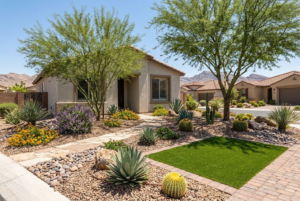
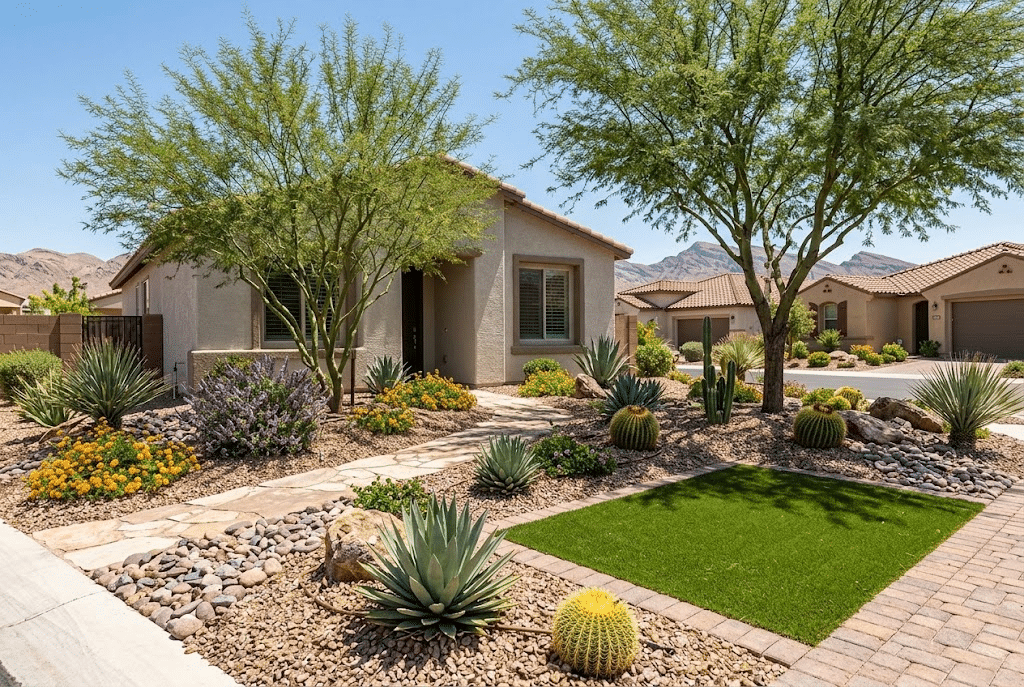
Xeriscaping means designing a landscape that needs little to no water beyond natural rainfall, using drought-tolerant plants, efficient irrigation, and strategic use of mulch and hardscape instead of thirsty turf. It’s the foundation most of the other ideas on this list build on.
Advantages of xeriscaping:
- Cuts watering time and water bills significantly
- Holds up through peak summer heat instead of stressing
- Qualifies parts of the conversion for SNWA rebates
You don’t have to convert an entire yard at once. Starting with one bed or one section of lawn is a reasonable way to work toward a full xeriscape design over time. Cost varies a lot based on yard size and what’s being removed, so a design consultation gets you an accurate number rather than a generic estimate.
2. Planting Desert-Friendly Succulents
Cacti and succulents store water in their leaves, which means they don’t just tolerate dry conditions, they actually prefer them. Overwatering is the more common way to kill a succulent here, not underwatering. Varieties range from classic barrel and prickly pear cacti to rosette-forming Echeveria types, giving plenty of room for a design that doesn’t look like every other desert yard on the block.
Advantages of succulents:
- Survive extended drought with no supplemental water
- Wide range of shapes, colors, and sizes to choose from
- Naturally suited to Las Vegas’s climate, not just tolerant of it
3. Planting Nevada’s Native Plants
Plants native to the Las Vegas area need the least help from you, since they’re already adapted to the exact conditions in your yard. Brittlebush, desert marigold, and desert willow are all reliable choices that also bring in local pollinators and birds. One thing worth checking: native to Nevada isn’t the same as native to Las Vegas specifically, since plants suited to the cooler northern part of the state won’t necessarily thrive in the Mojave Desert climate down here.
Advantages of native plants:
- Require less water and fertilizer than non-native species
- Rarely need pesticide treatment
- Support local pollinators and wildlife
4. Hardscapes Over High-Maintenance Plants
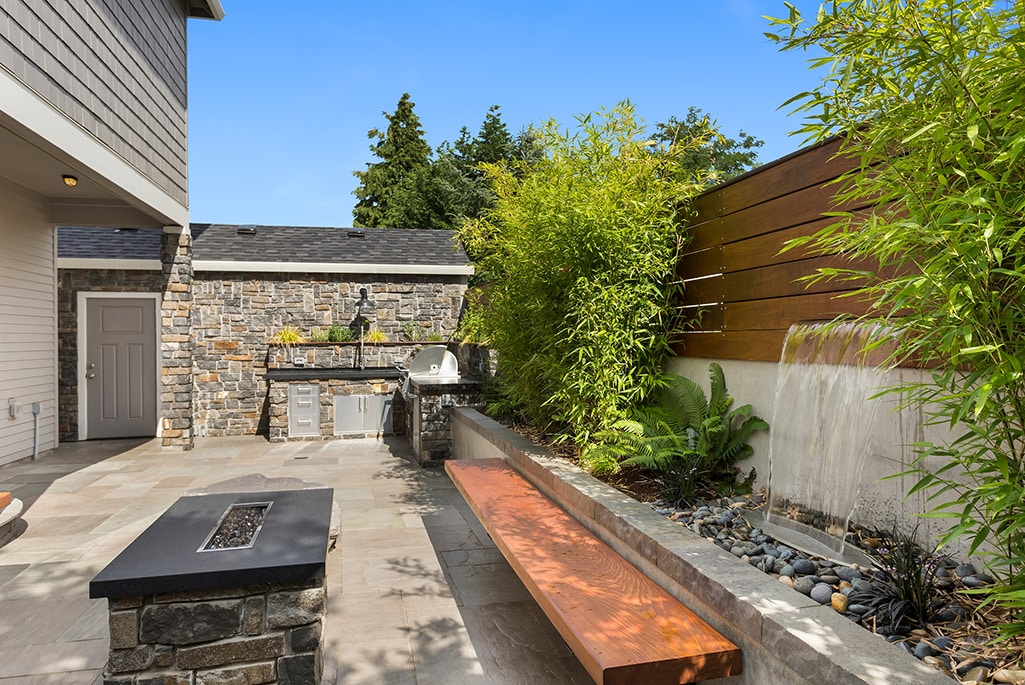
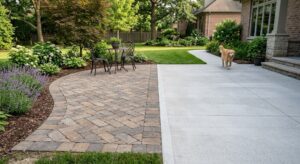
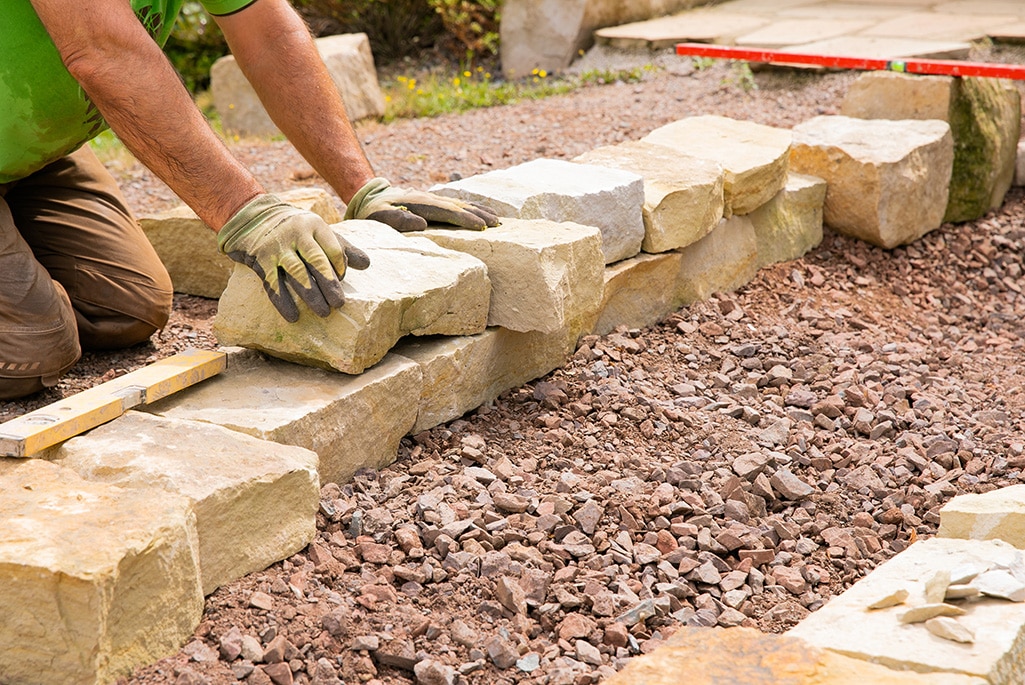
Every square foot of hardscape, boulders, pavers, patios, walkways, is a square foot that never needs watering, weeding, or mowing. It also gives a yard structure and visual interest without relying entirely on plants to do the work. The upfront installation cost tends to be higher than planting, but the near-zero ongoing maintenance makes up for it over a few years.
Advantages of hardscaping:
- Maintenance drops to occasional cleaning only
- No water use once installed
- Well-designed hardscape can add real resale value
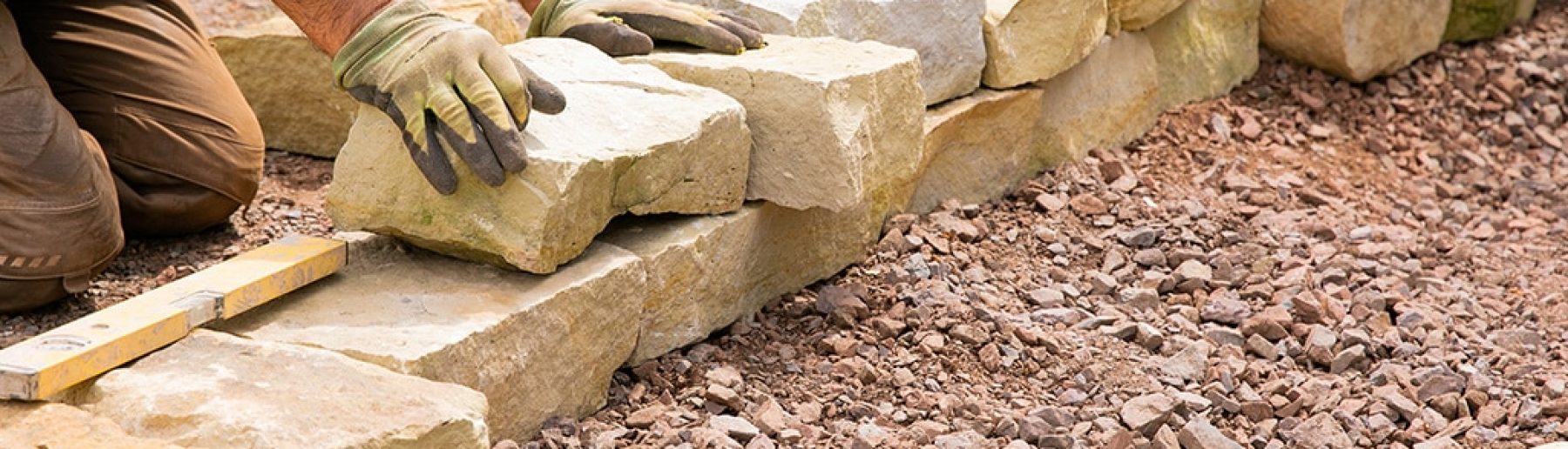
River rock, boulders, and paver work all fall under rock, boulder, and flagstone installation, and it’s one of the most straightforward ways to shrink the high-maintenance footprint of a yard without leaving it feeling bare.
5. Go with Ground Covers Instead of Grass
If you want the look of a lawn without the water and mowing that comes with it, low-growing ground covers are a middle option between turf and full xeriscape. Carpet sedum and creeping thyme both handle Las Vegas heat reasonably well and spread to form a dense, low mat. They’re still living plants, so they need some water and occasional care, just far less than traditional grass.
Advantages of ground covers:
- No mowing required
- Use meaningfully less water than turfgrass
- Fewer pest and weed problems than a traditional lawn
6. Installing Low-Maintenance Artificial Turf
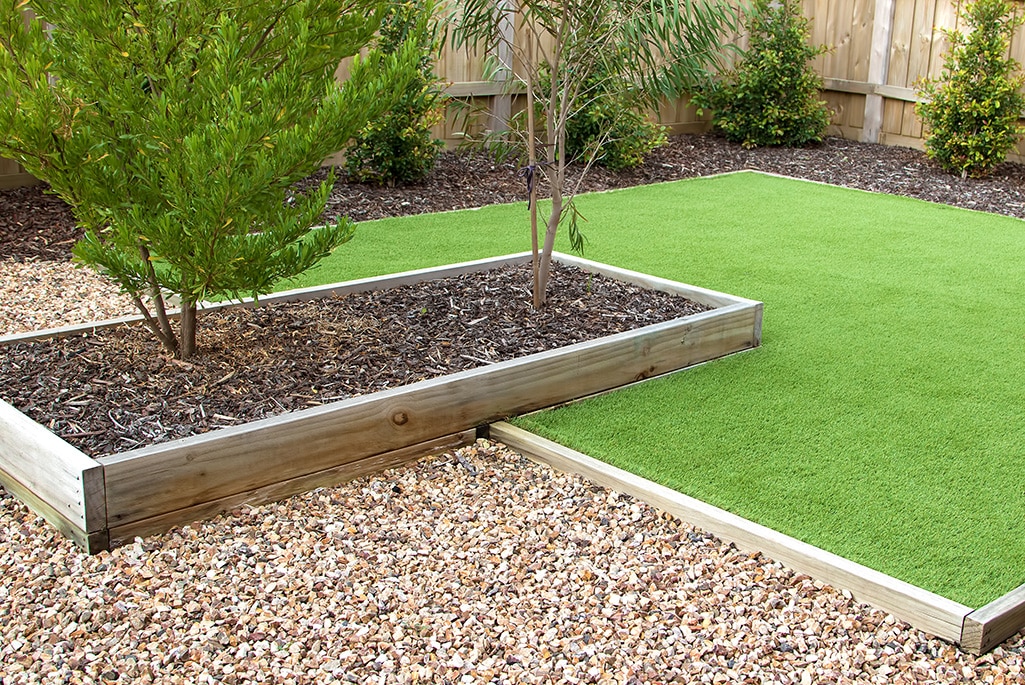
Artificial turf removes watering, mowing, and fertilizing entirely, and modern turf looks far more convincing than the plastic-looking versions from years past. The tradeoffs are a higher upfront installation cost and a hot-to-the-touch surface on peak summer days, worth knowing before committing a large area to it. Even artificial turf isn’t truly zero-maintenance: debris, dust, and pet waste still need periodic clearing, and an occasional professional maintenance visit keeps it looking as good as day one.
Advantages of artificial turf:
- No mowing, watering, or fertilizing after installation
- Stays green and consistent year-round
- Doesn’t attract the pests real grass can
7. Mulch for Plant Beds
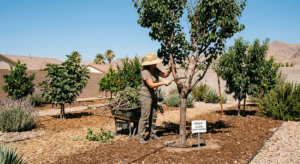
A layer of mulch over plant beds suppresses weeds and helps soil hold onto moisture longer between waterings, which matters more here than almost anywhere given how fast bare soil dries out in full sun. Inorganic options like gravel or rubber last indefinitely without replacement, while organic mulch like wood chips breaks down over a year or two and adds nutrients back into the soil as it goes.
Advantages of mulch:
- Cuts down significantly on weed growth
- Reduces how often beds need watering
- Inorganic mulch never needs replacing
Mulch installation is one of the lowest-cost, highest-impact additions on this list, and it pairs with almost every other idea here.
8. Perennials That Come Back Every Year
Annual flowers look great for one season and then need to be replaced. Perennials come back on their own year after year, which means less replanting and less recurring cost. Desert marigold, blackfoot daisy, and desert globemallow are all heat-tolerant perennial options that hold up well here.
Advantages of perennials:
- Return each year without replanting
- Lower long-term cost than annual flower beds
- Many varieties are also drought-tolerant
9. Installing Smart Irrigation
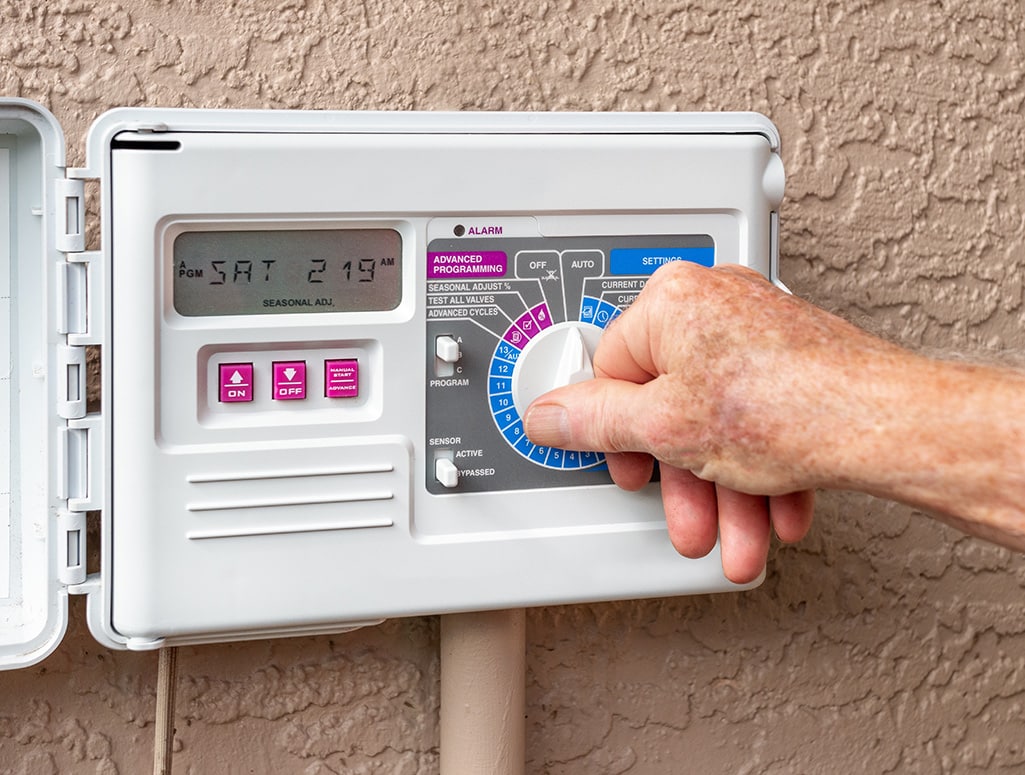
None of the above matters much if the irrigation behind it is inefficient. A WIFI-enabled irrigation timer keeps whatever plants you do have on a consistent schedule even when you’re not around to manage it manually, and it’s one of the simplest upgrades for cutting down on hands-on yard work. If you’re not sure your current system is running efficiently, Cacti Landscape’s irrigation evaluation checks for leaks, bad coverage, or timing issues before they turn into a bigger repair or a higher water bill.
The Water Savings Add Up
Every idea on this list points toward the same outcome: less water used, less time spent maintaining a yard, and lower bills over time. Working with a Water Smart Contractor can also qualify parts of a conversion like this for SNWA rebates, which helps offset the upfront cost of moving away from a traditional lawn.
FAQs
What’s the easiest way to reduce yard maintenance in Las Vegas?
Hardscaping and artificial turf require the least ongoing work, since both eliminate watering and mowing entirely. Xeriscaping with drought-tolerant plants is the best option if you still want a living, green landscape.
Are native plants really lower maintenance than other options?
Yes, plants native to the Las Vegas area specifically need less water, less fertilizer, and rarely require pesticide treatment, since they’re already adapted to local soil and climate conditions.
Does converting to a low-water yard actually save money?
Often yes, through lower water bills, potential SNWA rebates for xeriscape conversions, and reduced spending on mowing, fertilizer, and pest control over time.
How do I know if my irrigation system is wasting water?
An irrigation evaluation is the most reliable way to find out. It identifies leaks, poor coverage, or timing issues that waste water without you noticing until the bill or the dead patches show up.