
Las Vegas yards don’t tolerate grass well. Water bills climb, turf burns out, and maintenance cycles restart every season with diminishing returns. Rock landscaping offers a better path: durable, drought-adapted designs that hold up year-round with a fraction of the upkeep. What follows covers the most effective styles for desert yards, how to plan them, and the local conditions worth understanding before any rock is ordered.
What Is Rock Landscaping?
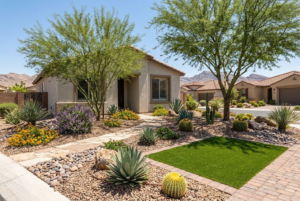
Rock landscaping uses stone, gravel, and boulders as the primary ground cover and structural elements of an outdoor space, typically paired with drought-tolerant plants. It eliminates lawn irrigation demand, suppresses weeds naturally, and holds up under summer heat that would end any turf season in weeks.
In the Las Vegas Valley, it is the foundation of xeriscape design and the practical default for any low-maintenance yard. Working with a trusted desert landscaping company makes a real difference here, because desert rock landscaping is as much about soil, drainage, and heat management as it is about the rock itself.
Popular Rock Landscaping Ideas for Desert Yards
These styles work across yard sizes, budgets, and design preferences. What they share: low water demand, long material life, and curb appeal that holds year-round. One rule applies to every installation: wherever rock is laid on the ground, weed barrier fabric goes beneath it first.
Desert Rock Garden Beds
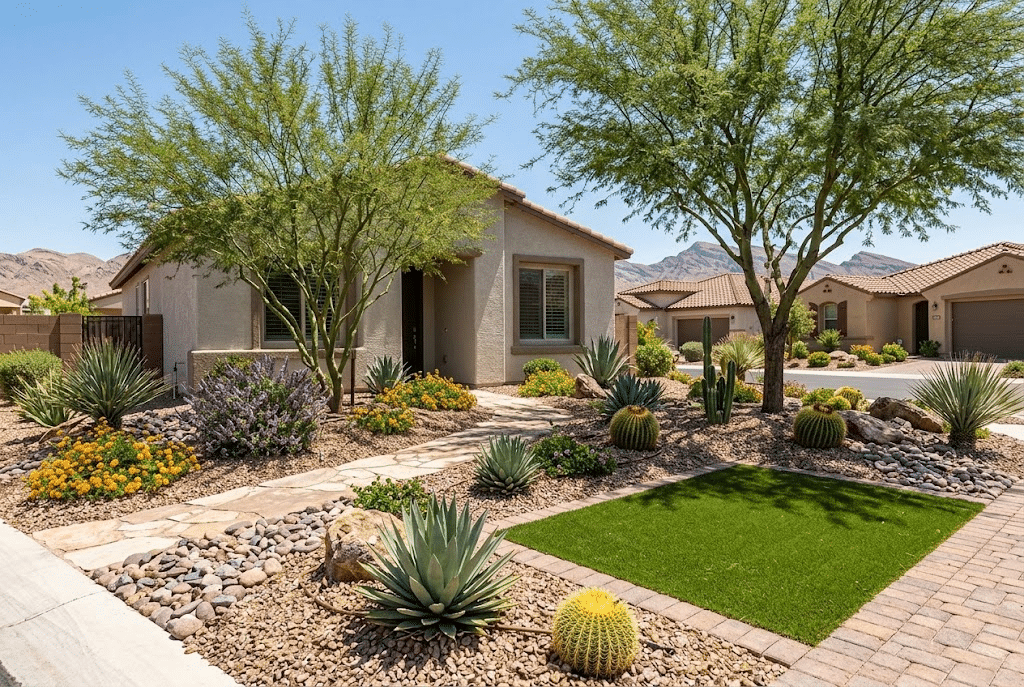
A desert rock garden combines decomposed granite or crushed gravel with low-growing plants and a few accent stones. It is one of the most durable front yard landscaping ideas with rocks: clean from the street, minimal upkeep once installed. If an existing rock bed has gone thin or patchy, you can rerock your yard for a fresh desert landscape without a full redesign.
River Rock and Dry Creek Beds
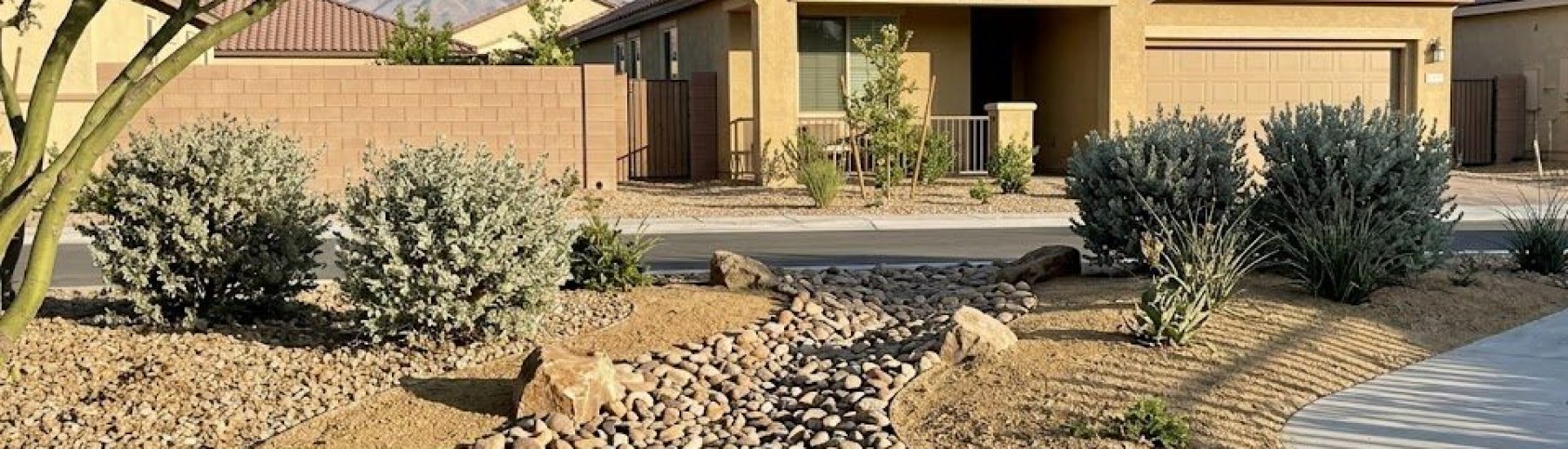
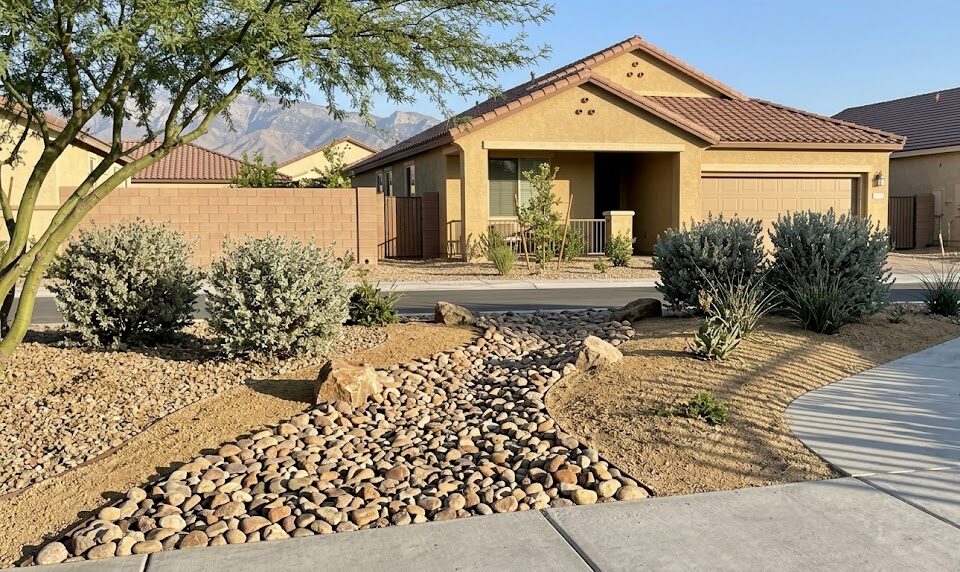
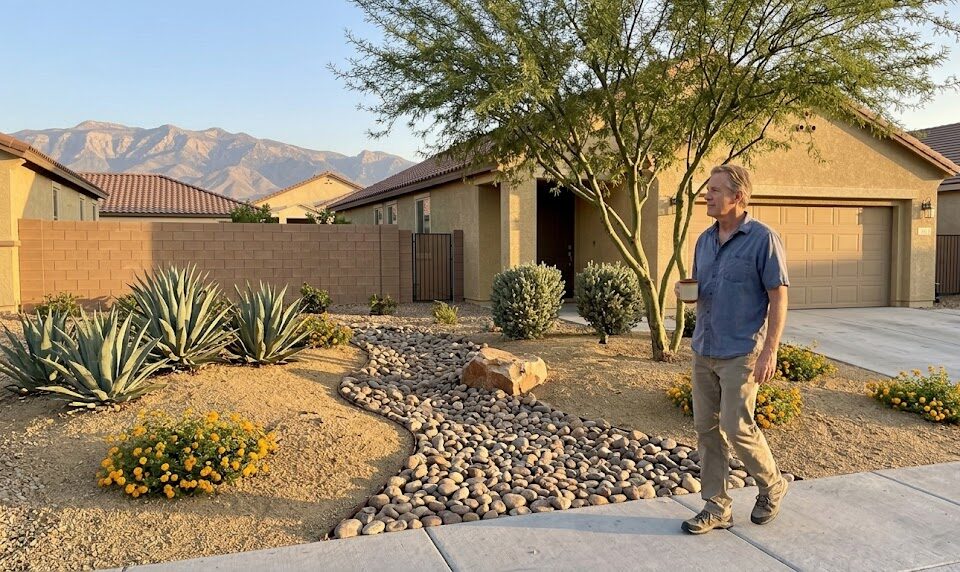
River rock landscaping ideas built around a dry creek bed handle monsoon drainage and visual interest at once. Rounded stones in mixed sizes move runoff away from the foundation while adding natural flow to flat yards. Always lay weed barrier fabric in the trench before adding rock.
Boulder Focal Point Landscapes
Boulder focal point landscapes use large stones as visual anchors that define the structure of a yard. Instead of spreading small elements evenly, the design focuses attention on one or a few key boulders.
Placement is more important than quantity. Single boulders work well in small spaces, while larger yards benefit from grouped formations. Burying about one-third of each boulder below grade helps it look naturally embedded rather than placed on top of the soil.
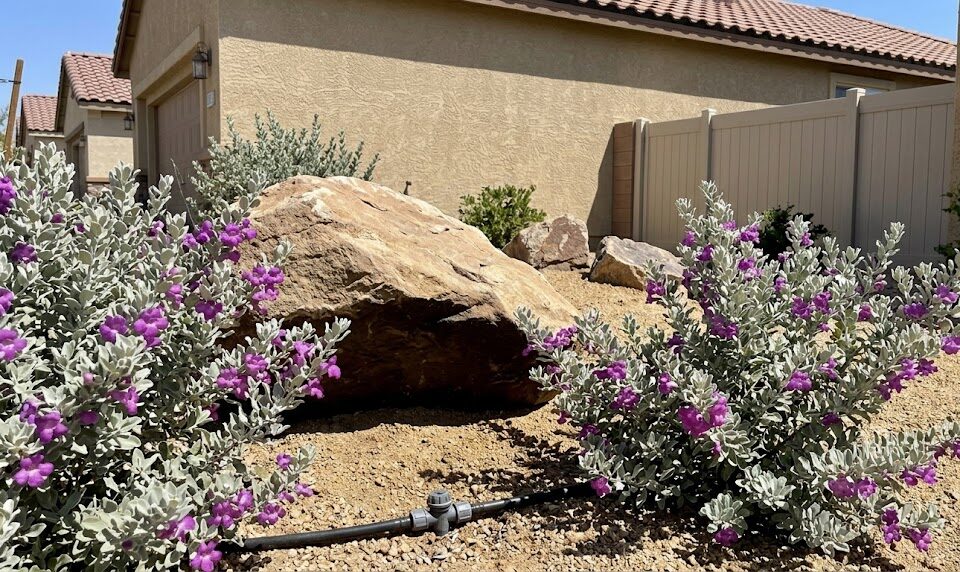
Surround the base with decomposed granite or rock mulch to frame the feature and reduce weeds. In desert landscaping, boulders add lasting structure and require no irrigation, but proper scale is essential; too small loses impact, while too many can overwhelm the space.
Rock and Plant Combinations
Rock landscapes work best when hard materials are balanced with plants that add color and texture. The contrast between stone and foliage creates depth and prevents the design from feeling static.
A common pairing is decomposed granite with Desert Marigold, which adds bright yellow blooms against a neutral base. Texas Ranger works well near boulders, softening hard edges with silver foliage and seasonal purple flowers.
For a modern look, agave paired with river rock creates strong architectural contrast. Spacing is important; plants should be close enough to interact visually with rock but not so close that reflected heat causes stress.
Flagstone Pathways and Patios
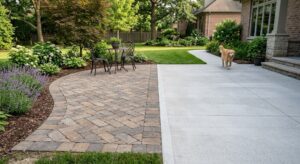
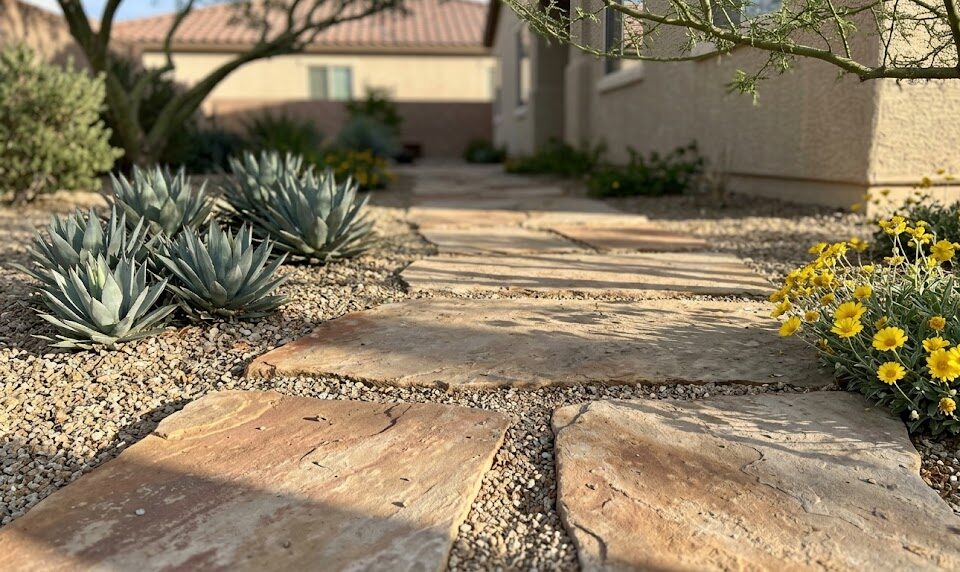
Flagstone handles foot traffic without cracking and ages well in desert heat. Fill joints with fine gravel pathways or decomposed granite for drainage. Flagstone paths improve curb appeal significantly and complement both Mediterranean and modern desert design styles.
Lava Rock Garden Beds
Lava rock brings reddish-brown warmth to planting beds and drains exceptionally well. Use landscape fabric beneath it. The irregular surface creates gaps where weeds root easily without it. Against neutral stucco, the contrast reads sharply from the street.
Drip-Ready Rock Garden Beds
Route and test drip lines before laying rock. Rock installed over untested irrigation turns every future repair into an excavation. Use rock mulch as the final layer: it slows evaporation between irrigation cycles and holds moisture at the plant root zone.
Rock Retaining Walls and Terraces
Stacked-stone walls convert sloped yards into usable terraced planting space. Dry-stack construction allows drainage between stones, which is critical in Las Vegas desert landscaping where poor subsurface drainage compounds quickly.
How to Choose the Right Rock Landscaping Ideas for Your Yard in Las Vegas
Two factors national guides routinely skip: heat absorption and soil conditions.
- Rock color near the home. Dark rocks like black lava or dark basalt absorb and radiate significantly more heat than light-toned alternatives. Near the foundation or under west-facing walls, that stored heat transfers into the living space. Light decomposed granite, tan river rock, or pale flagstone reflects more heat. As a rule, keep dark rock away from the structure.
- Caliche. The Las Vegas Valley sits on caliche, a dense calcium carbonate layer that acts like underground cement. It restricts drainage, limits root depth, and causes water to pool above it rather than percolate through. Before installing any deep planting beds or retaining walls, probe for where the caliche layer sits. A contractor who doesn’t ask about it hasn’t worked enough Las Vegas yards.
Rock Landscaping Costs in Las Vegas
Cost depends heavily on material type, labor intensity, and site conditions. In Las Vegas, most projects fall into predictable ranges:
- Decomposed granite and gravel: $2 to $5 per sq ft installed, usually the most budget-friendly option for full-yard coverage.
- River rock and lava rock: $4 to $10 per sq ft, higher due to material weight, hauling distance, and required depth.
- Flagstone patios: $15 to $30+ per sq ft, driven by cutting, leveling, and labor-heavy installation.
- Boulder features: from a few hundred dollars to several thousand depending on size, sourcing, and equipment needs.
Site preparation also has a major impact on total cost. In many Las Vegas yards, grading, weed barrier installation, drainage work, or caliche correction can add significant expense and sometimes match or exceed material costs.
For landscaping ideas with rocks and stones matched to your actual site conditions, a professional assessment upfront prevents expensive corrections later.
How to Plan a Rock Landscape Design
Rock landscaping ideas that ignore how water moves through a yard create problems within one monsoon season. Map where runoff travels and design features to follow that flow. Dry creek beds and gravel pathways should reinforce natural drainage lines.
Then, match the rock color to the home’s exterior. Warm stucco pairs with tan, buff, or rust stone. Gray or white modern facades work with charcoal or silver river rock.
Define zones before buying materials. A rock garden, a flagstone patio, and a boulder accent each require different rock types and quantities. Purchasing material before the layout is set is one of the most expensive mistakes in any installation. The guide to using rocks in your landscape covers these planning decisions in detail.
What Are the Best Plants to Pair With Rock Landscapes?
Here are three pairings that perform consistently in Las Vegas:
- Desert Marigold + Decomposed Granite. Baileya multiradiata produces bright yellow blooms against a neutral DG background, with silver-green foliage that holds year-round. It thrives in full sun, needs minimal water, and requires almost no maintenance once established.
- Texas Ranger + Boulder Groupings. Leucophyllum frutescens fills space around boulder focal points with silver-gray foliage and purple blooms that appear after summer rain. It needs no supplemental irrigation once established. Plant two to three feet from boulder bases to allow for spread.
- Agave + River Rock Beds. Agave provides strong architectural contrast against the rounded texture of river rock. Species selection comes down to available bed space, with smaller varieties suiting tighter beds and larger specimens working well where the scale allows.
For ideas for landscaping in the front yard with rocks that include drought-tolerant plants, native desert species consistently outperform adaptives under Las Vegas conditions.For that reason, a custom landscape design for Las Vegas homes can match plant selection to sun exposure and soil depth specific to the property.
Rock Landscaping Maintenance Tips
Low maintenance is not the same as no maintenance.
Weed barrier fabric degrades over time. Most non-woven landscape fabric lasts 10–15 years before organic debris accumulates on top and creates a thin germination layer for weeds. Plan for eventual replacement rather than assuming it will last indefinitely.
Rock settles and thins over time, particularly at edges. Topping off annually keeps the fabric covered and the surface looking consistent.
Drip irrigation hides under rock, which means broken heads and clogged emitters stay invisible until a plant dies. Building seasonal irrigation checks into the maintenance schedule catches problems early. For ongoing yard maintenance for desert landscapes, a professional service plan catches small issues before they have a chance to compound.
Final Words
Rock landscaping done right is built once and managed lightly for years. The materials are durable and the maintenance is manageable, but longevity comes down to the foundation decisions: drainage graded correctly, weed barrier properly placed, and drip irrigation tested before the rock goes down. Get those right and the design choices follow naturally from there.
FAQs
The design inspiration is the easy part. These answers address the practical questions that come up most once planning gets specific.
What looks good in a rock garden?
The most effective rock gardens combine at least two rock types: a fine base of decomposed granite, medium river rock or lava rock in accent areas, and one or two larger boulders for visual weight. Drought-tolerant plants break up the hard surfaces. All-one-material designs tend to read as flat from the street.
What do I put under landscape rocks?
Non-woven geotextile landscape fabric rated for outdoor use. Lay it over graded, compacted soil before any rock goes down. Overlap seams by at least 6 inches and secure with landscape staples. It allows drainage while blocking weed germination. Plastic sheeting is not an equivalent. It blocks drainage and breaks down faster.
What’s the difference between a rockery and a rock garden?
A rock garden uses rock as ground cover with plants integrated throughout. A rockery is more structured, typically terraced or raised, where stones are deliberately placed to create vertical form. Most Las Vegas residential designs blend both depending on yard slope and budget.
How to landscape around a large rock?
Determine first whether the boulder is partially buried. Buried rocks look more natural and stay more stable. Surround the base with decomposed granite, then layer outward with rock mulch. Plant drought-tolerant species 2–3 feet from the edge. Avoid planting directly against the boulder face. Reflected heat stresses most plants at close range.