
Landscape edging gives your Las Vegas yard clean lines and a finished look, whether you’re separating rock beds from turf, bordering xeriscape plantings, or defining walkways. The right edging material also cuts down on maintenance by keeping gravel, mulch, and weeds where they belong. Here’s how to pick the right edging for desert landscaping and get it installed properly.
Benefits of Landscape Edging
Landscape edging is a simple tool that can dramatically improve your garden’s appearance while making it easier to manage. By creating clear boundaries and adding structure, edging enhances the look of your yard and offers practical solutions to common landscaping challenges. Let’s explore the key benefits of landscape edging, from improving curb appeal to preventing grass and mulch spread.
Clean Separation Between Lawn and Garden Beds
One of the primary functions of landscape edging is to create neat divisions between your lawn and garden beds. Without proper edging, your yard can look disorganized, with grass and plants mixing together.
- Defined Boundaries: Edging creates clear separation that makes your yard look organized and visually appealing. Options like brick edging, metal edging, or rubber edging provide both form and function.
- Easy Maintenance: Edging makes it easier to maintain your yard, keeping mulch in place and preventing grass from creeping into flower beds. This reduces the time spent on upkeep, especially important in dry climates like those found in landscaping in Las Vegas.
- Variety of Styles: There are many types of edging to choose from, including classic brick edging and modern metal edging. These materials allow you to customize the look of your garden while ensuring clean separation.
Improved Curb Appeal
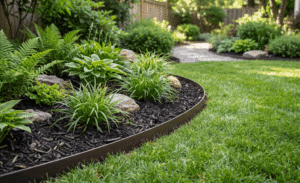
Landscape edging does more than just divide your yard, it enhances your property’s beauty and value.
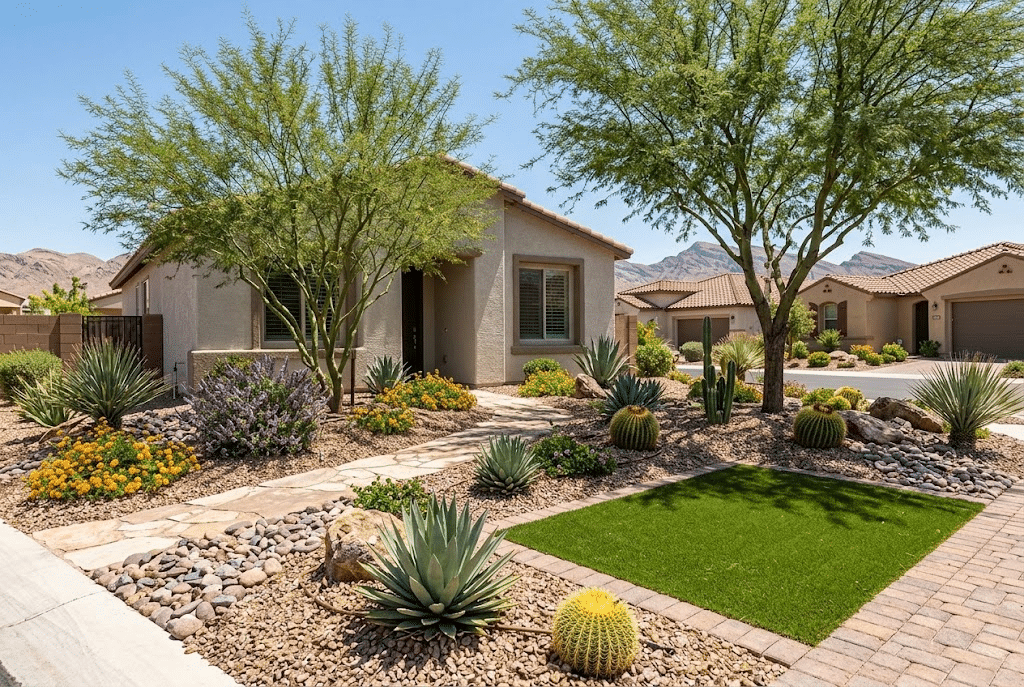
- Enhancing Visual Appeal: Clean edging around rock beds and walkways makes a Las Vegas yard look professionally maintained and can help avoid HOA violation notices in subdivisions with strict curb appeal standards.
- Customization Options: Whether you prefer timeless brick edging or sleek metal edging, there are countless landscaping edging ideas to suit your style and preferences.
- Complementing Your Landscaping: Edging ties together various elements of your garden, like raised bed edging and curved edges, softening lines and adding dimension.
Edging is a small investment that yields significant visual and financial rewards, making your yard more attractive and inviting.
Keeping Rock, Gravel, and Plantings in Place
Edging is essential for keeping your garden neat by controlling the spread of grass and mulch.
- Rock and Gravel Containment: Edging keeps decorative rock and gravel from migrating onto walkways or turf areas, a common problem in Las Vegas yards after wind or foot traffic. Metal or stone edging holds material in place better than plastic in desert heat.
- Grass Control: Grass can invade landscape beds without proper lawn edging. Installing metal edging or easy-to-install materials creates a barrier that keeps grass out and reduces maintenance.
- Easy Installation: Many types of edging are simple to install with basic tools like a rubber mallet, creating an effective barrier with minimal effort.
Whether you’re looking to define boundaries, boost curb appeal, or prevent grass and mulch from spreading, there’s an edging solution to fit every style and budget. With materials like brick edging, metal edging, and rubber edging that are easy to install, you can quickly transform your yard into a visually stunning and easy-to-maintain space.
Popular Materials for Landscape Edging
When choosing the right material for landscape edging, you want something that not only looks great but also fits your yard’s needs. If you’re thinking about updating your landscaping, here are some of the most popular edging materials to consider for your landscaping edging ideas:
Natural Stone
Natural stone is a popular choice for landscape edging because of its natural beauty and durability. It adds a classic and timeless look to your yard, making it perfect for defining garden beds or creating a border around rock beds.
- Aesthetic Appeal: Stone brings a natural, elegant feel to your landscape and blends well with most garden styles.
- Durability: It’s a strong material that can withstand weather changes, making it a long-lasting option for edging.
- Maintenance: Although stone is a durable option, it requires some care to prevent weeds from growing between the stones.
Brick and Concrete
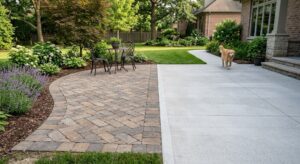
For a more structured look, brick edging and concrete are great choices. These materials are ideal for creating clean, defined edges in your yard, whether you’re outlining pathways or planting areas.
- Neat and Polished Look: Brick edging creates a tidy and classic boundary, while concrete offers a more modern and sleek appearance.
- Low Maintenance: Both materials are easy to install and require little maintenance once in place, making them a practical option for lawn edging.
- Versatility: Bricks can be laid in different patterns to create unique designs, and concrete can be molded into custom shapes to match your landscaping edging ideas.
Metal
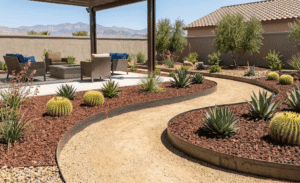
Metal edging is perfect for homeowners looking for a modern, minimalist look. This material is durable and provides a sharp, clean line between different parts of the yard.
- Modern Style: Metal edging gives your yard a sleek, contemporary feel, making it great for modern designs.
- Durability: Metal is highly durable and resistant to rust if you choose the right type, such as aluminum or steel.
- Flexibility: It’s flexible enough to form curves, making it ideal for more creative edging ideas for landscaping.
Wood
For a more rustic look, wood edging is a great option. It adds warmth and charm to your garden while still being practical and functional.
- Natural Look: Wood blends well with natural environments and works beautifully around garden beds or flower beds.
- Customizable: You can cut the wood into different lengths or even stack it for a layered look.
- Desert Consideration: Wood degrades fast in Las Vegas intense UV and dry heat cause warping, splitting, and fading within a couple of seasons. If you want the wood look, composite or pressure-treated lumber lasts significantly longer in this climate.
Plastic and Rubber
If you’re looking for affordable and easy-to-install options, plastic and rubber edging are great choices. These materials are flexible and can be used for various garden edging ideas.
- Affordability: Plastic and rubber are budget-friendly and perfect for homeowners looking to enhance their yard without spending too much.
- Flexibility: These materials are lightweight and easy to shape, making them ideal for curved edges or intricate designs.
- Durability: While they may not last as long as stone or metal, high-quality plastic or rubber can still provide a neat and durable edge.
Each of these edging materials brings its own style and benefits to your landscape. Whether you’re after a natural, rustic look or a clean, modern landscape design, there’s an option to match your landscape edging ideas and make your yard look fantastic.
Landscape Edging Design Ideas
Landscape edging is not just about separating garden areas; it can also enhance the overall look of your yard. With the right landscape edging ideas, you can add character and structure to your garden. Let’s explore some creative edging ideas for landscaping that can transform your outdoor space.
Raised Bed Edging
Raised bed edging is a great way to create height and depth in your garden. It defines your garden beds while adding a stylish and organized appearance.
- Functional and Stylish: Raised edges keep soil and plants neatly contained, making your garden easier to maintain. This type of edging works especially well for flower beds or vegetable gardens.
- Materials to Use: You can use materials like wood, stone, or brick to build raised edges. These materials provide durability while giving your garden a polished look.
- Easy to Maintain: Raised edging makes watering and weeding easier, keeping everything in its place and reducing the need for frequent upkeep.
Curved Pathways with Edging
Adding curved pathways with edging brings a natural flow to your landscape design. It softens the sharp lines of a yard and leads the eye through the garden.
- Creating Flow: Curved edges create a sense of movement in your yard, guiding people naturally along pathways. This is one of the most elegant ideas for landscaping edging.
- Material Choices: You can use a variety of edging materials like stone, metal, or brick to outline your curved paths. These materials add a neat and finished appearance to the paths.
- Adding Dimension: Curved edging creates visual interest, making your yard look more inviting and dynamic.
Edging Around Pool Surrounds and Fountains
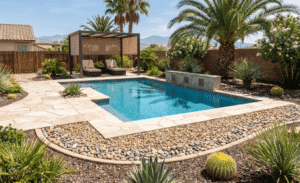
In Las Vegas, edging most commonly borders pool decks, small fountains, and catch basins rather than ponds or streams. Stone or concrete edging creates a clean transition between pool hardscape and surrounding rock beds.
- Enhancing Aesthetics: Water features are already eye-catching, but adding the right landscaping edging ideas can make them stand out even more. Stone or brick can give water features a natural, seamless border.
- Practical Use: Edging helps prevent soil or plants from washing into the water, keeping the area clean and easy to maintain.
Layered Stone Edging for Height
If you want to add height and structure to your garden, layered stone edging is a great option. It can make your yard look more sophisticated and create a striking feature.
- Adding Depth: Layering stones creates height, adding dimension to flat gardens. This is a great choice if you’re looking for bold edging ideas for landscaping.
- Natural Look: Stones blend easily with most garden styles and give a natural, organic feel to your yard. Layering them around garden beds or pathways can make your outdoor space look more structured.
- Durable and Long-lasting: Stone is a durable material, perfect for outdoor use. Once installed, it requires little maintenance while continuing to enhance the beauty of your landscape.
These landscape edging ideas can elevate the look of your garden while making it more functional and easier to maintain. Whether you’re adding curves, height, or defining water features, the right edging design can completely transform your outdoor space. For more assistance or advice on your project, feel free to contact our landscaping experts.
Tips for Installing Landscape Edging
Installing landscape edging can be a simple project that makes a big difference in your garden’s appearance. Whether you’re outlining garden beds or adding structure to pathways, proper installation is key to making your edging last. Here are some helpful tips to ensure your landscape edging ideas come to life smoothly and effectively.
Preparing the Ground
Before you install any edging, it’s important to prepare the ground. This step sets the foundation for the entire project and ensures that your edging will stay in place.
- Clear the Area: Remove any grass, plants, or debris from the space where you’ll be placing the edging. Make sure the surface is as smooth as possible to avoid bumps.
- Measure and Mark: Outline where you want your edging to go. Using stakes and string can help you mark the boundary. If you’re working with curved pathways, make sure the lines are smooth to get the best results.
- Level the Ground: Ensure the ground is flat and even, especially if you’re using rigid materials like stone or brick. This will prevent your edging from shifting over time.
Digging Trenches for Stability
Digging trenches is an essential step that provides stability to your edging and keeps it firmly in place.
- Create a Deep Enough Trench: For most landscaping edging ideas, you’ll need to dig a trench that is deep enough to hold at least half of the edging material. This ensures that the edging is stable and won’t shift easily.
- Keep the Trench Even: Make sure the trench is consistent in depth along the entire length. This will prevent uneven edging, which can affect the look and stability.
- Consider the Material: The trench depth may vary depending on the material you use. For instance, brick edging might require a deeper trench than plastic edging to hold it securely.
Securing Edging in Place
Once the trench is dug, it’s time to secure the edging. This step ensures that your edging stays where it should, even after years of use.
- Install the Edging Firmly: Place your edging material in the trench, making sure it’s snug against the ground. For flexible materials like rubber edging, use stakes to hold it in place. For heavier materials like stone or brick edging, ensure they are tightly packed.
- Use a Rubber Mallet: A rubber mallet is helpful when securing edging materials like bricks or stones. Tap gently to make sure the edging sits flush with the ground, but don’t hit too hard, as it can cause cracks.
- Backfill the Trench: Once the edging is in place, fill in the trench with soil or mulch to keep it secure. This provides additional stability and helps blend the edging into your landscape.
Maintenance Tips
Keeping your landscape edging in good shape is just as important as installing it correctly. Here are a few maintenance tips to make sure your edging ideas for landscaping last for years.
- Inspect Regularly: Check your edging for any signs of shifting or damage. If you notice any, make repairs early to prevent further problems.
- Weed Control: Weeds can sometimes grow along the edges, especially between stones or bricks. Regularly check for weeds and remove them to keep your edging looking clean.
- Clean Edging Materials: Over time, dirt and debris can build up on your edging. Cleaning it periodically will keep it looking fresh and maintain its visual appeal.
By following these steps, you’ll ensure that your landscape edging is properly installed and lasts for years. Whether you’re working with brick edging, stone, or plastic, these tips will help bring your ideas for landscaping edging to life while keeping your garden neat and beautiful.
Installing landscape edging is a simple yet effective way to enhance the look and functionality of your garden. By creating clear boundaries, you not only improve the aesthetics of your yard but also make it easier to maintain. Whether you choose brick edging, stone, or plastic edging, following the right steps ensures your edging stays secure and lasts for years. Proper preparation, digging trenches for stability, and regular maintenance will keep your landscaping edging ideas looking fresh and tidy, adding long-lasting beauty and structure to your outdoor space.
If you’re ready to add clean, professional edging to your Las Vegas or Henderson yard, Cacti Landscape can help. We handle edging as part of our full landscape design and yard maintenance services. Call (702) 370-5000 or request a free estimate to get started.