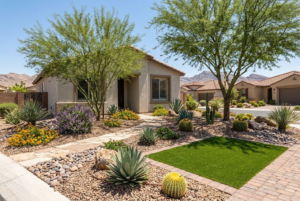

Las Vegas gets less than five inches of rain a year, and most yards still water every plant on the same schedule regardless of how much they actually need. Hydrozoning fixes that by grouping plants with similar water needs into zones, so nothing gets over- or under-watered. Done right, it’s one of the most effective ways to cut your water bill without losing a healthy-looking yard.
What is Hydrozoning?
A hydrozone is a section of your yard where every plant has similar water needs, grouped together so they can be irrigated as one unit. Instead of watering an entire yard on one schedule, you split it into zones based on how much water each area actually needs. Plants get exactly what they need, no more and no less, which means healthier plants and a lot less wasted water.
Hydrozoning for Water Conservation
The practice of hydrozone landscape implementation results in various positive effects that extend past water conservation measures. Hydrozone landscape techniques produce multiple benefits that help gardeners.
Efficient Watering
Each plant zone benefits from precise watering methods because you group plants that share moisture requirements. The exact nature of this method directs water precisely to its designated areas with the appropriate amount of water.
Plants requiring regular watering stay healthy without drought stress, and drought-tolerant species remain undamaged by excessive moisture. The strategic watering method reduces water consumption by 20-50% compared to conventional irrigation methods.
Lower Maintenance
The outcome of hydrozone irrigation reduces required maintenance activities. Grouping plants by their requirements allows you to minimize the time needed to address watering-related issues. The proper hydration level enables plants to become healthier and better able to fight off pests and diseases while needing minimal intervention, thus benefiting landscaping in Las Vegas because of its desert conditions.
Cost Savings
Lower water bills result from decreased water consumption in hydrozoning practices. Landscape areas that receive proper hydrozoning need less fertilizer, need fewer replacement plants, and require lower pest control measures.
Environmental Benefits
Beyond personal benefits, hydrozoning helps conserve water on a larger scale. It reduces runoff and erosion, decreases the amount of chemicals that leach into groundwater, and supports biodiversity by creating varied habitats within your landscape. By using less water for irrigation, you’re helping preserve drinking water supplies in your community.
Hydrozoning and the SNWA Rebate
As a certified SNWA Water Smart Contractor, we design hydrozone layouts as part of qualifying for the Southern Nevada Water Authority’s Water Smart Landscapes Rebate Program, which pays cash back for converting to water-efficient landscaping. Hydrozoning isn’t just a DIY water-saving tip, it’s often a required part of a rebate-eligible design. If you’re not sure whether your current yard is set up efficiently, our $80 flat-rate irrigation evaluation tells you exactly where water is being wasted and what a proper hydrozone layout would look like for your property.
How to Create Hydrozones
Strategic planning and assessment of your landscape conditions are essential for building proper hydrozones. Here’s how to get started:
Mapping Out Your Yard
Draw up a basic yard map featuring all significant landscape features.
- Different areas within the landscape with three sun exposure levels: complete sunlight, partial sun, and total shade conditions
- Slopes and low areas where water naturally collects
- Existing trees and shrubs
- Focus on the areas below downspouts and runoff collection points.
- The areas naturally warmed by the sun and heat (such as walls and pavement surfaces)
These mapping assessments will show you where natural microclimate zones exist so you can determine hydrozone placement. You can receive professional guidance on this assessment; just contact our landscaping specialists.
Dividing Your Lawn Into Irrigation Zones
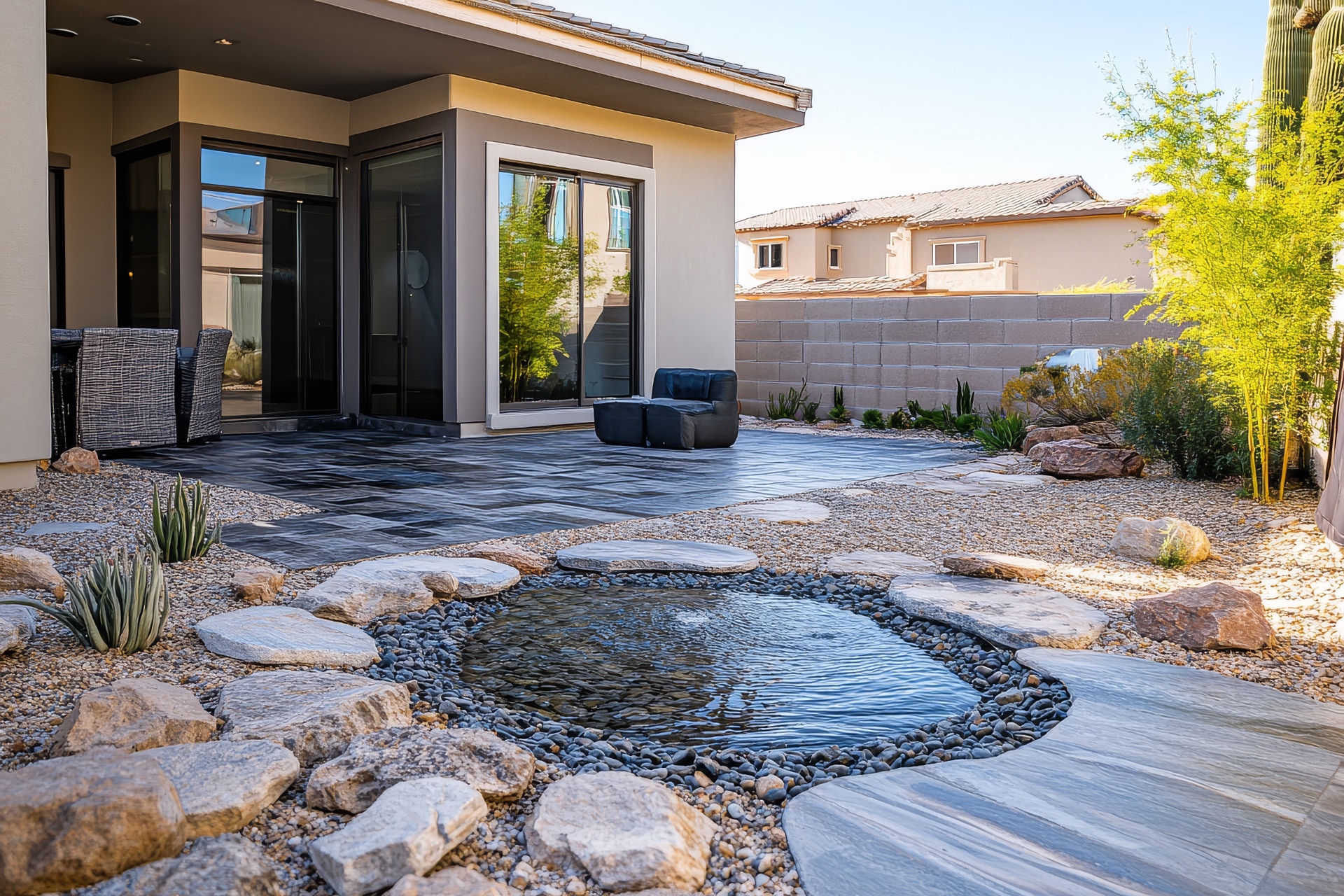
Based on your map, divide your landscape into four primary irrigation zones:
Zone 1: Routine Irrigation
This zone needs regular watering and contains annual flowers, vegetables, turfgrasses, and several water-loving perennials. Using routine irrigation practices means irrigating two times per week as seasons change. The high-use or high-visibility areas should be the main focus for this zone, which aims to be relatively compact.
Zone 2: Reduced Irrigation
This moderate-water zone of the landscape includes decorative plant life as well as mature shrubbery and tolerant perennial vegetation. The irrigation requirement for plants in this area amounts to weekly watering. The majority of ornamental gardens with sidewalk landscaping belong to this zone.
Zone 3: Limited Irrigation
Plants in the limited irrigation zone can sustain minimal supplemental water after establishment because they are selected from drought-tolerant native and adapted species. The irrigation requirement for these areas exists only during periods of intensive dry spells or excessive heat. The limited irrigation zone proves ideal for yard perimeter borders and inactive regions, plus locations hard to reach from water supply points.
Zone 4: No Irrigation
Following their establishment period, these drought-resistant plants in this zone can endure natural rainfall over time. The locations without supplemental irrigation treatment are appropriate for distant places on the property, together with regions meant for natural native vegetation restoration.
Grouping Plants with Similar Water Needs
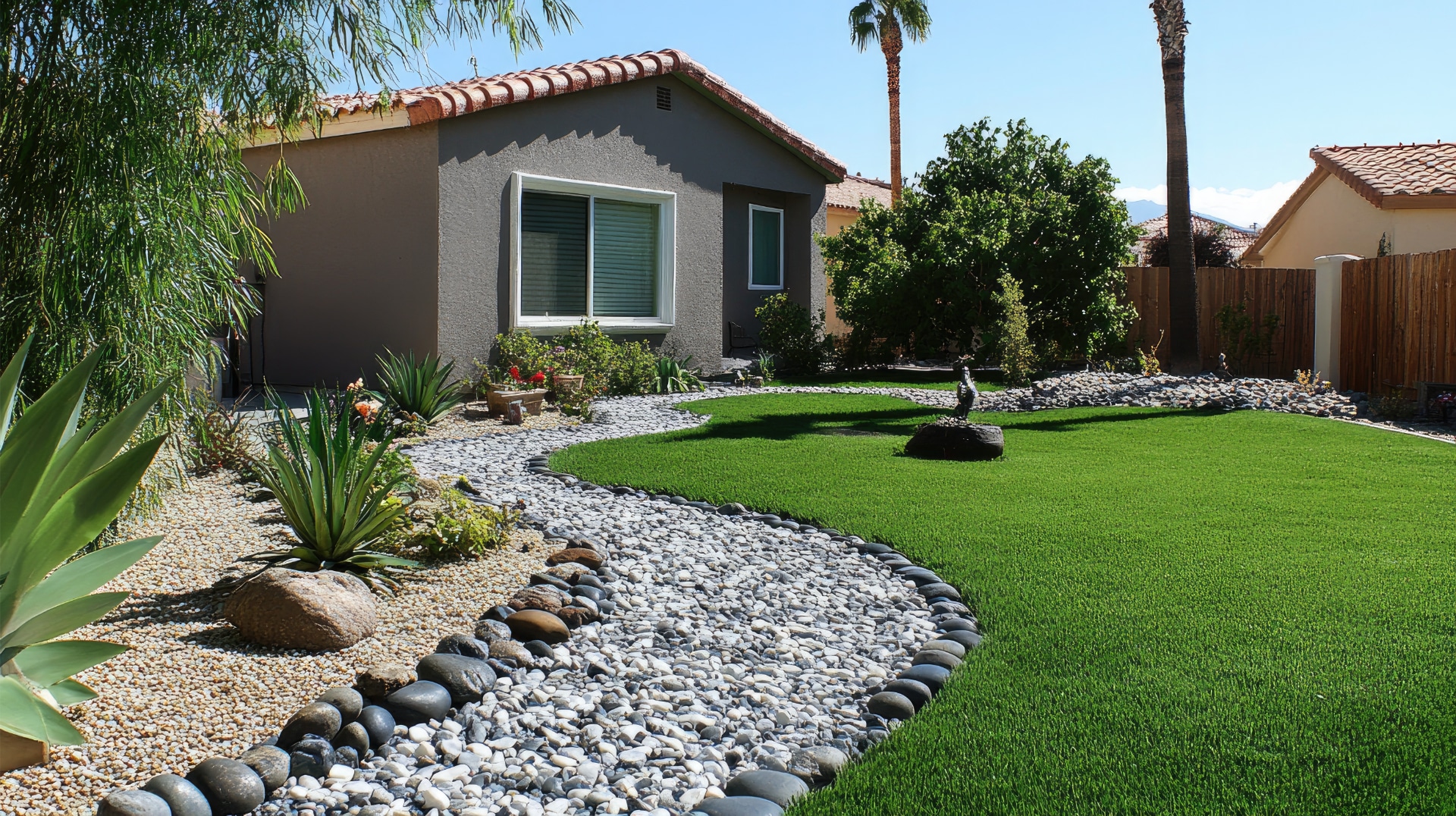
Plant selection within irrigation zones must be done for plants that require the same water conditions while sharing soil types and compatibility with sunlight and temperatures. Grouping plants that share common ecological needs proves to be the most sustainable configuration. Consider factors like
- Root depth (shallow-rooted plants dry out faster)
- Drought tolerance
- Seasonal water needs
- Mature size
For gardening in Las Vegas and similar desert environments, emphasizing drought-tolerant plants in Zones 3 and 4 can dramatically reduce your overall water consumption.
The same principle applies in Henderson yards, where soil and sun exposure often vary block to block, making an accurate water-need assessment worth doing before you plant.
Setting Up an Irrigation System
Install smart irrigation systems with separate valves for each hydrozone. This allows you to customize watering schedules for each area’s specific needs. Consider using
- Drip irrigation for shrubs and garden beds (most efficient)
- Soaker hoses for densely planted areas
- High-efficiency rotary sprinklers for lawn areas
- Rain sensors or soil moisture sensors to prevent unnecessary watering
Common Mistakes to Avoid When Hydrozoning
When implementing a hydrozone landscape, watch out for these common pitfalls:
- Mixing high and low water-use plants in the same irrigation zone
- Ignoring microclimates within your yard
- Failing to adjust irrigation schedules seasonally
- Placing high-water plants in hard-to-reach areas
- Installing incompatible irrigation methods for specific plant types
Best Plants for Hydrozoning
Hydrozoning typically divides your landscape into four zones based on water needs: high, moderate, low, and very low. Each zone is designed to group plants with similar irrigation requirements, helping you conserve water while keeping your garden healthy.
High-Water Plants
For Zone 1, select plants that thrive with regular moisture, such as
- Most turfgrasses
- Annual flowers
- Vegetables
- Tropical plants and ferns
Moderate-Water Plants
For Zone 2, consider plants that need occasional but not constant moisture:
- Many ornamental trees and shrubs
- Established fruit trees
- Perennial flowers
- Some native plants
Low-Water Plants
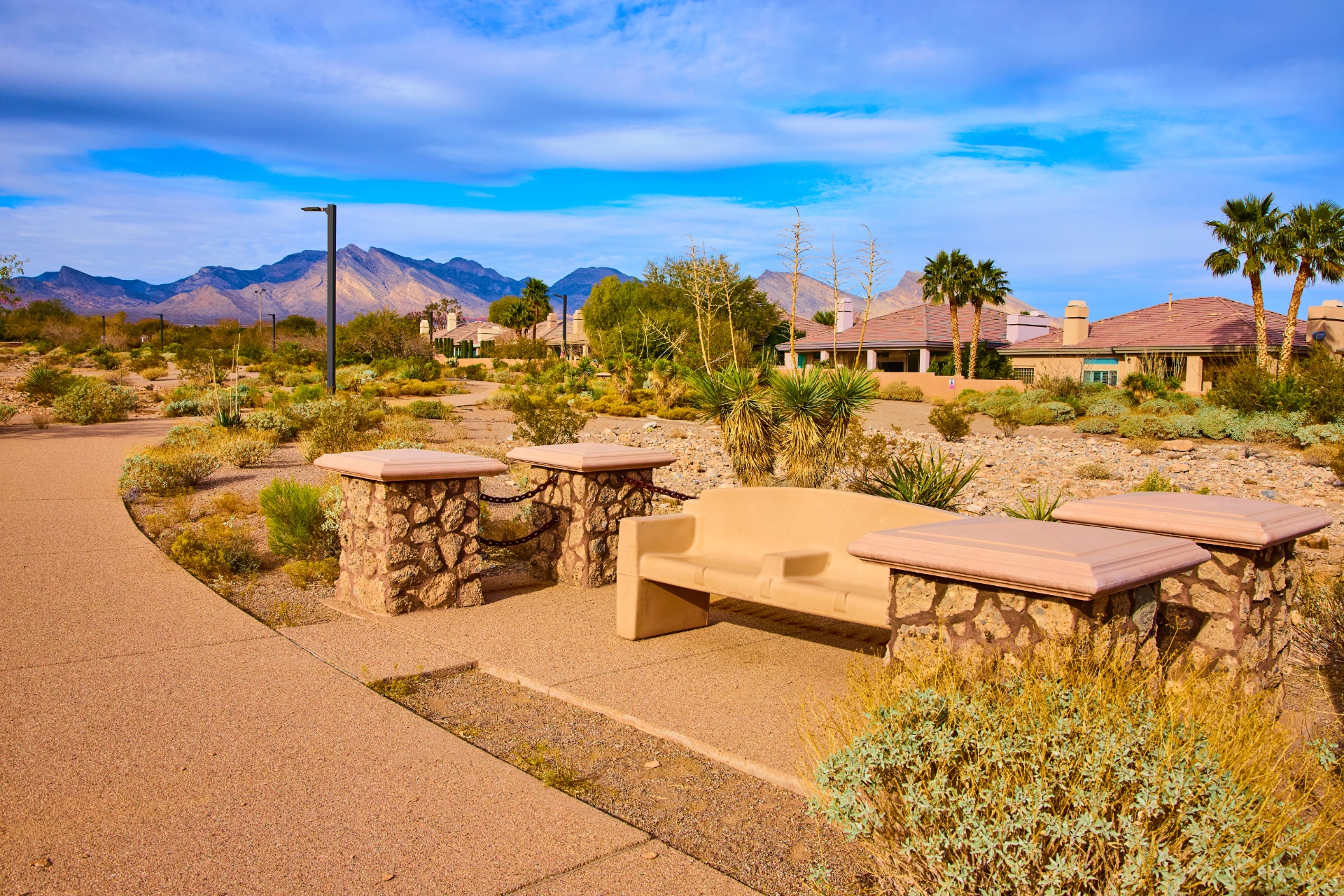
For Zones 3 and 4, focus on drought-tolerant options that require minimal water or none at all:
- Native grasses
- Succulents
- Many Mediterranean herbs
- Native wildflowers
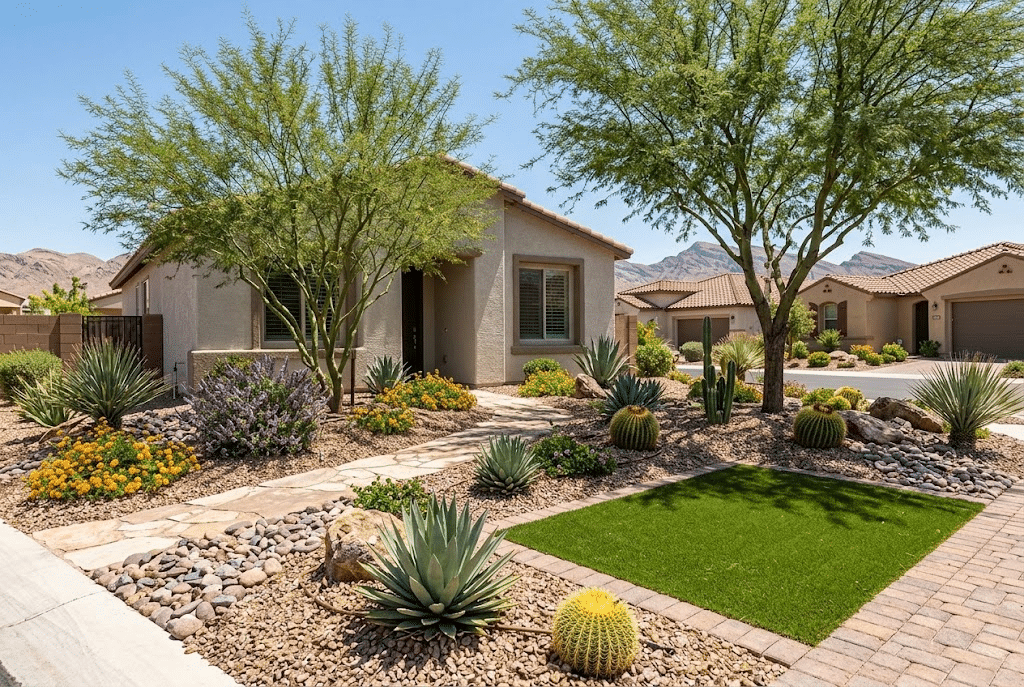
- Well-adapted desert plants
A well-designed hydrozone layout is one of the fastest ways to cut water waste in a Las Vegas or Henderson yard without giving up a healthy, good-looking landscape. If you want a professional assessment of how your yard is currently zoned and where it’s losing water, start with our call (702) 370-5000 or request an estimate online.